News
Kanye offers to meet Jewish community in UK after Wireless controversy
BBC News
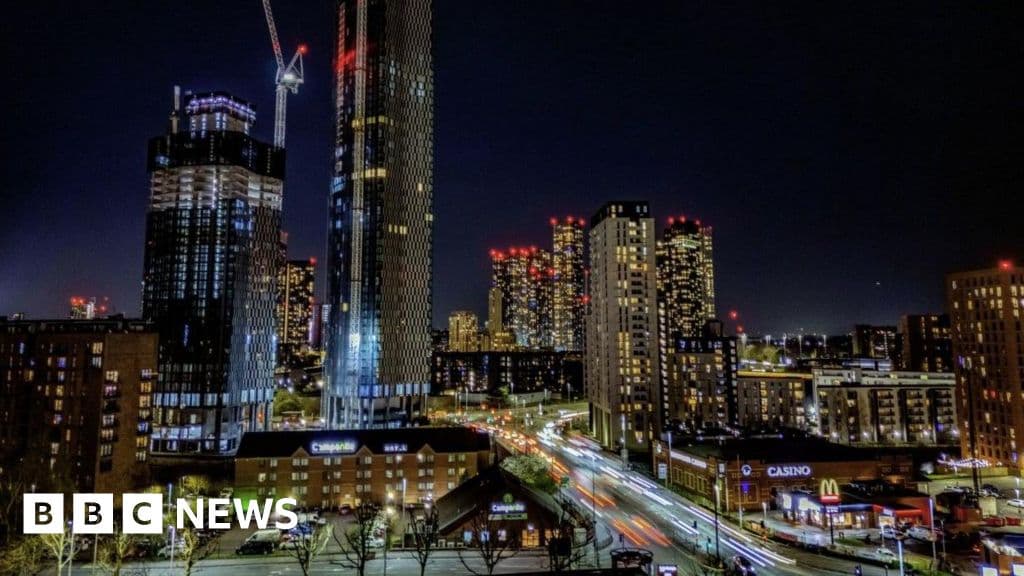
It is the age-old debate – where is England's second city?
This hotely-contested question over the unofficial title has fiercely divided the Brummies and Mancunians for decades.
After being named as the most entrepreneurial city outside of London according to data drawn from Companies House registrations in 2025, it has certainly reignited the debate.
Hot off the back of Manchester hosting the Brit Awards and the Mobo Awards, has Manchester cemented its claim over Birmingham as the second city?
"The second city debate to me is a league table that London is always going to be top of," said Andy Spinoza, author of Manchester Unspun which gives a detailed account of the city's recent transformation told through the lens of popular culture.
"So once you put London in that category of world cities, I think Manchester has a claim to be capital of the rest of everything.
"People are moving to Manchester for high-value jobs.
"In fact the most recent figures show more people left London for Manchester than the other way around, which is probably the first time it's ever happened in history."
According to the BBC's economics editor Faisal Islam, there is a buzz around Manchester that is difficult to truly understand unless you spend time there.
"At a time when the UK economy has been spluttering along for some years, this place smells of growth, and it looks like growth too," he said.
"Look up and there are cranes and dozens of new skyscrapers.
"Look down and there are thousands of young workers, graduates and apprentices, local and global, who work in offices and facilities, that were simply not there a decade ago."
Buzz is the right word for a city that has the bee as its emblem, and the numbers behind the anecdotes are solid.
At 3.1% annual growth sustained over 10 years, Manchester's economy has performed twice as well as that of the UK as a whole.
Like London, Manchester sits at the centre of a much larger urban conurbation, Greater Manchester.
This also includes the city of Salford, towns such as Stockport, Bolton and Oldham and well-known landmarks like the Trafford Centre, Old Trafford and the BBC's home, MediaCityUK.
Encompassing Miles Platting, Moston, Newton Heath and Collyhurst and dotted with the textile mills that earned the burgeoning city the 19th Century nickname of Cottonopolis, the M40 postcode has seen more businesses set up than anywhere in Manchester in 2025, according to new analysis by business experts at MoneySuperMarket.
More than 3,000 new businesses were registered last year in the area.
This is down to places like Pollard Yard.
Just a stone's throw from Ancoats and New Islington, shipping containers have been transformed into everything from hairdressers to record shops and cafes to clothing brands.
"It feels a bit more manageable than somewhere in town," said Alex Nixson-Evers, from Palms Coffee.
Megan Foster, from Prairie Tattoo, said: "It's very affordable here so it's a really good place for people to start up their own businesses."
Filipa Marques, from New Dawn Pottery, said: "I decided to relocate to Manchester because it was a bit cheaper and it was very up-and-coming city and it's a great place for arts."
Some are so confident that Manchester holds the title that they have named their business as such.
Second City Coffee - based in Manchester - sells retail and wholesale coffee.
Underneath Manchester's railway arches is the home of carbonated drinks manufacturer Hip Pop.
"We started Hip Pop in my kitchen," said Emma Thackray, Hip Pop co-founder, who credits Manchester as being the perfect place for businesses to set up and grow.
"We were brewing kombucha in glass jars and now we make healthier pop here in the heart of Manchester next to Manchester Piccadilly," she said.
"I think we all know it's the second city, right?"
Listen to the best of BBC Radio Manchester on Sounds and follow BBC Manchester on Facebook, X, and Instagram. You can also send story ideas via Whatsapp to 0808 100 2230.
Share this article
Manchester is being discussed as England's second city because its recent economic growth, business activity, and cultural profile have strengthened its case. The article says the debate has been reignited after Manchester was named the most entrepreneurial city outside London in 2025 and hosted major events like the Brit Awards and the MOBO Awards.
Manchester's growth is backed by strong economic and business figures. The article says the city has sustained 3.1% annual growth over 10 years, which is twice the UK average, and that more than 3,000 new businesses were registered in the M40 postcode area in 2025.
Yes, the article says more people left London for Manchester than moved the other way in the most recent figures. Andy Spinoza says this may be the first time that has ever happened in history, and he links it to high-value jobs in Manchester.
Greater Manchester is described as a larger urban conurbation that includes Salford, Stockport, Bolton, and Oldham. The article also mentions major landmarks such as the Trafford Centre, Old Trafford, and MediaCityUK.
Business owners in the article say Manchester is appealing because it is more affordable and feels manageable for new ventures. Others also describe it as up-and-coming, especially for creative and independent businesses, with places like Pollard Yard offering space for shops, cafes, and studios.

See every story in News — including breaking news and analysis.