
Crypto
Binance’s UAE Haven Tested By Iran Strikes — Should BNB Traders Be Worried?
NewsBTC
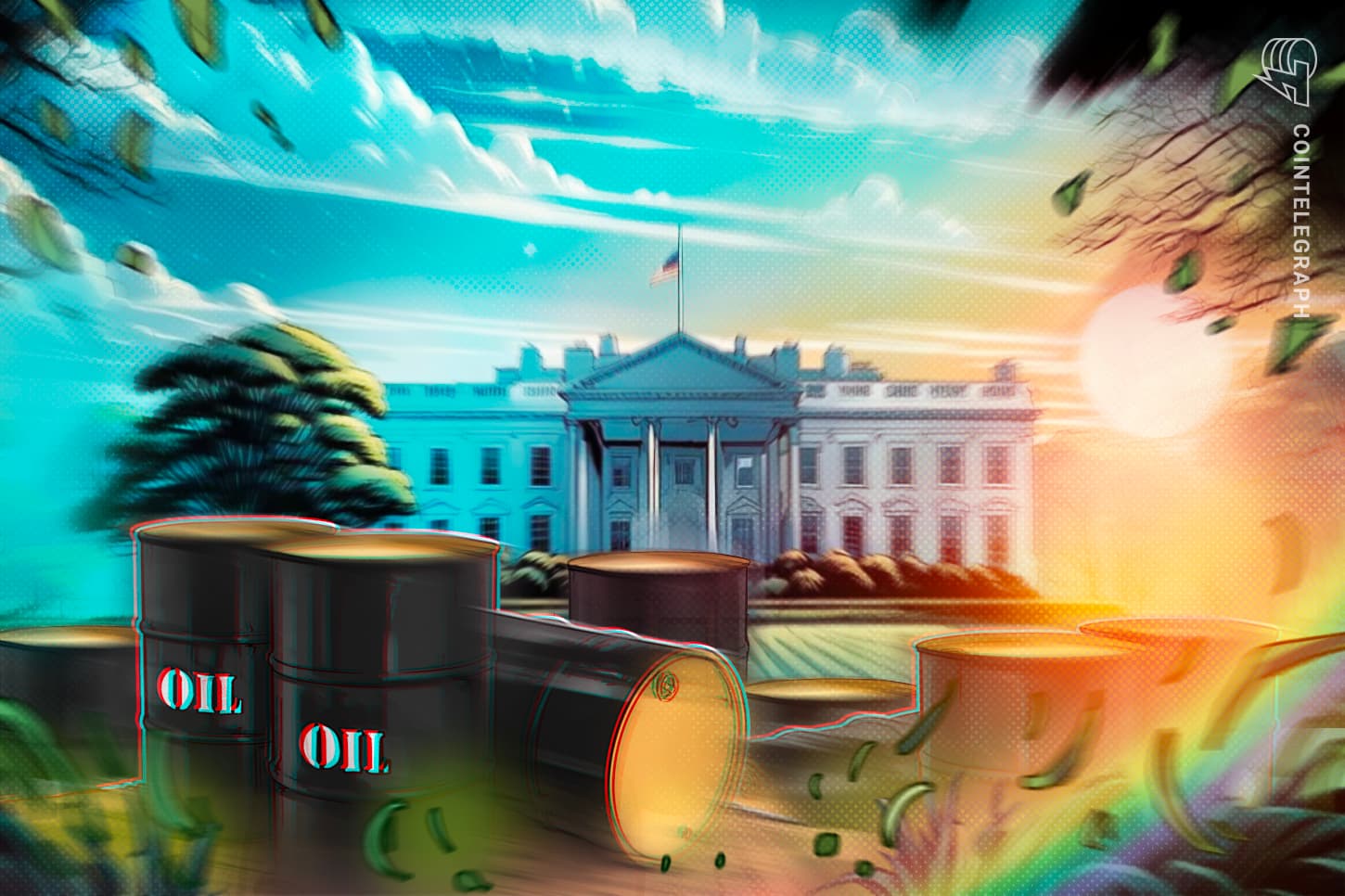
The White House warned staff against using confidential information for futures market bets after suspicious oil trades occurred before President Trump's Iran announcement. A significant $500 million bet on crude futures raised concerns about insider trading and prompted calls for stricter regulations.
The White House warned staff against improperly using confidential information to place bets in futures markets after suspicious oil trades ahead of President Donald Trump’s March 23 Iran announcement drew scrutiny, according to Reuters.
Reuters reported on Thursday that the White House sent the internal email on March 24, a day after Trump ordered a five-day delay in attacks on Iran’s energy infrastructure.
The warning followed a roughly $500 million bet on Brent and West Texas Intermediate crude futures placed in a one-minute burst shortly before Trump’s March 23 announcement, according to Reuters calculations based on exchange data. Oil prices fell about 15% after the policy shift.
The episode has intensified scrutiny of whether officials or politically connected traders could profit from nonpublic information tied to military or policy decisions. It has also added momentum to a broader push in Washington to tighten rules around prediction-market trading.
The STOCK Act amendment in the Commodity Exchange Act (CEA) prohibits federal officials, congress members, executive staff and judicial officers from using non-public information derived from their positions to trade commodity, futures or options markets. The amendment was signed into law on April 4, 2012.
Cointelegraph has approached the White House for a copy of the internal email.
Related: US Senate bill targets prediction markets on war and assassinations
Lawmakers have also stepped up scrutiny of prediction markets, where well-timed bets tied to military and political events have raised similar concerns about the misuse of privileged information. Polymarket traders netted around $1 million by accurately betting when the US would strike Iran.
In response to the concerns, Congressman Adrian Smith and Congresswoman Nikki Budzinski introduced the Preventing Real-time Exploitation and Deceptive Insider Congressional Trading Act (PREDICT Act) on March 25, a bipartisan bill seeking to ban members of Congress and federal officials from prediction market trading.
On March 26, US lawmakers Todd Young, Elissa Slotkin, John Curtis and Adam Schiff unveiled the bipartisan Public Integrity in Financial Prediction Markets Act of 2026, a bill aimed at curbing prediction market insider trading by government officials.
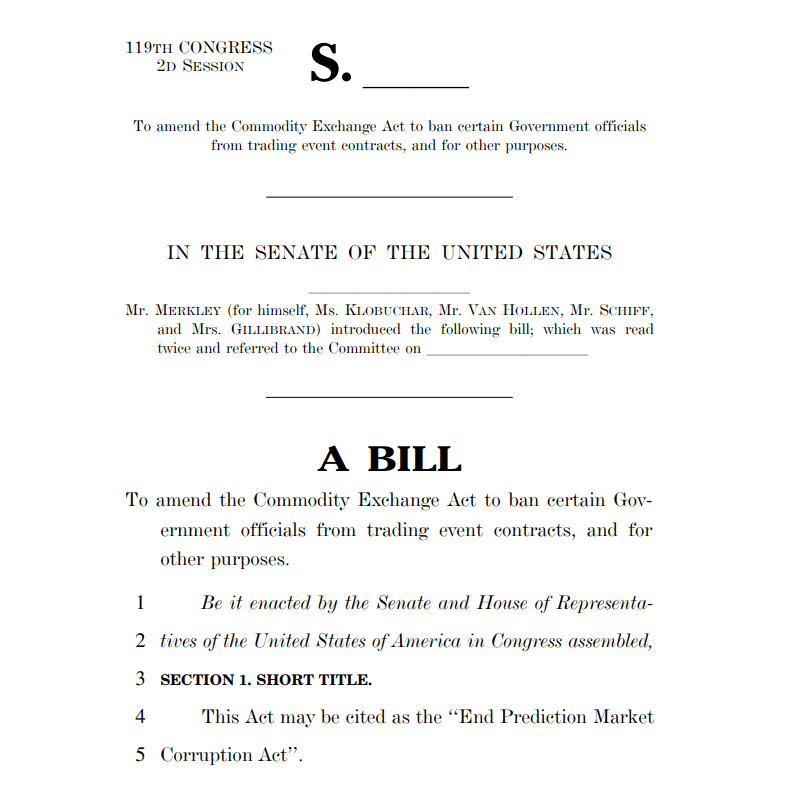
End Prediction Market Corruption Act. Source: Merkley.senate.gov
The same day, Senator Jeff Merkley introduced the End Prediction Market Corruption Act, seeking to ban event contract trading by government officials with “material non-public information,” including the president, vice president and members of Congress.
Magazine: Crypto traders ‘fool themselves’ with price predictions — Peter Brandt
Share this article
The warning was triggered by a suspicious $500 million bet on crude futures placed shortly before President Trump's announcement regarding Iran on March 23.
Oil prices fell approximately 15% following President Trump's policy shift regarding Iran.
The STOCK Act prohibits federal officials and others from using non-public information for trading in commodity and futures markets, aiming to prevent insider trading like the recent concerns surrounding the Iran announcement.




See every story in Crypto — including breaking news and analysis.