
Crypto
Bitcoin community weighs in on reports of Iran's crypto toll for oil ships
Cointelegraph

Bitcoin may play a role in facilitating safe passage through the Strait of Hormuz amid a fragile ceasefire between the U.S. and Iran. Iran plans to collect tolls from vessels in Bitcoin, ensuring payments are untraceable due to sanctions.
Bitcoin is emerging as a potential component in the fragile ceasefire that is taking shape between the United States and Iran after a 39-day conflict disrupted the region and forced the closure of the Strait of Hormuz.
Tehran is unlikely to relinquish its grip on the narrow trade artery that handles roughly 20% of global crude oil flows. Instead, it plans to manage transit alongside Oman, collecting tolls from vessels seeking safe passage.
And that’s where Bitcoin (BTC) comes into play. Those payments may not be limited to traditional currencies. Hamid Hosseini, a spokesperson for Iran’s Oil, Gas and Petrochemical Products Exporters’ Union, told the Financial Times that certain ships could be required to pay in BTC for safe passage of their oil cargo.
“Once the email arrives and Iran completes its assessment, vessels are given a few seconds to pay in Bitcoin, ensuring they can’t be traced or confiscated due to sanctions,” said Hosseini.
If implemented, the move would mark a notable shift for Iran, which has previously said it would only accept the Chinese yuan as toll payment for the strait.
This week’s Crypto Biz looks at Iran’s reported crypto gambit, Jamie Dimon’s latest comments on blockchain and competition and the White House’s stance on stablecoin yields.
Ships moving through the Strait of Hormuz are increasingly being asked to pay transit fees in cryptocurrency, as Iran tightens control over one of the world’s most important shipping lanes, according to the Financial Times.
Reports indicate that vessels, particularly oil tankers, are being charged fees that can reach into the millions per trip, with payments made in crypto or alternative currencies. The system is being enforced by Iran’s Revolutionary Guard Corps, which has restricted access to the waterway and allowed only approved ships to pass.
The development comes amid ongoing conflict and a fragile ceasefire, with Iran using its position over the strait as leverage. With roughly a fifth of global oil flows moving through the route, the use of crypto payments underscores both the geopolitical stakes and how digital assets are being used to bypass traditional financial channels.
JPMorgan CEO Jamie Dimon warned that a new wave of technology-driven competitors is putting pressure on traditional banking, highlighting both artificial intelligence and emerging financial infrastructure.
In his annual shareholder letter, Dimon pointed to fintech companies and nonbank players adopting blockchain and other technologies to build faster, lower-cost systems. He also hinted that stablecoins should be viewed as part of the broader shift underway in financial services.
America’s biggest bank, as measured by assets, is already investing heavily in its own blockchain infrastructure, including its Kinexys platform, as it looks to compete in areas such as payments and tokenization where new entrants are gaining ground on traditional players.
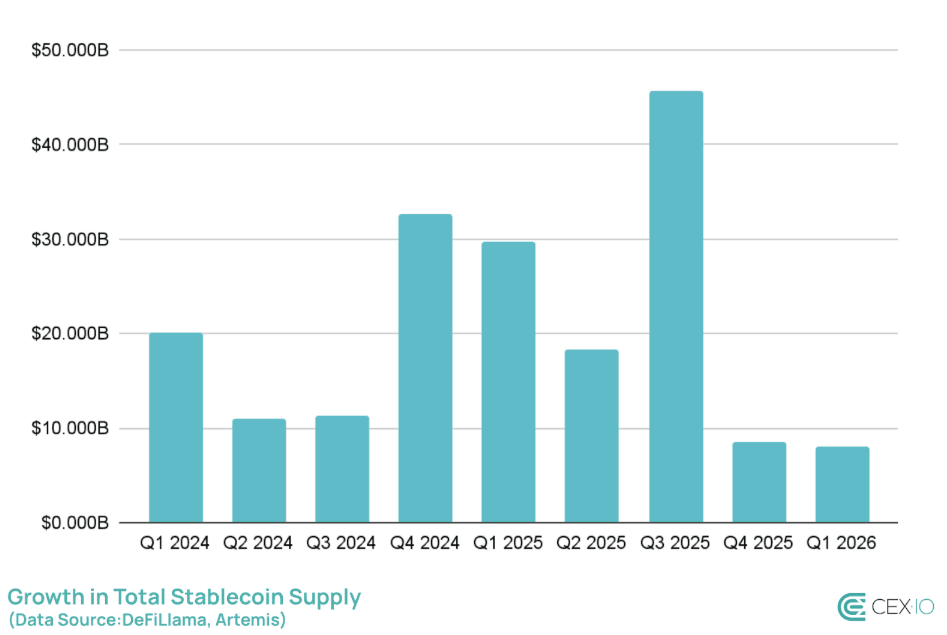
Stablecoins became a $315 billion market in the first quarter. Source: CEX.io
Analysts at Bernstein say Figure Technologies’ rapid loan growth highlights the potential of blockchain-based lending, suggesting the company’s stock is significantly undervalued at current levels.
In a recent note, Bernstein said Figure surpassed $1 billion in monthly originations, signaling growing traction. It assigned the stock an “Outperform” rating and a $67 price target, roughly double current levels.
Figure’s lending platform runs on the Provenance blockchain, which is designed to reduce costs and speed up loan processing. Bernstein analysts said this structure could improve margins compared to traditional lenders, particularly as volumes increase.
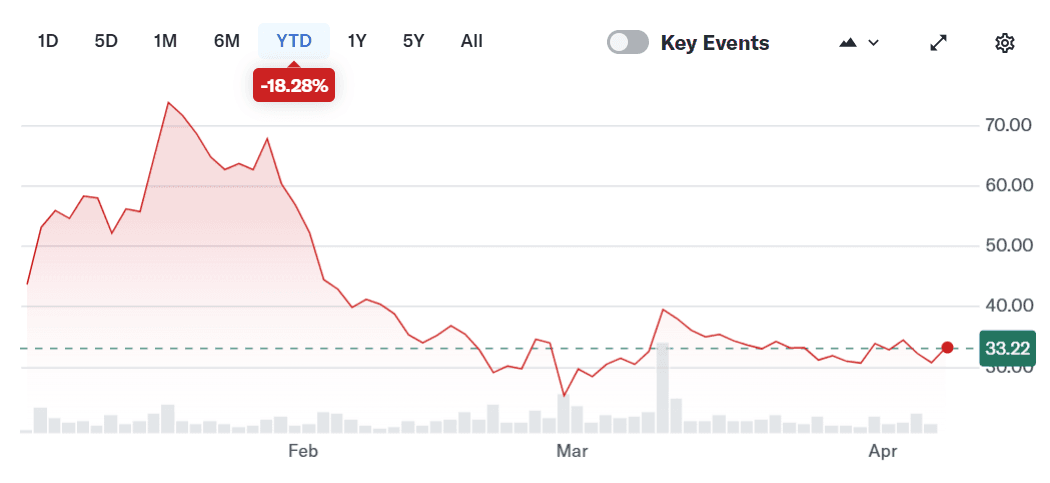
Figure (FIGR) stock’s year-to-date performance. Source: Yahoo Finance
Economists at the White House said restricting yield-bearing stablecoins would have a negligible impact on bank lending, challenging claims that such products pose a meaningful threat to deposits.
According to analysis by the Council of Economic Advisers, a ban on stablecoin yields is estimated to increase bank lending by just 0.02%, suggesting only limited spillover into the traditional financial system. The analysis comes as yield-bearing stablecoins remain a key sticking point in market structure legislation talks.
The report also pointed to potential downsides. Limiting yields could reduce consumer benefits by cutting off access to higher returns, highlighting a trade-off for policymakers weighing tighter regulation of the sector.
Crypto Biz is your weekly pulse on the business behind blockchain and crypto, delivered directly to your inbox every Thursday.
Share this article
Iran plans to require certain vessels to pay tolls in Bitcoin for safe passage through the Strait of Hormuz, allowing for untraceable transactions.
The Strait of Hormuz handles roughly 20% of global crude oil flows.
A 39-day conflict disrupted the region, resulting in the closure of the Strait of Hormuz.
Iran previously stated it would only accept the Chinese yuan as toll payment for vessels passing through the Strait of Hormuz.


See every story in Crypto — including breaking news and analysis.