
Crypto
Circle under fire after $285 million Drift hack over inaction to freeze stolen USDC
CoinDesk

Today in crypto, Stablecoins dominated crypto trading in Q1 as investors sought safety, according to CEX.io, Coinbase legal chief Paul Grewal says US lawmakers are nearing agreement on the CLARITY Act, and Alabama has followed Wyoming in enacting a bill granting decentralized autonomous organizations (DAOs) legal status.
Stablecoins were a rare bright spot in an otherwise subdued crypto market in the first quarter, with supply growth and transaction activity pointing to sustained demand even as broader market conditions weakened.
Total stablecoin supply increased by roughly $8 billion to a record $315 billion in Q1, according to data from CEX.IO. Although this marked the slowest pace of expansion since Q4 of 2023, it still represented growth during a period when the wider crypto market contracted.
The data suggests investors rotated into stablecoins as a defensive strategy, boosting their share of overall market activity. Stablecoins accounted for 75% of total crypto trading volume during the quarter — the highest level on record.
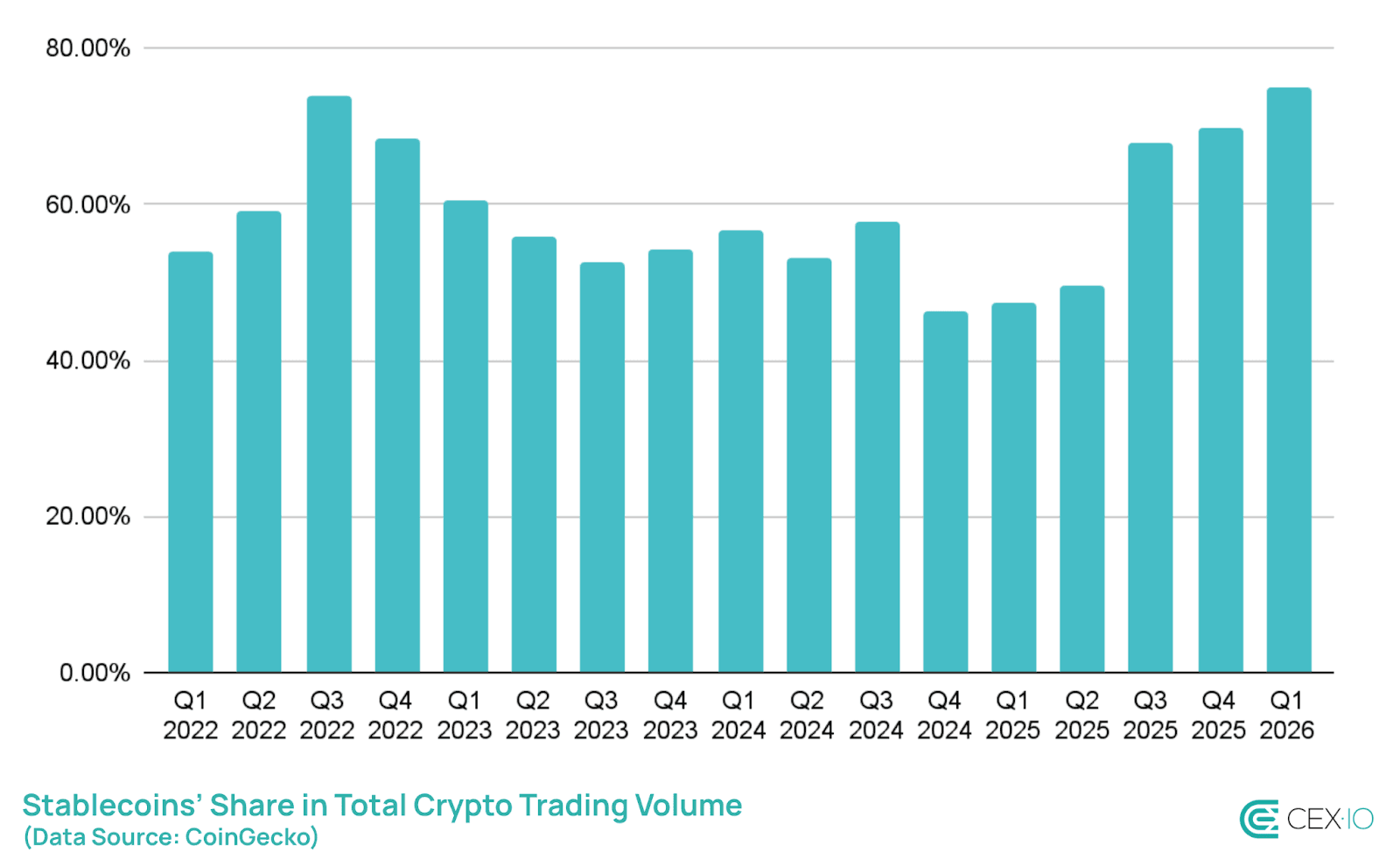
Stablecoins’ share of total digital asset trading volume exceeded its 2022 peak. Source:CEX.io
Coinbase chief legal officer Paul Grewal said the US Digital Asset Market Clarity Act is “moving toward” a markup hearing in the US Senate Banking Committee and could eventually move to a floor vote if senators resolve the stablecoin yield dispute and schedule a markup.
Speaking in a Wednesday interview on Fox Business, Grewal said lawmakers are nearing agreement on core elements of the crypto market structure bill, even as debate continues over stablecoin yield. “I think we’re very close to a deal,” he said.
The remarks point to possible movement on one of the last major sticking points in Senate talks over crypto market structure legislation: whether stablecoin issuers or platforms should be allowed to offer yield or similar rewards. The dispute has helped delay a Senate Banking Committee markup, leaving the broader effort to set federal rules for digital asset oversight still unresolved.
US banks have pushed for restrictions, arguing that such incentives could draw deposits away from traditional institutions and disrupt the banking system. Grewal pushed back on that claim, saying there is no evidence to support fears of deposit flight.
The US House of Representatives passed the CLARITY Act on July 17, 2025. In January, Senate Banking Committee Chair Tim Scott delayed a planned markup, which has yet to be rescheduled.
The US state of Alabama has become the second US jurisdiction after Wyoming to grant decentralized autonomous organizations (DAOs) legal status under the DUNA Act.
The Decentralized Unincorporated Nonprofit Association (DUNA) Act (Senate Bill 277) was introduced in February by Republican Senator Lance Bell. The House passed it 82-7 with 16 abstentions on March 17, and has reportedly been signed by Alabama Governor Kay Ivey.
Speaking about the bill’s passage, the head of policy and general counsel at a16z Crypto, Miles Jennings, said on Wednesday that “Decentralized governance is essential to crypto’s future—it’s one of the core constructs in market structure legislation.”
The bill provides legal status and limited liability protections to DAOs, solving a long-unresolved question in crypto: How DAOs exist from a legal standpoint in the real world.
It gives decentralized communities “the certainty to build, govern, contract, and scale in the real world,” added Jennings.
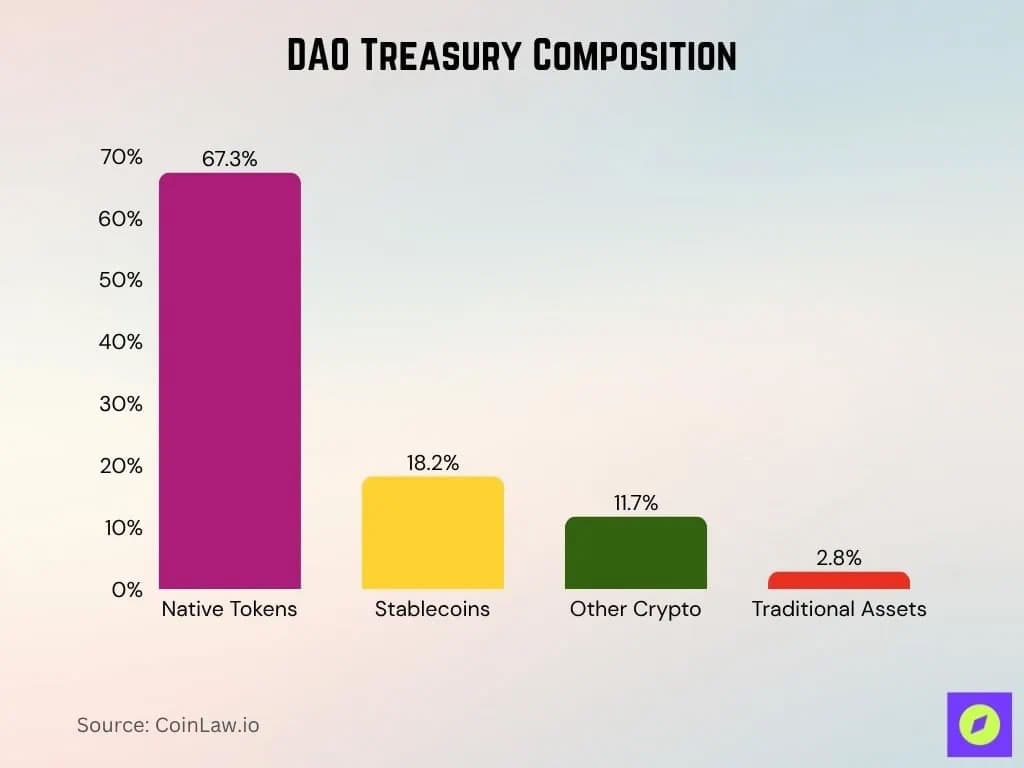
DAO treasury composition. Source: CoinLaw
Share this article



See every story in Crypto — including breaking news and analysis.