
Crypto
YouTube Now Lets You Create Your Own AI Deepfakes
Decrypt
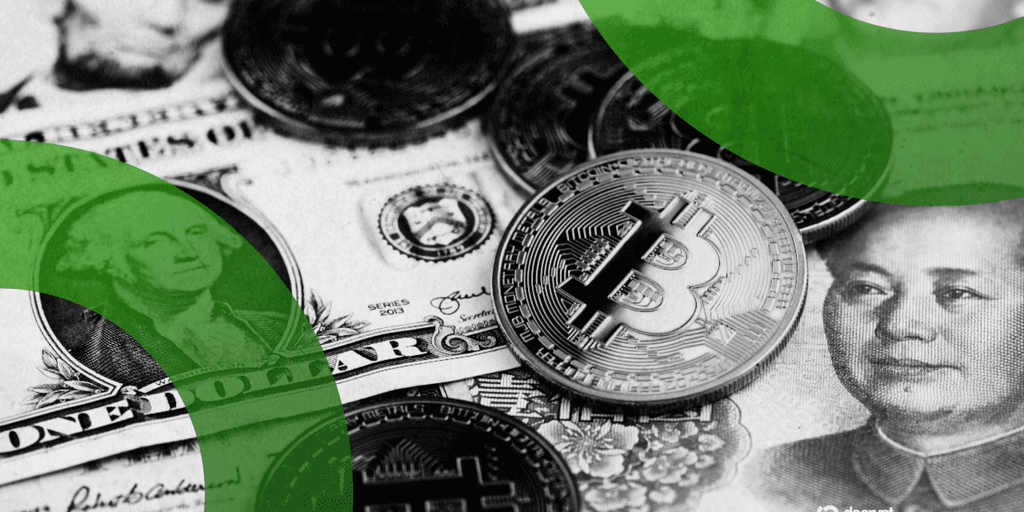
Iran may be accepting Bitcoin for tolls in the Strait of Hormuz, a crucial oil transit route, but experts express skepticism about the scale of this adoption. Reports indicate that shipping companies are also using stablecoins and Chinese yuan for transactions.
Iran is reportedly putting a Bitcoin-based price tag on the world’s most vital oil artery, but experts are questioning whether a revolution has taken place or if it is just a game of telephone.
The cryptosphere was abuzz on Wednesday after The Financial Times reported that Iran would demand shipping companies pay tolls in cryptocurrency, including Bitcoin, for safe passage through the Strait of Hormuz, the maritime chokepoint through which 20% of the world’s oil flows. Negotiations reportedly start at $1 per barrel.
Some Bitcoiners appeared to welcome the news. Iran’s purported acceptance of Bitcoin underscores the asset’s censorship-resistant qualities and how “there is no second best,” Strike founder and CEO Jack Mallers, a longtime Bitcoin advocate, posted to X on Wednesday.
On top of that, the Iranian seaport city of Bandar Abbas has already been labeled on BTC Map, an open-source project enabling users to locate physical merchants and businesses that accept Bitcoin. “Would sail again,” a comment posted on BTC Map’s website read.
The Petrocoin pic.twitter.com/BXeXJAUTYN
— SF Hodl (@sf_hodl) April 8, 2026
Still, some blockchain intelligence experts specializing in detecting sanctions evasion express doubt that meaningful volumes of Bitcoin payments are actually occurring between entities linked to Iran and shipping companies desperate to transit the strait.
“I’m also skeptical,” Ari Redbord, global head of policy and government affairs at TRM Labs, told Decrypt. “We don’t have data at this point indicating that crypto is being used at scale for something like transit tolls through the Strait of Hormuz.”
Redbord’s impression is that Iran and affiliated actors are likely signaling an openness to crypto as a payment rail. That would be consistent with broader sanctions evasion tactics, he added. A report from blockchain forensics firm Elliptic, for example, found last year that Russia used $8 billion in crypto to evade sanctions and influence elections in Moldova.
A March report from blockchain analytics from blockchain analytics firm Chainalysis also found that Iran, Russia, North Korea, and other sanctioned countries boosted their use of cryptocurrency last year, with illicit addresses receiving $154 billion.
Redbord’s doubt was shared by Bitcoin advocate and Taproot Wizards co-founder Udi Wertheimer (Disclosure: an investor in Decrypt's parent company, Dastan), who noted to Decrypt that the individual cited by the Financial Times, Hamid Hosseini, doesn’t actually represent the Iranian regime.
Rather, Hosseini is a spokesperson for Iran’s Oil, Gas and Petrochemical Products Exporters’ Union, which works with Iran’s government. That raises the question of whether the report stemmed from a game of telephone, he said.
“I haven’t seen any official saying that it's even remotely a thing,” he said. “You could imagine that he heard from his sources that they're using stablecoins or something, and he doesn't understand the difference between crypto and Bitcoin.”
Bitcoin’s usage would further Iran’s reported embrace of digital assets amid the conflict that has lasted for more than five weeks. Oil tankers have been using Chinese yuan and crypto, specifically stablecoins, as payment for naval escort through the waterway, Bloomberg reported this month, citing people with knowledge of the situation.
Despite the reported payments, and a two-week ceasefire recently unveiled by U.S. President Donald Trump, traffic through the strait remains subdued, according to Sal Mercogliano, a maritime historian at Campbell University in North Carolina.
In a video posted to X on Wednesday, Mercogliano said “we’re just seeing a minor tick here in the number of ships” that’s far below pre-war levels.
On Myriad, a prediction market owned by Decrypt’s parent company Dastan, traders foresaw a nearly 70% chance on Wednesday that the seven-day moving average of transit calls would be above 15 by the end of the month. On Tuesday, those odds peaked around 90%.
Share this article
Reports suggest that Iran is considering charging tolls in Bitcoin, but experts are skeptical about the actual implementation and scale of this practice.
Shipping companies are reportedly using stablecoins and the Chinese yuan alongside Bitcoin for transactions in the Strait of Hormuz.
Ari Redbord from TRM expressed skepticism, stating that there is currently no data indicating that cryptocurrency is being used at scale for toll payments.
The Strait of Hormuz is a vital maritime chokepoint through which approximately 20% of the world's oil flows, making it crucial for global energy supply.



See every story in Crypto — including breaking news and analysis.