Crypto
Bitcoin may hit $110K as Strategy absorbs nearly 3x new BTC supply
Cointelegraph

JPMorgan CEO Jamie Dimon said “new technologies” are intensifying competition across the financial sector, with blockchain-based players emerging alongside traditional rivals.
In his annual shareholder letter on Monday, Dimon identified artificial intelligence, data and advanced technology as “key to the future,” signaling a shift toward more automated, data-driven financial services.
While blockchain and digital assets were not a central focus, Dimon acknowledged that “a whole new set of competitors is emerging based on blockchain, which includes stablecoins, smart contracts and other forms of tokenization.”
The comments come as JPMorgan continues to focus on its own blockchain initiatives, even as Dimon emphasized that the bank’s long-term success will depend largely on its ability to deploy AI across its operations.
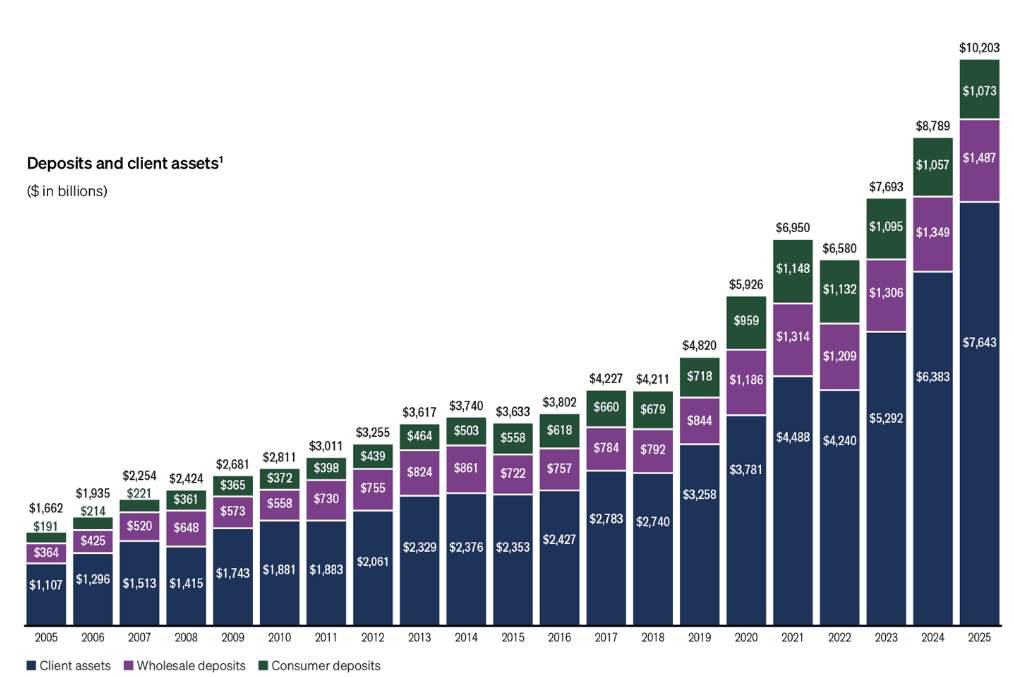
Dimon’s shareholder letter highlighted the bank’s scale, including client assets, wholesale funding and consumer deposits. Source: JPMorgan
JPMorgan has been expanding its in-house blockchain infrastructure, now known as Kinexys, which enables near-instant fund transfers without relying on traditional intermediaries.
The platform is targeting up to $10 billion in daily transaction volume and recently moved toward that goal by onboarding Japan’s Mitsubishi Corporation. Other clients include Qatar National Bank and major institutional players such as Siemens and BlackRock.
Kinexys is also being positioned as a broader tokenization platform, with JPMorgan aiming to expand into markets such as private credit and real estate.
Related: SoFi expands into institutional finance with integrated crypto services
Dimon’s mention of blockchain and stablecoins comes at a contentious moment for the banking industry, as US lawmakers continue to debate digital asset legislation.
The passage of the GENIUS Act last year, which established a regulatory framework for stablecoins, is widely expected to accelerate adoption by providing clearer rules for issuers and institutions.
However, broader market structure legislation remains stalled in Congress. A key point of friction is yield-bearing stablecoins, which banking groups argue could undermine financial stability by allowing issuers to offer interest-like returns without adhering to the same regulatory requirements as banks.
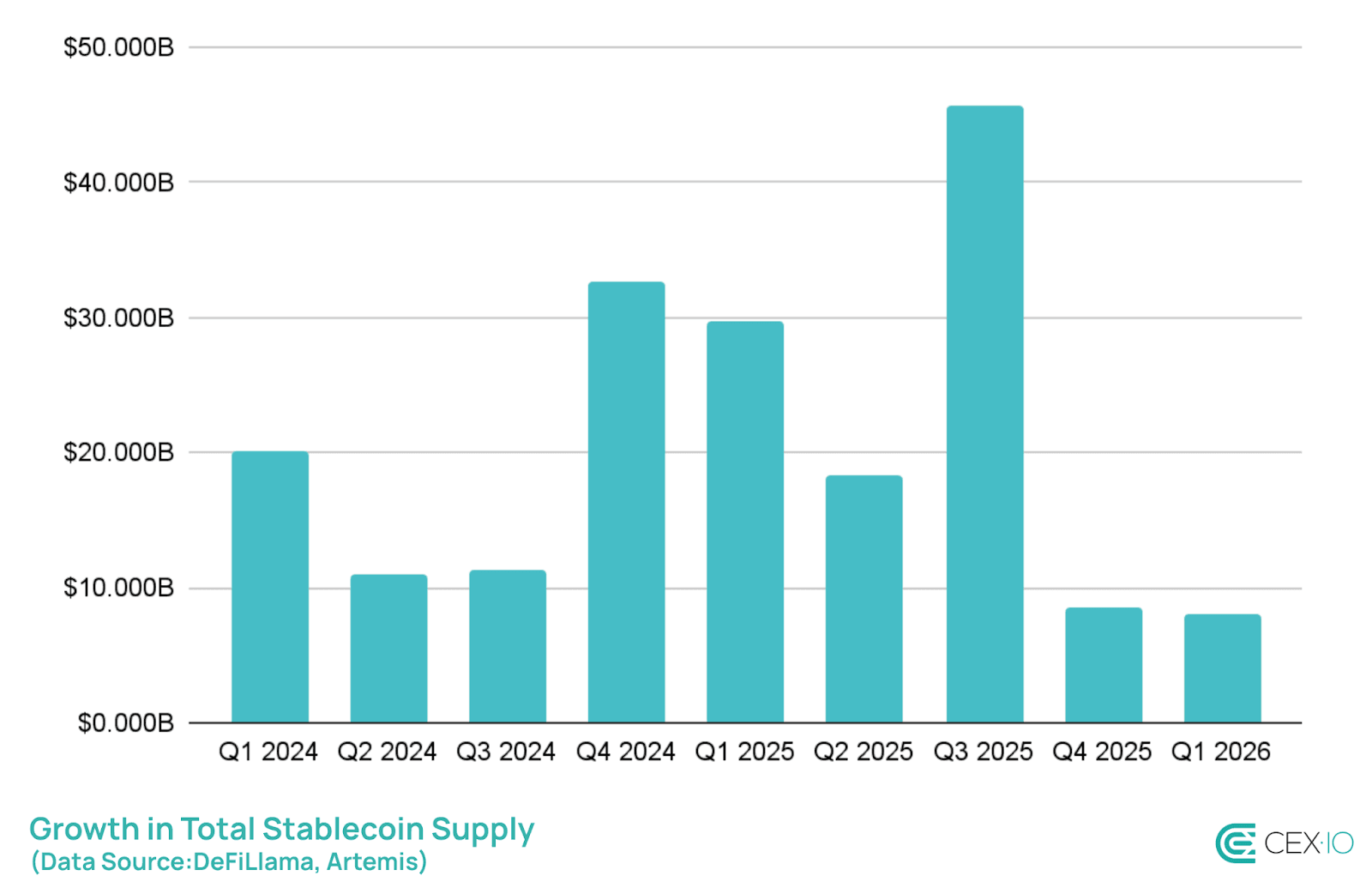
The stablecoin market topped $315 billion in the first quarter. Source: CEX.io
Tensions have also spilled into the public sphere. Dimon and Coinbase CEO Brian Armstrong have traded criticisms over the direction of crypto regulation, with Dimon pushing back against claims that banks are attempting to derail legislative efforts.
Industry lobbying groups, including the American Bankers Association, have made opposition to yield-bearing stablecoins a key policy priority this year.
Related: Stablecoin supply reaches $315B in Q1 as USDC rises, USDT declines
Share this article
Dimon said a new set of competitors is emerging from blockchain-based technologies. He specifically pointed to stablecoins, smart contracts, and other forms of tokenization as part of that shift. He said these players are adding to competition across the financial sector.
Dimon said artificial intelligence, data, and advanced technology are key to the future of banking. He signaled that JPMorgan's long-term success will depend largely on its ability to deploy AI across its operations. The bank is moving toward more automated, data-driven financial services.
Kinexys is JPMorgan's in-house blockchain infrastructure for near-instant fund transfers without traditional intermediaries. The platform is also being positioned as a broader tokenization platform. JPMorgan wants to use it in areas such as private credit and real estate.
JPMorgan is targeting up to $10 billion in daily transaction volume for Kinexys. The platform recently moved closer to that goal by onboarding Japan’s Mitsubishi Corporation. Other clients include Qatar National Bank, Siemens, and BlackRock.
Clearer stablecoin rules could accelerate adoption by giving issuers and institutions more regulatory certainty. The article says the GENIUS Act established a framework for stablecoins and is widely expected to help adoption. However, banking groups are still pushing back against yield-bearing stablecoins, arguing they could create financial stability risks.





See every story in Crypto — including breaking news and analysis.