Crypto
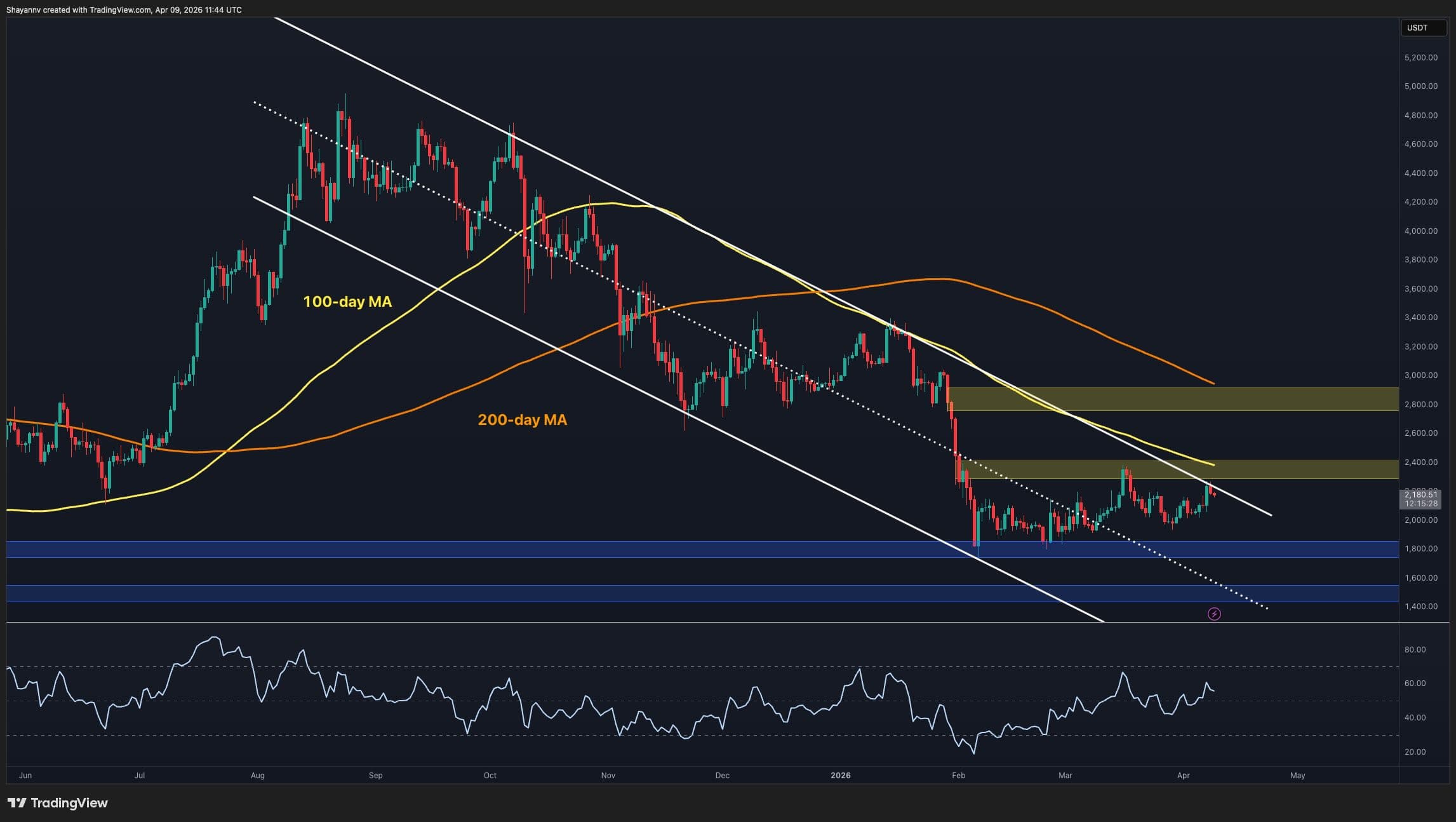
Ethereum Price Analysis: Can ETH Finally Break Out of This Bearish Channel?
CryptoPotato

Iran is seeking to use Bitcoin to facilitate the passage of oil tankers through the Strait. This move comes amid rising tensions and fluctuating oil prices.
Morning Minute is a daily newsletter written by*Tyler Warner. The analysis and opinions expressed are his own and do not necessarily reflect those of Decrypt.* *And check out our new daily news show covering all of the top stories in 5 minutes or less, downloadable on Apple Pod or Spotify.*
GM!
Today’s top news:
Per the Financial Times, Iran is charging oil tankers $1 per barrel to transit the Strait of Hormuz during the two-week window, with payments demanded in crypto (Bitcoin specifically).
Tankers must email Iranian authorities with their cargo details before attempting passage. Tehran will then calculate the fee and instruct ships on how to settle, with Bitcoin specifically cited as an accepted payment method. A fully loaded supertanker could face a bill approaching $2M.
This is a tricky one to interpret. On one hand, it’s incredibly bullish that a nation state would be willing to accept Bitcoin as payment for oil transit. In fact it could be deemed a blow to the US petrodollar. But on the other hand—it’s Iran. And it’s a tollbooth. So not the best use case, and one from the most sanctioned group on Earth.
At a minimum it’s an interesting precedent, if it ever gets off the ground.
Key Details:
Morgan Stanley’s Bitcoin ETF posted $33.9M in volume on its first day of trading, a respectable debut for a fund that launched into a ceasefire rally with zero runway. MSBT went live on NYSE Arca on Tuesday with a 0.14% fee, still the lowest of any spot Bitcoin ETF on the market.
That helped propel total spot Bitcoin ETF volume to $2.4 billion on Wednesday. BlackRock’s IBIT did $1.93B on its own and Fidelity’s FBTC added $212M. But even with that volume influx, the day ended with $125M in net outflows (so net sellers on the day).
Key Details:
The White House Council of Economic Advisers released a 21-page report on Wednesday finding that banning stablecoin yield would increase bank lending by just $2.1B - a rounding error at 0.02% of total US lending. The net welfare cost of the ban: $800 million.
This is the banking lobby’s central argument, subjected to a formal economic model by the president’s own economists, and it didn’t survive. The report goes further: reaching even $531B in additional lending from a yield ban requires stacking 3 implausible assumptions simultaneously:
The White House called that scenario “implausible.”
The timing matters enormously. The Clarity Act has been stalled in the Senate largely over this exact fight - banks wanting stablecoin yield banned, Coinbase and the crypto industry refusing to accept that. The White House just published a study saying the banks’ argument doesn’t hold up mathematically.
That’s a significant step toward getting the bill across the finish line.
Key Details:
The New York Times published an 18-month investigation today naming Adam Back as the most likely candidate for Satoshi Nakamoto.
The reporter is John Carreyrou, who broke the Theranos scandal (so he has some weight behind him).
His case rests on three pillars:
Back denied it before the article ran, denied it inside the article, and denied it again on X the moment it published. “I’m not satoshi,” he wrote, calling the evidence “a combination of coincidence and similar phrases from people with similar experience and interests.”
There is exactly one way to prove Satoshi’s identity: sign a message with the private keys linked to the genesis wallet. That hasn’t happened. And probably never will…
Key Details:
The Nicholas Bitcoin and Treasuries “AfterDark ETF” debuted on the NYSE on Wednesday. It’s a fund that holds US Treasuries during regular trading hours and switches to Bitcoin exposure around 4:30 PM ET, riding the overnight session before exiting each morning.
The thesis behind the fund is simple: research has shown the majority of Bitcoin’s historical gains occur outside US trading hours, driven by Asian and European sessions.
Trump’s Truth Social posts, Iran headlines, and geopolitical developments in particular tend to land when US markets are closed.
And the timing could not have been more on-the-nose. Hours after launch, Trump posted his ceasefire announcement at 6:32 PM ET. Bitcoin surged from sub-$68,000 to $72,700 in an after-hours move that a standard ETF investor would have missed entirely.
The AfterDark ETF was built for exactly this.
Key Details:
Corporate Treasuries & ETFs
Meme Coin Tracker
Share this article
Iran is looking to use Bitcoin as a means to bypass sanctions and facilitate the movement of oil tankers through the Strait.
Oil prices have jumped recently, influenced by eroding hopes for a ceasefire and ongoing geopolitical tensions.
Morgan Stanley's Bitcoin ETF recorded $31 million in volume on its first day, contributing to a $2.5 billion day for ETFs overall.
The White House report states that stablecoin yields will not significantly impact the banking industry.




See every story in Crypto — including breaking news and analysis.