News
Kanye West blocked from travelling to UK, government tells BBC
BBC News
Violet Gibson was the great-aunt of Philippa Gibson who tried to assassinate Benito Mussolini in Rome on 7 April 1926. She stepped out of a crowd and shot at him, and the bullet grazed his nose before the gun jammed when she tried to fire again.
Her great-niece said the attack appears to have been driven by both political and faith-based motivations. Violet was alarmed by the rise of fascism and violence under Mussolini, and the murder of socialist leader Giacomo Matteotti was one of the events that pushed her toward the attempt.
Violet Gibson was jailed in Italy and then deported to England. She was later incarcerated at a psychiatric institution in Northampton, where she remained until her death in 1956.
She came very close, and the article says her attack was the closest of four documented attempts on Mussolini's life. Philippa Gibson said the bullet was only yards away and clipped his nose after he turned his head.
Her great-niece says she admires Violet's courage and commitment to what she believed in, but does not support political violence. She said Violet's deep convictions helped lead her to the attack, while also emphasizing that political assassination is not the answer.
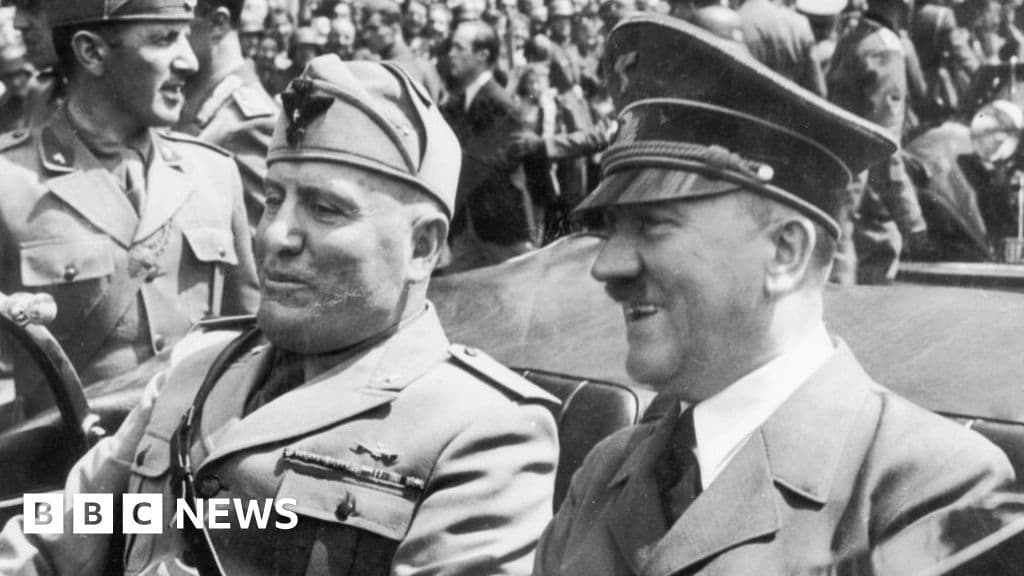
Violet Gibson came very close to changing the course of history 100 years ago, when she emerged from a crowd in Rome and shot fascist dictator Benito Mussolini.
The bullet grazed the Italian leader's nose and she tried to fire again but the gun jammed.
She was saved from the crowd by police "because they [Mussolini's supporters] probably would have killed her", said her great-niece Philippa Gibson.
Violet was jailed in Italy before being deported to England where she was incarcerated at a psychiatric institution in Northampton until her death in 1956.
Of four documented assassination attempts on Il Duce, Violet came the closest.
Philippa, from Llangrannog, in Ceredigion, Wales, said her great-aunt was from a very wealthy and political family.
Her father was Anglo-Irish aristocrat Baron Ashbourne, Lord Chancellor of Ireland, the country's highest legal office at the time.
Violet had a "typical upbringing for someone of that age and status" but rebelled against her family, converting to Catholicism and becoming a socialist, said Philippa.
She said: "The family weren't pleased at all but they had a softer approach towards Violet partly because... she had mental health problems but she was also an incredibly intelligent woman."
Violet ended up going to Italy where she learnt the language and "did good works", said her great-niece, adding: "It was that kind of age where rich people gave alms to the poor."
However, Violet had periods of severe mental ill health. She suffered a breakdown following the sudden death of her fiance, was imprisoned for a knife attack and attempted to take her own life, said Philippa.
On Violet's assassination attempt, she said: "I think she saw the fascism of Mussolini developing, and the incredible cruelty and violence.
"The socialist leader [Giacomo Matteotti] had been murdered by a fascist mob and that was one of the things that led her to this.
"So, partly a political motivation and partly a faith motivation - martyring herself for an important cause."
On 7 April 1926, three years into Mussolini's rule, Violet made her attempt on his life.
Philippa said: "She was only 50 but she looked a lot older and no-one took any notice of a little old lady taking out a gun very, very close to him.
"And it was yards between them but, apparently, he turned his head and it [the bullet] just clipped his nose.
Philippa said the British government and Violet's family wrote to Mussolini following the attack to thank him and congratulate him on surviving, and to emphasise her mental instability.
"Mussolini also did that [focused on her mental instability] because he didn't want it to appear that a political opponent had got that close.
"There were several attempts on his life and he survived them all.
"All of that kind of plays in to [the perception] he's unbeatable, he's protected by God, he's got a mission and that's what he's here for... so I think [the assassination attempt] was counter-productive."
Mussolini was executed after his capture by Italian partisans in 1945, while attempting to flee the Allied advance.
Violet's life has inspired songs, books, a play, radio documentary and 2021 film Violet Gibson: the Irish woman who shot Mussolini.
In 2022, a plaque commemorating Violet was unveiled in Dublin.
Philippa said while she admired her great-aunt she did not support political violence.
"I certainly wouldn't support any kind of political violence whatsoever, it's not the answer," she said.
"But I feel her deep-held beliefs are what led her to that. So, I admire her courage, her willingness to give herself for what she believed in, but I wouldn't endorse any kind of political assassination attempts."
Share this article

See every story in News — including breaking news and analysis.