
News
Lost Joan Eardley painting found in charity shop sells for £29,500
BBC News
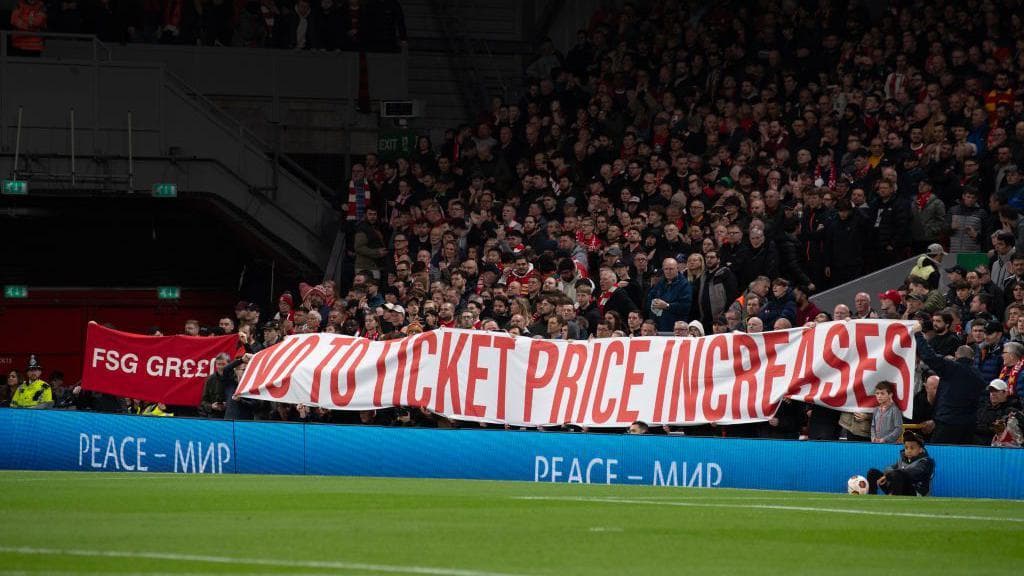
When Liverpool's players are warming up before their next Premier League match against Fulham on Saturday, they may well will do so with fewer supporters watching on from the stands than usual.
That is because fans group Spirit of Shankly have launched a campaign called 'not a pound in the ground', calling on fans to spend time buying food and drink from local businesses in the Anfield area rather than inside the stadium itself.
The move is the first in a series of protests planned by the group against Liverpool's decision to raise ticket prices for the next three seasons.
In a statement announcing the action, Spirit of Shankly said: "Liverpool FC has chosen to ignore clear, overwhelming opposition from its own supporters and push ahead with plans to increase ticket prices.
"Fans do not accept this decision. And if the club's owners won't listen, then we make them.
"This is no longer about consultation. That opportunity has been and gone. This is about action.
"If it goes unchallenged, it sets a precedent. Not just for Liverpool, but across the game."
So what exactly is the theory behind the price changes, and how could fans of other clubs be impacted?
In late March, Liverpool announced that ticket prices would be rising in line with the consumer price index (CPI) for inflation for the next three seasons.
That means that, for next season, season ticket prices are increasing by between £21.50 and £27, while prices for each individual ticket for non season ticket holders will go up between £1.25 and £1.75.
Further increases will follow in the following two seasons, meaning that some fans will potentially be paying around £100 more for their season ticket by 2028. Growth in the rate of inflation could raise that increase further.
This is the first time a Premier League club has pre-announced ticket price rises for multiple consecutive campaigns, and will mean Liverpool ticket prices have gone up in five out of six seasons by the start of the 2028-29 campaign.
Data from Uefa's annual European club finance and investment landscape report shows that - including both general admission and hospitality - Liverpool make an average of £74 per fan from every ticket they sell.
The Reds made £120m in total ticket revenue last year, a 27 percent year-on-year increase, in part because of the opening of the expanded Anfield Road stand.
Per matchday, they make an average of £4.5m from ticket income, the eighth highest in Europe.
The increase in prices next season should net the club roughly £1.5-2million more from ticket sales.
Liverpool defended the new policies by citing rising operational costs.
"Matchday operating costs have significantly increased, with rises of 85% since 2016-17, and continued rises in the cost of football operations in general", they said.
"In the past four years, utility costs across the club have also increased by 107% and business rates in that same period have grown by 286%, while wages – excluding player salaries – have risen by 73 per cent."
But fans don't accept the logic.
"It's about what kind of football club Liverpool chooses to be", Spirit of Shankly said. "One rooted in its people, or one that sees them as a revenue stream to be pushed year after year.
"The key point is simple: this [action] will grow and escalate.
"If you care about this issue, you need to be part of it. Turn up. Join in. Back it. Encourage others to take part.
"This only works if enough of us make it work."
The link to CPI means that world events which impact the economy and push up inflation, like the US-Israel war with Iran, could cause Liverpool fans to pay even higher prices.
Former Liverpool CEO Christian Purslow told The Football Boardroom podcast: "Alienating your traditional, most hardcore fans? I think it's bad business.
"I don't like the multi-year thing. I look at this as an affordability issue - you don't see public sector or private pay deals being done on a multi-year basis.
"The real cost of going is rising for fans who are last able to cope with that.
"I'm not sure why a team that is making £700m of revenue needs the extra money."
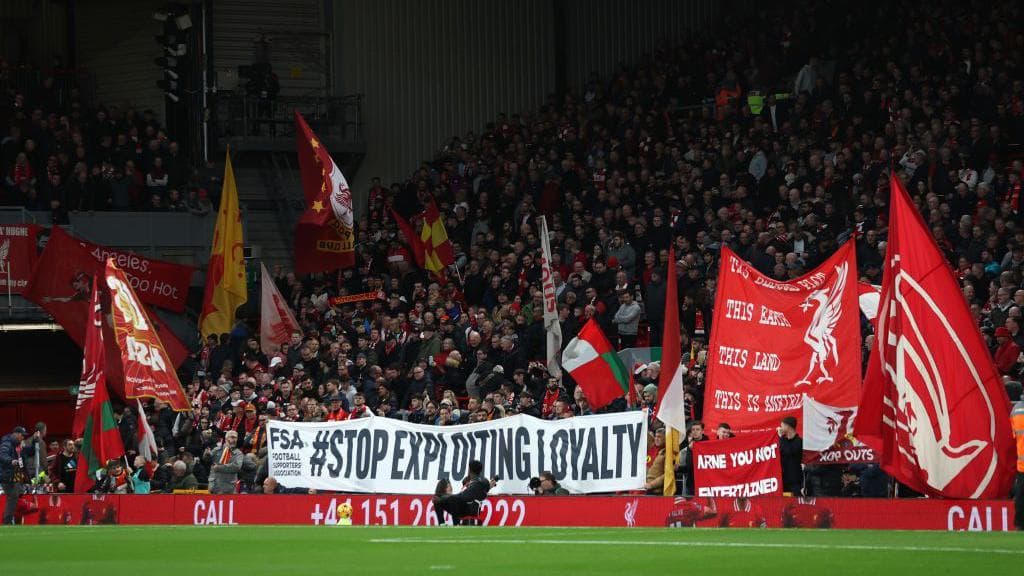
Image caption,
The Football Supporters Association has been running the Stop Exploiting Loyalty campaign against ticket prices for the last two seasons, with fans groups from all 20 Premier League clubs taking part
Liverpool fans have a track record of success with protests - when a mass walkout was organised against a plan to raise general admission prices to £77 in 2016, the club's owners backed down.
But the Reds' decision to increase prices over multiple years is unprecedented - and has led to concern among fans of other clubs that similar policies could be coming their way later down the line.
"It is a concern [for fans of other clubs] because we know the clubs talk to each other and set their prices based on what others are doing", says Thomas Concannon, Premier League network manager at the Football Supporters Association.
"Knowing that prices are going up for three years is particularly worrying in terms of engagement – is [clubs and fans having a dialogue about ticket prices] effectively being removed from the agenda for the next three years? We don't think that's right, this should be an ongoing conversation.
"There needs to be some pushback. This is something we absolutely support."
Protests regarding ticket policy have significantly increased among fans of Premier League clubs in recent years.
Some focus on overall prices, while others - at Manchester United and Manchester City, for example - have been against the moving of fans from one area of the stadium to another in order to accommodate an increase in higher-priced hospitality seats.
In some cases, like at Tottenham Hotspur and Nottingham Forest, a reduction in concessionary-priced seating for young people or the elderly has also drawn ire.
"Protests are becoming a more common thing and that can't be good for the league", Concannon says. "Fans are protesting because things are changing in football and not for the good of the supporters.
"This is volunteers giving up their time, fighting for what they believe in, for the good of the community that is their football club. Nobody wants to have to do that.
"Nobody wants to see their fanbase price out and replaced by people who are happy to pay whatever the higher prices are.
"Supporters should get behind this, whether you're a Liverpool fan or not. We must protect what is ultimately ours."
Share this article
Les supporters protestent parce que le club veut augmenter les prix des billets pendant les trois prochaines saisons, en suivant l’inflation. Ils estiment que cette décision ignore une opposition massive et risque d’écarter les fans les plus fidèles. Spirit of Shankly affirme que le club ne devrait pas considérer les supporters comme une simple source de revenus.
Liverpool a annoncé que les abonnements augmenteront de 21,50 à 27 £ la saison prochaine. Les billets à l’unité pour les non-abonnés grimperont de 1,25 à 1,75 £. À terme, certains supporters pourraient payer environ 100 £ de plus pour leur abonnement d’ici 2028.
La campagne 'not a pound in the ground' demande aux supporters de dépenser leur argent à l’extérieur du stade plutôt que d’acheter nourriture et boissons à l’intérieur d’Anfield. C’est la première action d’une série de protestations contre la hausse des tarifs. Spirit of Shankly veut ainsi exercer une pression visible sur le club.
Oui, car les autres clubs pourraient s’en inspirer pour fixer leurs propres tarifs. La Football Supporters Association explique que les clubs se parlent et comparent souvent leurs prix. C’est pourquoi une hausse annoncée sur plusieurs années pourrait créer un précédent dans tout le championnat.
Liverpool explique que ses coûts d’exploitation ont fortement augmenté. Le club cite la hausse des coûts liés aux jours de match, aux services publics, aux taxes professionnelles et aux salaires hors joueurs. Les supporters, eux, ne jugent pas cette justification suffisante pour des augmentations sur plusieurs années.



See every story in News — including breaking news and analysis.