Sports
Report Milan want Gabriel Jesus from Arsenal
Milan reportedly wants to sign Arsenal's Gabriel Jesus for next season.
Yahoo Sports1 min read
The NCAA Tournament will expand to 76 teams, significantly impacting job security for college coaches. This change marks a major evolution in the tournament's 90-year history.
The NCAA Tournament will turn 90 years old at the end of this decade in 2029. It's worth taking the time to recall how much this event has evolved. The expansion to 76 teams in March Madness will create profound changes in the college basketball industry. One piece of the puzzle is that job security will decrease for coaches.
The first NCAA Tournament back in 1939 was an eight-team event. The term "Elite Eight" didn't exist back then, much as the "Sweet 16" wasn't even a concept. Those labels came much later. The "Final Four" was an event in the sense that the NCAA gathered the last four teams at a neutral site to decide the champion of the tournament, but the actual Final Four label wasn't part of NCAA branding until 1982, when a courtside banner in New Orleans used those words. The 1981 NCAA Tournament ended in Philadelphia. The courtside banner for that weekend in Philly used the term "basketball finals."
This was a very small and humble event at the beginning.
The NCAA Tournament expanded from 8 to 16 teams in 1951, quickly followed by an increase to 22 in 1953. The tournament had 22 to 25 teams for most years (it's weird that the number didn't hold steady every year) for the next few decades.
In 1974, ACC powerhouses North Carolina State and Maryland met in the ACC Tournament final. Back then, only tournament champions and independents went to the still-small NCAA Tournament field. Maryland, in modern times, would have been a No. 1 seed. Back then, the Terrapins missed the NCAA Tournament entirely because they lost to NC State, which eventually won the national title that year. The 1974 ACC final became the moment which completely changed the minds of college basketball's overlords. They realized how dumb it was that great teams weren't allowed to compete in the NCAA Tournament. There was money to be made and television publicity to be gained.
The period of 1979 through 1984 was the transitional phase for the NCAA Tournament after its 1974 epiphany. The Tournament grew to 40 teams in 1979 and then to 48 and, in 1984, 53 teams. Steady upward expansion had taken off. Moreover, in 1982 -- the first year CBS covered the NCAA Tournament after many years on NBC (through 1981) -- Brent Musburger used the term "March Madness" on air, leading the NCAA to eventually acquire the copyright from the state of Illinois, which had used it for its high school championship tournament.
This was the year the NCAA Tournament finally expanded to 64 teams, with 16 teams in every region. With 53 teams in 1984, some teams still had first-round byes. The 64-team field was the clean bracket with every region being equal and no byes. It remains for most Americans the way the NCAA Tournament should always be. It never should have been touched.
The NCAA Tournament just couldn't resist adding one game. The field expanded from 64 to 65. Northwestern State beat Winthrop in the first-ever 16-seed play-in game.
The field expanded from 65 to 68, with the First Four being born: Two 16-seed play-in games and two bubble play-ins between 11 or 12 seeds. Now, 15 years later, we have expansion to 76 and 12 play-in games, six with 15 or 16 seeds and six with bubble teams.
We walked you through all these changes to underscore a simple point: Missing the NCAA Tournament was easy, and making it was very, very hard, for a long time. The NCAA Tournament, starting in 1939, lasted nearly 50 years with fewer than 54 teams. It went 40 years with fewer than 41 teams. It was hard to get in for roughly half of the event's now-87-year history. Only in the mid-1980s, with the expansion to 64, did March Madness become more widely accessible. Now, however, at 76, we are going to see genuinely mediocre teams get in. The value of making the NCAA Tournament has been diminished, but the flip side is that the humiliation of missing a 76-team March Madness field will now be felt much more intensely.
If, in the past, a coach had four years to make the NCAA Tournament at a given job, that window will certainly narrow to three, maybe two, seasons. The bar will be raised -- and rightly so. You will see fewer high-major schools hang onto coaches for five or more years without an NCAA Tournament berth. Coaches have wanted expansion precisely so it's easier for them to coach in March Madness, but the tradeoff is that if they miss, they will pay a more severe price. Job security exists only if coaches make the 76-team field with regularity. No more excuses.
Contact/Follow@College_Wireon X and@College_Wireson Threads. Like our page onFacebookto follow ongoing coverage of college sports news, notes, and opinions.
This article originally appeared on College Sports Wire: March Madness expansion means hotter seats for coaches
The expansion to 76 teams is expected to decrease job security for college coaches as competition intensifies.
The first NCAA Tournament was held in 1939 with only eight teams participating.
The term 'Final Four' was officially branded by the NCAA in 1982 during a tournament held in New Orleans.
The NCAA Tournament has evolved from an eight-team event in 1939 to a 76-team format, introducing concepts like the 'Elite Eight' and 'Sweet 16' over time.
Milan reportedly wants to sign Arsenal's Gabriel Jesus for next season.

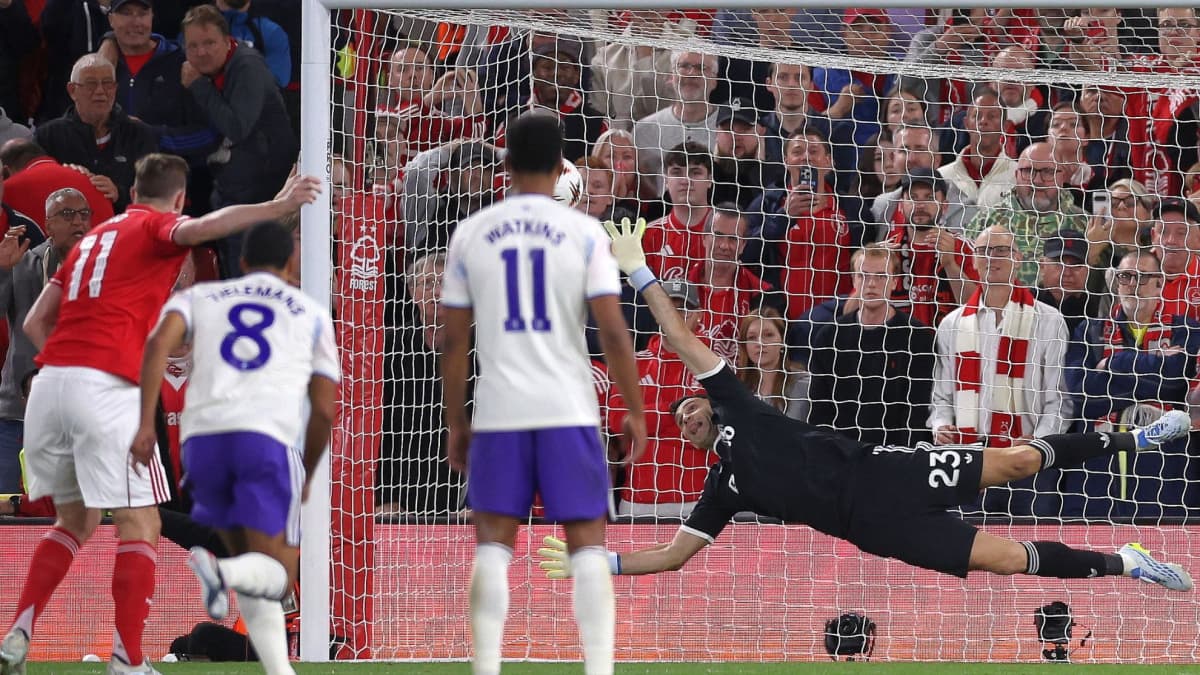
El Nottingham Forest se lleva la victoria 1-0 sobre el Aston Villa con un penalti de Chris Wood.
See every story in Sports — including breaking news and analysis.