
Sports
England v Wales: Women’s Six Nations rugby union – live
Catch the live updates for England vs Wales in the Women's Six Nations!
The Guardian Sport1 min read
The Jerusalem Marathon successfully took place after a month of conflict, showcasing the city's resilience. Participants are already looking forward to next year's event.
Runners make their way uphill toward Jaffa Gate, passing beneath the Tower of David’s iconic walls. (photo credit: GIL LEWINSKY)
This spirit of persistence is perhaps why, even with exhausted legs, many are already thinking about next year.
The finish line appears almost suddenly.
Along Sderot Ben Zvi, just beside Sacher Park, the final uphill is behind you. The road flattens. Your legs are heavy, your heart rate pushing its upper limits – but it no longer matters. Around you, strangers: Jerusalemites, volunteers, runners call out in Hebrew and English: “You can do it.” “Just a little more.”
You turn into the final stretch. Moments later, it’s over.
Another finisher crosses the line. Soon, they are met by loved ones.
Only weeks earlier, it wasn’t clear if the race would take place at all.
Runners in the 2026 Jerusalem Marathon line up to race. (credit: GIL LEWINSKY)
Jerusalem had been living through what many were already calling the Second Iran War. Rocket sirens turned routine runs into bomb shelter calculations: how far to the nearest shelter, how long between alerts. Sleep schedules collapsed. Reserve duty orders came in waves. The marathon itself was postponed to the latest possible date, and even then, uncertainty lingered.
Race morning did not feel like previous years.
AT 5:30 a.m., outside the Jerusalem Gate Hotel near the Central Bus Station, my day began with runners gathered quietly in the dark. On the walk toward Sacher Park, conversations were brief but revealing: a 21-year-old from Samaria simply glad to run; a Jerusalemite in his 40s relieved, if only temporarily, by the ceasefire.
Near the park’s entrance, a small group stopped at a tefillin stand for a final prayer.
Inside the park, the usual marathon atmosphere was there but altered, thanks to Home Front Command instructions. No dense crowds allowed; in fact, no one was allowed to loiter. Running vendor stands were mostly absent, with open space replacing the familiar congestion.
The exception was the Elite Turkish Coffee booth. Runners were gathered for their pre-run caffeine rush. In fact, the booth is a tradition and appears in many runs across the country. Here, runners were chit-chatting, others were stretching in the park grounds nearby.
Soon after, runners headed to the starting corrals, and here confusion crept in: Runners were called forward by numbers rather than colors, delaying groups and raising quiet frustration. What does “2” mean when you are yellow? Eventually, everyone ran together regardless of their color.
Then, a voice over the loudspeaker dedicated the race to soldiers and reservists on the frontlines.
Moments later, the marathon began.
The first kilometer set the tone.
Through Givat Ram, the route climbed immediately, and many runners felt it. Watches buzzed with heart-rate warnings. A risk of a heart-rate spike was real, but it was just the beginning. The descent toward Nahlaot offered brief relief, as cheers echoed through the underpass, but the hills returned just as quickly. By Bezalel Street, some runners had already slowed to a walk, pacing themselves rather than pushing.
Jerusalem does not offer easy miles. But it offers something else as one runs through neighborhoods of culture and history.
Running through the Old City changed the rhythm entirely.
Through Jaffa Gate, into the Armenian Quarter, the noise softened. Footsteps echoed against stone that has carried centuries of history. Some runners fell silent. Others, myself included, began to sing “Jerusalem of Gold” through the narrow streets. Another runner, almost to himself, said, “Thank God we’re here.” Another encouraged his running partner: “We are halfway there, we got this far; we can do the rest, yalla!”
FOR MANY, just reaching the starting line this year had been uncertain.
In the months leading up to the race, injuries, disrupted routines, and the strain of war reshaped preparation. Since October 2023, and including two wars with Iran, running has not been the same in this country. Many had to adjust their routines, especially around long runs, to adapt to the war-related climate.
Years of stress impacts can easily challenge a normal running routine. Some runners returned only recently after long breaks forced by circumstance. Some were in Lebanon, others in Gaza. Others arrived without knowing what distance they would ultimately run, as last-minute changes due to an incoming dust storm caused the cancellation of the full marathon route.
In my case, this would be my first race in Israel since breaking personal records in the city’s 21 km. half-marathon last year. In 2018, an unfit me stumbled upon marathon runners on the capital’s streets, who inspired me to become a runner. Since it was Jerusalem, I would not have it any other way. I would take part, regardless of war challenges. The only question was the distance. I chose the 10 km. route.
Even after finishing this year, small inconsistencies remained, results mismatched, distances unclear, with marathoners running the half, and everyone running earlier in the day, racing as a dust storm would blow in. Reminders of an event held together under pressure.
But those details felt secondary.
BY THE time the route circled back through Rehavia and Sderot Ben Zvi, the meaning of the race had shifted.
This was never just about pace and shattering records, especially after a month of war.
It was about showing up.
As runners crossed the finish line, collected a medal, and exchanged glances with strangers, there was a quiet understanding. The city had been through something. So had the people running through it.
The Jerusalem Municipality affirmed, “Against the backdrop of the complex security situation, ongoing operational intensity, and despite the heat, thousands of IDF soldiers – regular service, reservists, and career personnel – took part in today’s marathon. Despite the challenges, they chose to participate, running shoulder to shoulder and demonstrating a spirit of determination and unity.
“Their participation expresses, more than anything, the Israeli spirit that beats within us – a spirit that does not break or stop, but continues forward even in difficult times.”
THIS YEAR, a race through Jerusalem and the treasures it contains felt less like a competition and more like a statement – that even after weeks of disruption, of sirens, of uncertainty, the city still finds a way forward. The thousands who ultimately took part are a testament to this resilience.
And this spirit of persistence is perhaps why, even with exhausted legs, many are already thinking about next year.
Maybe even the full marathon.
The Jerusalem Marathon took place successfully despite the recent month of war, highlighting the city's resilience.
The atmosphere was one of persistence and determination, with many runners motivated to participate despite challenges.
Yes, many participants are already thinking about and planning for next year's marathon.
Runners made their way uphill toward Jaffa Gate, passing beneath the Tower of David's iconic walls.
Catch the live updates for England vs Wales in the Women's Six Nations!
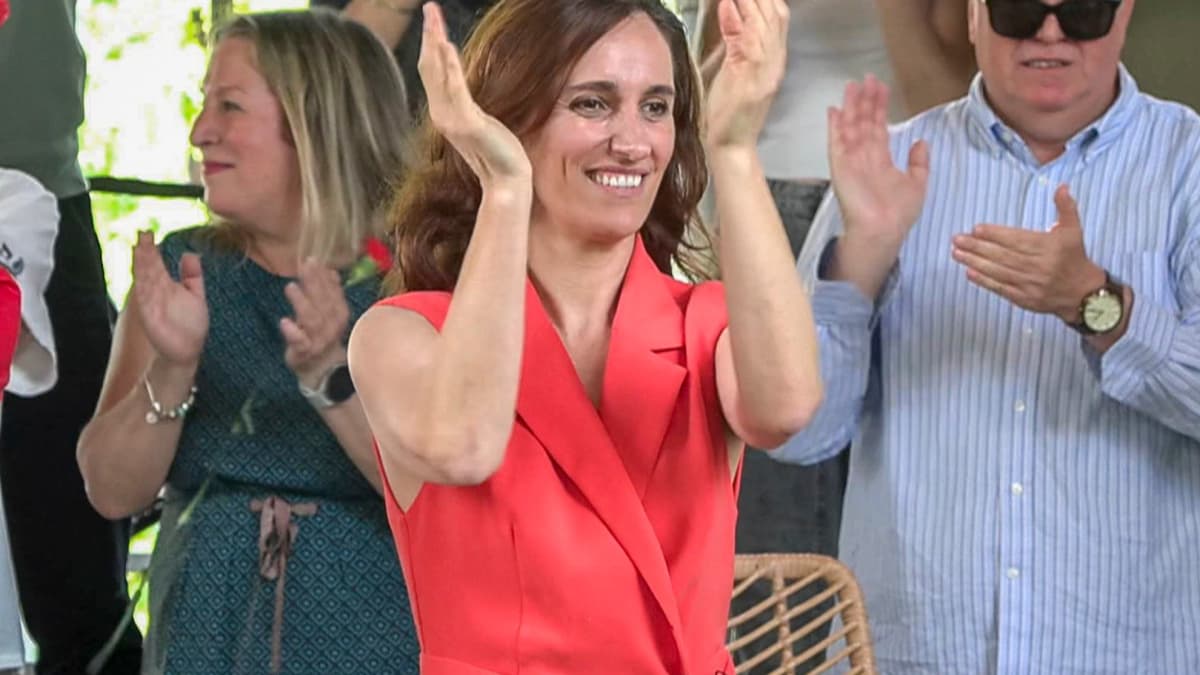
Mónica García quiere ser presidenta de la Comunidad de Madrid y desafía a Ayuso.
Rangers squad wants to give Tavernier the perfect send-off with a title win.
Check out the Jets' picks from Day 3 of the 2026 NFL Draft!
Napoli's coach says Inter Milan can win two trophies this year, unlike last season.
Rams coach Sean McVay acknowledges he was 'grumpy' after selecting Ty Simpson.
See every story in Sports — including breaking news and analysis.