Soccer
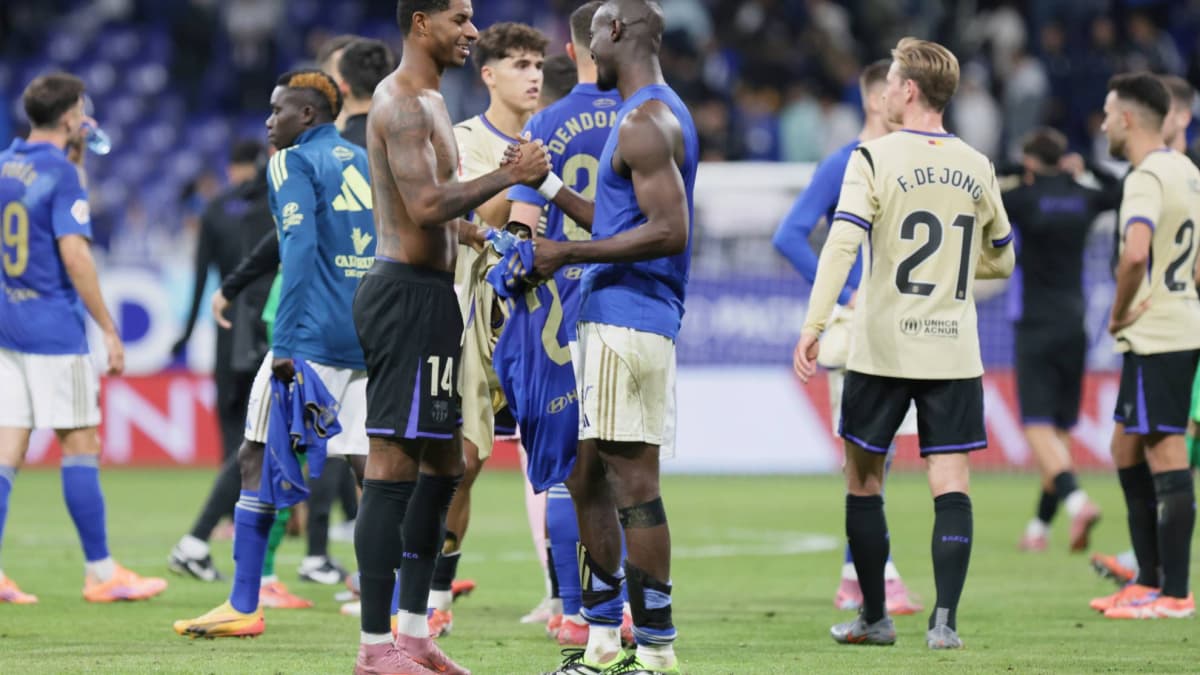
Condenado a nueve meses de prisión un aficionado por insultos racistas a Rashford
Condenan a un aficionado a 9 meses de prisión por insultos racistas a Rashford
Marca1 min read
NCAA power conferences are facing rapidly increasing costs, impacting roster management. G6 schools struggle to keep pace financially.
COLUMBUS, OHIO - APRIL 18: Ohio State Buckeyes head coach Ryan Day enters Ohio Stadium prior to the Ohio State Spring Football Game on April 18, 2026 in Columbus, Ohio. (Photo by Ben Jackson/Getty Images) | Getty Images
Financing isn’t just an issue for G6 (few of which will keep pace), the power conferences are facing rapidly increasing costs.
Also see:
Program reserves were wiped out during Covid as most had to look to the University for assistance, and pay back the University the following years.
Coaching staff cost has skyrocketed. It isn’t just the salaries of the top coaches on the staff – after the NCAA lifted the limit to the number of on-field coaches, programs added staff specialists for each position. Now a coach can miss a practice to hit the recruiting trail or watch tape and prep a game plan for the next opponent, and still have his assistants coaching players. Between the competitive salaries and comparable workload, programs can now attract quality offensive and defensive coordinators from the NFL. OSU assistant coaching staff is now approaching $15 Million.
The B1G as a whole is starting in the red. In 2024, ½ of the 16 public universities reported a deficit, 4 reported $15+ million deficits. Collectively they reported 2.84 billion in revenue, but expenditures near $3 billion,
The House settlement awarded $2.8 billion in back compensation to athletes. This is being paid by the NCAA and conferences, ultimately coming out of program’s budgets, disproportionately from the power conferences.
Boosters are finding it more satisfying to move their contributions from the program to NIL funds, where they can tie their donations to specific athletes.
Overnight, power conferences needed to fund $20+ million in shared revenue with athletes if they want to keep pace. This is substantial, representing 7.8% to over 15% of reported 2024 B1G Athletic Department revenue.
Fortunately this should only be a short term issue for the B1G. The next B1G contract is expected to nearly double the 2025 payout – this should be more than enough to balance the books (and why programs are willing to run large deficits in the short term).
Athletic Departments will struggle in the short term. ADs will have to make cuts, increase revenue, or borrow from the university to cover 10% to 20% of their current budget until the new broadcast contract is signed.
P4 ADs seem reluctant to eliminate non-revenue sports. Eliminating many varsity sports won’t notably help the AD’s bottom line (eliminating the golf or co-ed pistol team offers little savings), they would need to cut sports with larger rosters and higher expenses, which also tend to be more popular.
OSU President Cater:
“We’ll still have scholarships, we’ll still have programs. Some of those sports may start to look and act a little bit more like a club sport, but yet compete at the Division I level and still travel and still compete.”
Hard to nail down what he means here, I interpret it as deep cuts in non-revenue sports budgets other than scholarships (coaching, equipment, facilities, etc.).
In the same article, writer Mat Brown noted:
“Carter’s argument here lines up with what I’ve heard… from the P4 to the low-majors. It’s time to figure out how to tier your sports, and figure out where you want to go all in, and where you want to offer what is essentially a D-III experience with D-I brands and facilities.”
By “club sport” and “D-III experience” I believe they are referring to minor sports having decreased coaching, lesser facilities, fewer travel perks, etc.
Across the board, all sports can expect some budget cuts, even blue blood football – OSU HC Day was upset his recruiting budget was cut.
The most obvious new revenue source will be selling venue naming rights. For football stadiums, Washington sold their naming rights for 10 years for $41M, PSU 15 years for $50M, Indiana 20 years for $50M. I expect $2M to $5M a year to be a realistic target.
It isn’t limited to venue naming rights, programs have been selling sponsorship of playing surfaces, scoreboards, practice facilities, athlete weight rooms and lounges, and even restaurants in the stadium.
The NCAA will allow programs to place 2 logo patches on uniforms starting in 2026, and an additional logo on equipment (such as a batting helmet).
Notably expanding seating capacity seems to be out. PSU is undertaking a massive stadium makeover to expand use and improve the fan experience without notably changing the capacity. NW is building a new stadium with less capacity.
Programs are instead focusing on maximizing revenue from the current attendees. For decades OSU has increased and decreased capacity by tinkered with the mix of club seats, box seats, and loges to maximize revenue and demand. They just recently added a membership club/restaurant in the stadium which can be reserved on non-game days. Currently in the end zone they’re adding field level suites with premium seating above (if you can call lower end zone seating “premium”). Expect more programs to look at these types of smaller low cost modifications with high return potential.
“Improved fan experience” has been the buzzword among athletic directors. Concerned ticket demand could drop now that all games are broadcasted, programs have been upgrading lighting, sound systems, concessions, restrooms, concourses, and trying to expand traditions to improve the fan experience. This should also increase season ticket demand, which often requires a donation to the athletic department.
NCAAF Roster Management – Part 4. Conference Revenue
Note: this is the third in a four-part series from longtime OTE reader and commenter ProveIt on roster management, revenue sharing, and NIL distribution in our new era of college football. One of these will run every couple days for the next week or two. I’m very grateful to ProveIt for helping us out in the doldrums.
If YOU’D like to have articles like this published, feel free to email them to minnesotawildcat at gmail dot com — I may have a little back-and-forth if needed, but I’ll get them polished up and published here. And, if you’re interested in writing more full-time for OTE, please feel free to contact me at that same email. —MNW
NCAA power conferences are experiencing rapidly increasing costs, which pose significant financial challenges.
Roster management in college football is influenced by financial factors, including the costs associated with maintaining competitive teams.
The G6 refers to the Group of Five conferences in NCAA football, which are struggling to keep pace with the financial demands of the sport.
NIL (Name, Image, Likeness) and revenue sharing are mechanisms that impact how college football programs manage their rosters and finances.
Condenan a un aficionado a 9 meses de prisión por insultos racistas a Rashford
LeBron James discusses his playing style vs. Michael Jordan's
NCAA Tournament Expansion: What It Means for Marquette Basketball
Turkey coach Montella reveals he considered quitting football during the pandemic.
Celtics Coach Mazzulla Shares Surprising Message After Game 5 Loss
Wrexham aims to secure a playoff spot in their last Championship game against Middlesbrough, crucial for their Premier League aspirations. The team, owned by Ryan Reynolds and Rob McElhenney, has achieved remarkable success with three consecutive promotions.
See every story in Sports — including breaking news and analysis.