
SportsFeature
Gen Z is shaking up IndyCar's Millennial, Gen X established order
IndyCar's championship sees a Gen Z takeover with young drivers leading the pack.
ESPN News1 min read
Dr. Ayonna Procter is set to compete in the revival of 'American Gladiators' in June 2025, reflecting on her childhood memories of the show. As a physical therapist in Los Angeles, she joins 23 other contestants in this reboot of the iconic athletic competition.
Mentioned in this story
Dr. Ayonna “Yonnie” Procter stepped onto the set of American Gladiators at Aren’Ice in Cergy, France in June of 2025. She was filled with a sense of surrealism and nostalgia as she looked over at “The Wall” and “Joust,” two events that she grew up watching on TV during the show’s original run.
Now, she was set to compete in its latest revival.
“This whole thing is insane,” Procter thought to herself.
Procter, a Los Angeles-based physical therapist who has worked with several professional athletes, musicians and entertainers, is one of 24 contestants that will be featured in the first season of American Gladiators, a reboot of the athletic competition game show that first aired from 1989-96 and pitted average people referred to as “contenders” against bodybuilders and athletes, or “Gladiators” with cartoonish personalities and names such as Thunder, Turbo, Blaze and Nitro. The show turned into such a pop culture phenomenon in its day that it — according to the Los Angeles Times — outdrew the NFL in some markets at one point.
“This feels like someone just plucked me out of a dream, put me on this grand stage,” Procter told USA TODAY Sports. “It's remarkable that this show is back, right? But it's also it just feels very special to be a part of it.”
Procter has a group chat with three of her former college basketball teammates, where they discuss everything from hoops to life, often just sharing memes with each other. There was one meme in particular that Procter recalled being sent in that chat while she was still under consideration that referred to several popular 90s TV shows.
“Man, you remember these shows?” one of her friends texted. “I remember I wanted to be on 'American Gladiators' so bad.”
Procter knew she couldn’t say anything just yet, all she could think to herself was, “She has no idea.”
The opportunity for American Gladiators came to Procter’s attention through a previous appearance on a similar show, the Titan Games hosted by Dwayne “The Rock” Johnson in 2019. Producers from the Titan Games emailed some of the former competitors informing them that American Gladiators was making a comeback and encouraged them to throw their names in the hat if they had any interest.
Procter originally wasn’t one of the recipients of that email, but it had been forwarded to a group chat with several other former Titan Games participants and she decided from there to just email them herself about her interest in competing. She got a response a few weeks later, which then kicked off a year-long selection process that consisted of seemingly endless rounds of interviews.
But from the moment Procter first heard back, she started preparing.
Dr. Ayonna Procter is a physical therapist based in Los Angeles who has worked with professional athletes, musicians, and entertainers.
'American Gladiators' is set to premiere in June 2025.
Dr. Ayonna Procter will compete in events like 'The Wall' and 'Joust' as part of the competition.
'American Gladiators' became a pop culture phenomenon, even outdrawing the NFL in some markets during its original airing from 1989 to 1996.
IndyCar's championship sees a Gen Z takeover with young drivers leading the pack.

Bournemouth has reached an agreement to appoint Marco Rose as their new head coach, succeeding Andoni Iraola.

Get ready for fantasy women's basketball drafts with rankings and strategies!
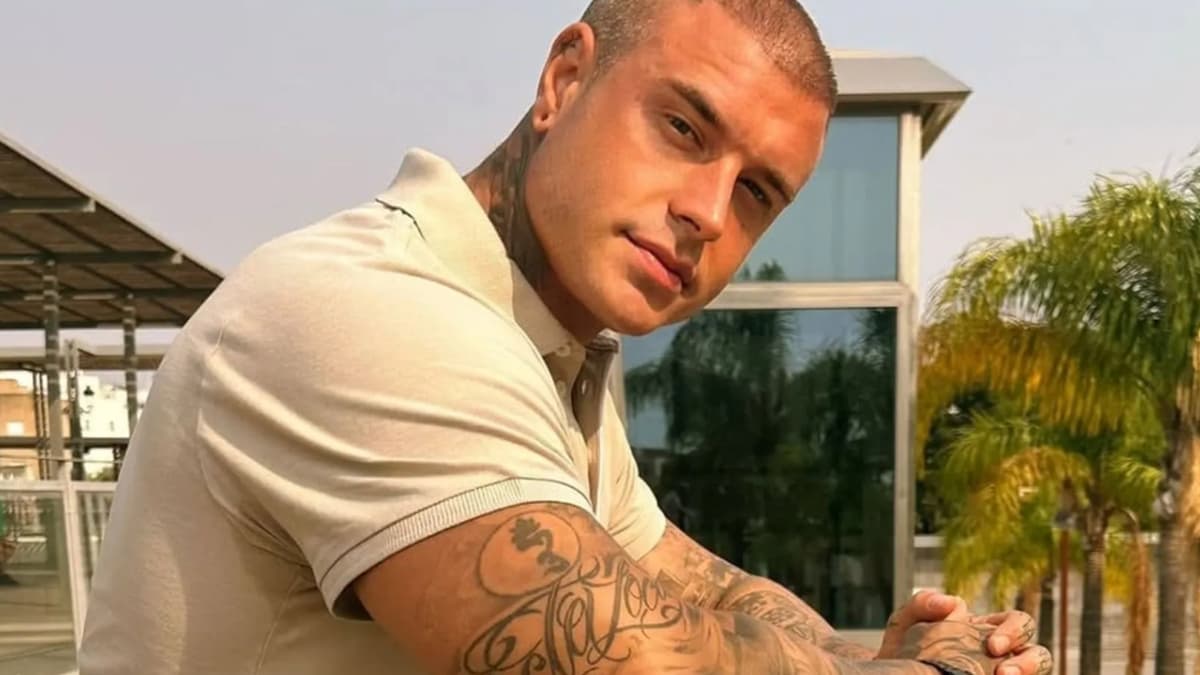

Lionel Messi construye tres viviendas para sus hijos en Castelldefels.

LIV Golf ya no contará con el dinero de Arabia Saudí, según su CEO.
See every story in Sports — including breaking news and analysis.
“If you stay ready you don’t have to get ready, so I was like, ‘Let me just go,’” she said. “But it's kind of hard to shoot at a moving target, or a target that you don't even see. In this case, I wasn't even sure what I was aiming for.”
Procter started training for any scenarios that she might find herself in while competing. She didn’t have pugil sticks laying around to practice jousting, but she could work on core movements to build up her balance and center of gravity. She focused on rotational ball slams for that. She did a lot of gripping and hanging because she figured she’d need a lot of that for events like “The Wall,” where contenders scale a rock-climbing wall while being pursued by the Gladiators whose goal is to throw them off, or “Hang Tough,” in which contenders attempt to swing on hanging gymnastics rings from one platform to another while trying to avoid being taken down by Gladiators.
“I was really just trying to prepare my body for anything,” Procter told USA TODAY Sports. “Because I didn’t know what games I would be a part of.”
The Titan Games held a combine as part of its selection process. Hopefuls went through 12 stations, each a different workout that tested a skill that might be needed on the show. Procter went in cold, but warmed herself up with a couple toe touches and a jump rope before the first station, 40-yard sprints.
As soon as she took off, Procter felt something in the back of her leg.
“That was the first time ever in my life that I had pulled my hamstring,” she said. “... I rehabbed several of them, but I never felt it.”
Procter went through the rest of the combine sure that she wouldn’t make the cut because of her injury, but she was selected to compete on the first season. The pulled hamstring however, limited her to only being able to train her upper body.
This time around for "American Gladiators," an injury-free Procter took advantage of the time she had to train and went into “overdrive” for any prerequisites that she felt she might need.
Dr. Ayonna Procter trained throughout a yearlong selection process for any event she might find herself competing in on the latest revival of American Gladiators.
Procter knew she’d play in the WNBA one day. She just knew it.
Every inch of the walls in her childhood bedroom in Elba, Alabama were filled with posters and cutout magazine clippings of Lisa Leslie, Chamique Holdsclaw, Cynthia Cooper and even a signed poster of Teresa Weatherspoon, Kim Perrot and Ticha Penicheiro.
Year after year, Procter signed up to play basketball but each year, there were never enough girls in Elba, a small town with a population of 6,000, signed up to form a full team. It wasn’t until Procter was 9 or 10 years old when they finally got a team together and the first time she got on the court, she double-dribbled. She traveled, too.
The coaches explained to her why she couldn’t just pick up the ball, or dribble with two hands, and Procter then spent countless hours in her driveway, dribbling with one hand behind her back and working on left-handed layups until she got it right.
“I knew I was going to play for Pat Summitt at Tennessee,” Procter told USA TODAY Sports. “That was the goal.”
Procter made the under-10 all-star team that first year playing organized ball. When they lost 36-6 to Geneva County, it was Procter who scored five of her team’s six points and got a mention in the local newspaper.
But by the time Procter was a junior in high school with no offers or any hints of interest from any colleges, she began to realize playing for the Lady Vols would be a dream deferred. Even smaller schools weren’t looking in her direction.
“What about softball?” Procter’s math teacher suggested her senior year.
Procter had played softball, along with volleyball and every other sport available to girls at her school, except for cheerleading (she was, however, the school mascot). But basketball was the only sport she had ever really thought about playing collegiately until that point.
Her teacher’s daughter had gotten a scholarship to play softball at Alabama Southern Community College, a JUCO in Monroeville, Alabama and he told Procter he could help her get one, too.
Procter got an offer, but all she could think about every time she was at softball practice was basketball. Standing out in Southern heat and humidity, all she wanted to do was go inside a gym. One day, Procter peeked her head into the women’s basketball team practice, introduced herself to the head coach and asked if she could try out.
Even though Procter had missed tryouts, they let her participate in one practice. By the time her sophomore year rolled around, she left softball behind to walk onto the basketball team at Alabama Southern. By the next year, she had earned a basketball scholarship and later signed to play her final two years at the University of West Alabama, a Division II school.
Procter was a backup for her two years playing with the Tigers but by then, her focus had already shifted.
When she was a junior in high school, Procter’s mom asked her what she was thinking of majoring in once she got to college.
“I want to be a sports commentator,” Procter told her.
Procter was thinking about sitting in a chair at ESPN and talking sports all day, but her mom clarified that commentating falls under journalism, which meant a lot of writing — which wasn’t Procter’s strong suit at all.
“What else you got?” Her mom followed up.
Procter thought of becoming a basketball coach, but her mom told her she’d have to start by coaching junior varsity and high school teams, and coaches at that level don’t make a lot of money.
“What else you got?”
Procter knew where this conversation was going.
“Whatever you do Yonnie, I think you should do something where you’re helping people,” she remembers her mom telling her. “In the medical field.”
Procter had no interest in being a nurse, and she didn’t feel like she could become a doctor. But when she filled out three different career assessment tests at her school, the one common thread between all of the results was physical therapist.
She didn’t know exactly what that was, but nonetheless determined that would be a job that could both satisfy her mom and bring fulfillment to herself.
“It says physical,” Procter said. “I can do it.”
While neither of her stops at Alabama Southern or West Alabama had physical therapy majors, Procter got herself on track by getting her associate's degree in applied science and bachelor's in biology.
When the time came for Procter to apply for physical therapy school, she got into Alabama State University — the only school she applied to — on her first try.
Despite being two very different things, playing a sport in college and studying to get a doctorate degree do have some similarities. Mainly, they both require a remarkable amount of dedication and commitment.
“I like goals,” Procter said. “... Anything I take on, there's usually a target, and I just try to try to work my way towards the target. So PT, school felt like that.”
When Procter played basketball, she practiced six days a week, not including the time she spent in the weight room, attending meetings and watching film. But becoming a doctor of physical therapy was a different beast.
She rarely had time to work out. Instead, Procter’s days were spent with her head in the books. She’d spend all day in class, get home and start studying on the whiteboard in her kitchen with her notes scattered all over the countertops.
“It was like my whole house was dedicated to getting this degree,” she said. “So I just dreamed of, ‘I can’t wait until this is over.’”
Procter graduated from Alabama State in 2012 and soon after took a job as outpatient orthopedic physical therapist in Yonkers, New York. Two years later, she began to take traveling assignments that took her everywhere from Kingston, New York to Houston, to multiple stops in small towns across Alabama, Arizona and California.
Then, in 2017, she got a call.
Grammy-winning Hip-hop artist 2 Chainz had broken his leg just 11 days before he was scheduled to start his Pretty Girls Like Trap Music Tour, and he had refused to cancel. His manager had gotten Procter’s number from a mutual connection and reached out to see if she could treat him while on tour for over 30 shows and nearly two months.
Procter went from traveling therapy to being on call 24 hours a day with a private, one-on-one client. And for the first time in her career, she was in an environment that wasn’t completely controlled. They would do his therapy in the back of the tour bus, backstage, on a private jet or at the Ritz Carlton.
“I learned a lot about myself, though. I really did,” she said. “I learned that I can handle hard things, that I can manage someone's individual care.”
The assumption is always that working with high-profile clients will immediately open doors, but instead of an influx of business, or boom in popularity, working with 2 Chainz gave Procter a newfound confidence in herself.
Procter was 2 Chainz’s point of contact for his doctors that were calling to check in on his progress and independently managed his entire plan of care. Everything ran through her.
“These were individuals with access to everything… infinite resources,” she said. “And they trusted ME. That experience reinforced that I was on the right path and capable of continuing to grow as a clinician.”
Procter first moved to LA in 2019 on a traveling contract, but the COVID-19 pandemic began shortly after the contract ended and with it, everything came to a standstill. Flights were cancelled, businesses were closed and life itself was put on pause as the virus tore through the world and resulted in the deaths of over 1.2 million people in the U.S., according to the CDC.
But after a while, one-by-one, Procter started to get calls.
“Are you still in LA? I broke my arm.”
“Are you still in LA? I need help.”
Procter would treat them, and they would in turn refer her to their friends, and so on. Soon, she had built a working caseload of patients for herself.
But early on, when she was still settling into LA, Procter had an interaction that had her looking inward in a way that she never thought to before.
“Why are you so happy?” Procter recalls one person asking in an angry, mocking tone. “Why are you always smiling?”
Procter, who had just woken up, didn’t know what to say.
“What am I to be upset about?” she replied.
Everything Procter does, she does so with joy. No matter if it’s treating clients, posting an Instagram reel of herself doing sliding pushups with one hand on a penny board and the other on a dumbbell, playing pickleball — one of her latest obsessions — or competing on shows like American Gladiators and the Titan Games. It’s not something she’s usually cognizant of, it’s just who she is.
“I have a heart of gratitude,” Procter said. “I'm very grateful for life. I'm grateful for my upbringing, I'm grateful for my mind. Like, how I think about things. I'm grateful for how I'm received. … Truly, I think it comes from within.”
Procter admitted that doesn’t always have a smile painted on her face, sometimes it is a conscious choice for her to be happy. But most times, she doesn’t have to make that choice.
“This is my baseline,” she said. “This is where I’m operating from. … You can influence the rooms that you walk in, and I think you can do so in a negative way or in a positive way. And I do feel like I'm conscious of that power, or that gift, and I choose to do it in a positive way.”
This article originally appeared on USA TODAY: Ayonna Procter's journey from college hoops to 'American Gladiators'