Sports
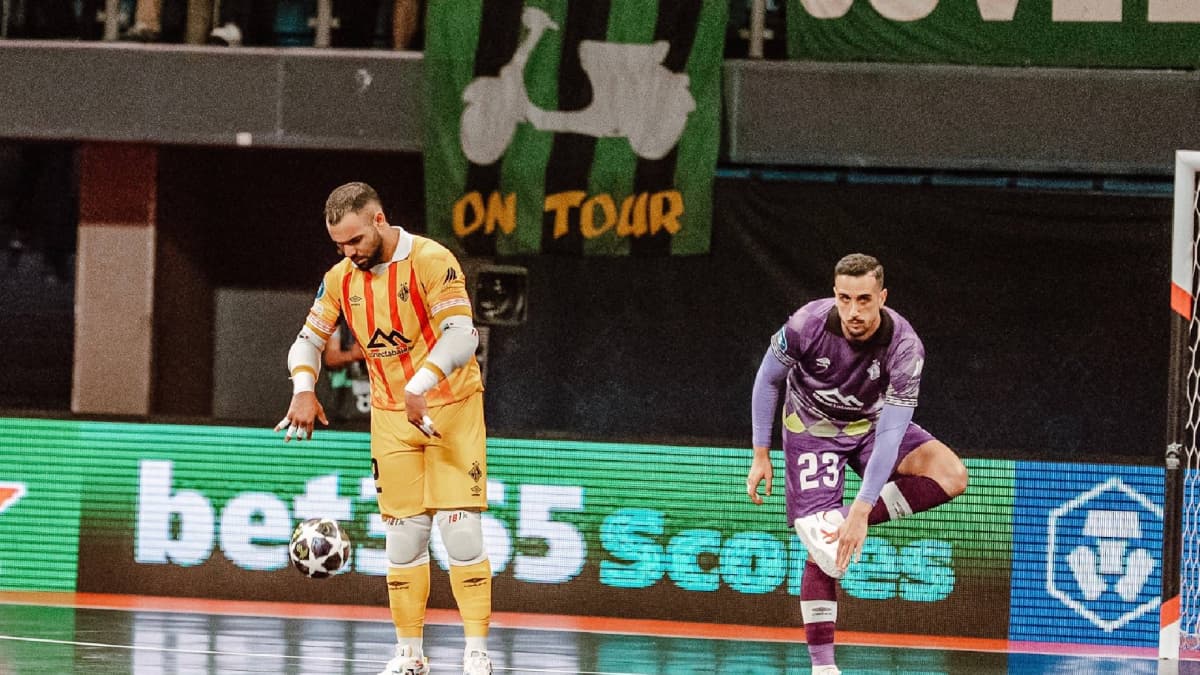
El Sporting gana la Champions y acaba con la hegemonía del Palma
El Sporting se consagra campeón de la Champions de Fútbol Sala tras vencer 2-0 al Palma, poniendo fin a su hegemonía en Illes Balears.
Marca1 min read
Terry Clark has been appointed as the new CEO of the PGA of America, following a tumultuous leadership period. He aims to enhance the PGA's major events and address challenges like the ball rollback and the recent silence of President Don Rea Jr.
Mentioned in this story
In February, the PGA of America announced its new CEO would be Terry Clark, a healthcare industry executive who had served as an independent director on the association’s board since 2024. Clark arrived at a bumpy time for the organization. The previous chief executive, Derek Sprague, resigned after less than a year in the job, and the PGA’s president, Don Rea Jr., drew intense criticism for his public comments on several occasions during his first year in office.
In his first in-depth interview since he started work on March 2, Clark discusses the challenges facing the PGA of America, including elevating the image of its premier events, keeping pace in the cash race, taking sides on the ball rollback and the curious silencing of President Rea.
You spent just over a year as an independent member of the PGA of America's board during a rocky period for the organization. What made you accept the CEO position?
What attracted me most was what I think is a really interesting place, the intersection of the professional game and the grassroots. When you think of the assets—30,000 PGA professionals, coaches, teachers and operators, they’re the tip of the spear around the recreational game. And combine it with some great assets in the PGA Championship and Ryder Cup. I look at it as this great alignment of assets that probably haven't fully operated the way they could. That's a great opportunity, if you had more focus around where you're going to go. So I felt like I had a unique opportunity to actually help.
Terry Clark was named CEO of the PGA of America on Feb. 4, 2026, and assumed the role on March 2.
You were most recently the C****hief Marketing Officer at United Health Group and spent a lot of dollars in golf. What part of that job prepares you for this one?
Let me tell you a little about myself and what motivates me because I think it goes to what prepares me. I think of myself as an enterprise operator with entrepreneurial DNA. So I've been at big and small. United Health Group had 400,000 employees. That teaches you how to make things very localized but at scale, and the ability to lead large organizations. We were really focused around product, experience, positioning and a growth mindset. What makes me tick is, what is the data? What is the insight? How do you build products and services around what your constituents want?
Terry Clark, a healthcare industry executive, became the CEO of the PGA of America on March 2, 2026.
Clark is addressing the need to elevate the image of the PGA's premier events, the ball rollback issue, and the recent controversies surrounding President Don Rea Jr.
Derek Sprague resigned after less than a year in the role, amid a challenging period for the organization.
Clark aims to align the PGA's assets better, enhance the professional game, and improve grassroots engagement in golf.
El Sporting se consagra campeón de la Champions de Fútbol Sala tras vencer 2-0 al Palma, poniendo fin a su hegemonía en Illes Balears.

Chargers' Akheem Mesidor Shares His Rookie Minicamp Prep
Ros Canter makes history with third Badminton win, just months after childbirth.
Gus Atkinson suffers concussion during County Championship, raising concerns for England's bowling.

R.J. Day, son of Ohio State coach, commits to Northwestern!
Callum Parkinson led Durham to victory over Worcestershire with a remarkable 5-13 in the second innings. Durham chased down a target of 143, finishing at 143-1.
See every story in Sports — including breaking news and analysis.
I also worked for my dad's family business and around nonprofit work, through board service. Before United, I worked for IAC, Barry Diller's company — publications, Expedia, Ticketmaster, companies like that. I love industries that were being transformed. I feel like we're in one, too. It's an incredible time for golf but it can be so much better. This is a 100-plus year organization. We’ve got to perform for today but we’ve got to transform for tomorrow. What I bring is the discipline, really believing in and getting to better by being very planful and strategic about the future, the few things that we're going to do really, really well. We've got great people. Just need a little focus around how we raise the bar and on what's going to matter in the future.
Your press conference Wednesday at Aronimink will really be your introduction to the broader golf world. What kind of message are you aiming to send?
It's a chance for people to get to know me a little bit more, but I want to give reflections on 75 days in, or whatever I am. Some perspectives on where we are and where I see the real strengths. I'm going to talk about three primary areas. I want to focus on the member. That’s really important—career pathing, opportunities for the future, training.
Then we're going to talk about the opportunity. Everyone says ’Grow the game’, but what does that mean? What are the programs we're doing with our membership to get at that? Golf is strong right now but I don't think that can be translated to complacency. You got to keep getting at it, so we’ll talk about those initiatives we're looking at on growing the game.
And third is a focus on what I call championship excellence. How do we take the assets we have and make them better? I don't say that meaning commercialize them more, sell more tickets at higher prices, or whatever. That isn't it. I look at every part of those and say, where are we and where do we want to go? How are we focused around that long term plan of making those assets better? Because they are the fuel that allows us to do so much more locally. That's what you’ve got to be honest with—those are accelerators to do more with membership and growing the game.
Who will be sitting alongside you during that press conference next week?
I don't know yet.
The PGA of America president is usually part of that media event but it's been reported that your current president, Don Rea Jr., won't even be on site for the tournament. He was obviously a lightning rod for criticism several times last year. Has he been muzzled by the PGA of America?
Okay, so let me answer your first point. Don will not be on stage with me, I know that. We've got Don operating in a different lane right now that's very, very focused around membership. I'm the one that should be projecting the external voice of the organization around things like this.
But has he been muzzled?
Don has been asked to specifically focus on those non-public facing membership responsibilities.
And he's happy with that role?
I can't comment for Don. I talk to Don all the time. He is still very active in his work with the board. Part of me deciding to come in was going to be that I've got specific support to be able to to do the job, and so I think part of that is I should be the spokesperson at this event.
Is the PGA of America's governance model fit for purpose? By which I mean having the CEO, who usually has solid business credentials, report to a rotating president, who does not. Is that up for review?
We're constantly looking at how do we get the best governance. There's been a lot of discussion around this. This is a membership organization and we're trying to take advantage of that real strength, but organizations need to evolve over time. One of the things we've done even when I was on the board is focus around clarity. How do you get to faster decision-making? Whose responsibility is that decision-making? Greater organizational alignment as a whole, and the role of the board around strategy. We're always looking at how we make that stronger. That doesn’t mean having a 22-person board is wrong. I actually think there's a real advantage to if you've got an organization as large as this, if I've got the right roles and responsibilities.
I've got my lane. They've hired me to run the day-to-day business, and the people inside are allowing me to do that. But there has been a lot of work to just make sure we've got that clarity. When I took this role, I had high confidence that I could succeed in the environment.
How do you think the organization handled the fallout over fan behavior at the Ryder Cup**?**
If I just step back for a second, the Ryder Cup is one of the truly great properties in all of global sports and I believe that the PGA of America has to be a very strong steward of it. I've read all the opinions. I actually think that there were a lot of things that worked well, but at the same time I'd be foolish to think there aren't ways we could do better. That's my big push. You mentioned fan behavior. There’s an opportunity to look at that and be better. No one sits here and says that’s a proud moment. How do you make that better? Not just for Ryder Cup but for your championships overall.
Europe has an infrastructure around its Ryder Cup team that its players are familiar with even between matches. It’s not cobbled together every two years. Is creating something similar on the U.S. side a priority for you?
It is, yeah. I mean, I’m not going to be the golf expert but I can help with organization, focus and discipline. It's one of the areas I'm really excited to work on with Jim [Furyk, the U.S. team captain]. How we create greater continuity between Ryder Cups instead of some things you might feel like you're starting over with? How do we look at analytics? How do we take institutional learning and have that connect across? How do we think about an operating structure that is more year round? One of the reasons I get excited about Jim in the role is because he's absolutely focused on how to make the Ryder Cup even stronger in the future.
Your predecessor as CEO, Derek Sprague, suggested that the PGA of America was not aligned with the governing bodies on their determination to take action on golf ball distance. What is the stance going to be on your watch?
What I would tell you is I've been really impressed with the governing bodies and the work that they're doing to hear our perspectives. We've been pretty consistent in trying to make sure that recreational golfers are not harmed in this. Golf is really good right now. I think they've listened and they've been very focused around understanding the impact on recreational golfers. I'm still trying to understand that a little more, so I'm continuing to work with them to figure out solutions. But we're in a little bit of wait and see right now.
But do you see a scenario in which three majors are played with one golf ball and yours is played with a different ball?
I think you're getting way ahead. I don't even know how to answer that without knowing where things are.
The PGA Championship is widely perceived as fourth among four majors. How do you plan to address that perception?
It's a good one. I'm a pretty competitive guy. I like to focus around how you make things better, no matter where you are. So, no defending the status quo. No ‘Everything is fine!’ We're going to get into how we improve the assets we have. We've got a lot that works in the PGA Championship. We have one of the strongest fields in golf, we've got great international representation, PGA professionals being part of it. We've talked before, identity matters. And I believe that we should really make the PGA Championship continue to feel distinct…
How?
Last weekend I was at the Kentucky Derby. I love to study iconic sports properties and what they've done to create identity, and where we have an opportunity. I've looked at the tennis world. The Australian Open is pretty amazing, what they've done to build a very distinct identity around cultural energy. It still centers on the sport, but has so many other elements wrapped around it. It's opened up new audiences. I'm trying to think of different ways to connect with new audiences and present ourselves differently. Where do we want to go and how do we keep getting closer to that as we move through?
On the subject of where you want to go, would you consider moving the date of the PGA Championship? Does May work or are there too many quality venues that are now out of reach because of the date?
That seems to be a hotbed question this week, I don't know why. You know, I don't put that as a big priority right now. We've got a really good slot. We’ve seen some strength and we're seeing the media side of it and the numbers. We open up some courses and make some of them harder, but not impossible. A lot of people like the identity in that spot. You're not in the middle of summer, you're not being moved by the Olympics. Then there's some who like to translate the identity to more of our marketing, you know, ‘Glory's last shot.’ I don't think creating an identity means you have to go backwards to something you were before. But if people think I'm sitting in a conference room plotting out how to get from May to August, that's not a priority right now.
You’ll announce the purse for the 2026 championship next week. Last year it was $19 million but just six years ago it was $11 million. Is continued growth of the prize fund sustainable or does there need to be a reset in men's professional golf?
I don't know that I would ever say reset. Can it be sustained at the growth levels that you're at? I just don't know the answer to that. There's certainly been a rapid increase in purses but a lot of that is also good for golf, creating great opportunities for the best golfers in the world to play for meaningful dollars.
Do you anticipate the PGA Tour seeking a greater share of the PGA of America's media rights revenue by arguing that your success, and that of the other majors, relies upon its members?
I don't. I mean, we do share our revenue as it relates to the Ryder Cup. That's not one where I’m concentrating time or energy.
Let's project ahead over the next few years. The PGA T****our has $1.5 billion in investment capital to spend. Augusta National has seemingly unlimited resources. The USGA has a healthy balance. Can the PGA of America responsibly invest in two of the games five biggest events while still being a trade association that serves its members?
I believe we're in a really strong position to continue to strengthen those properties from within. I really do. There is so much opportunity to grow those and to keep what really makes them special…
So the championships and the trade association don’t need to become separate entities at some point?
Our organization and our connection to our members and our mission is the exact right organization to help make those events better. We can continue to compete and grow and shape those to really be the best properties in the world by being part of the PGA of America.
Have you found an instructor in Frisco yet?
I have not. I need to. I’ve played so little golf so far, but I'm open to play more. I love the game. At some point I'm going to tell you how much I’ve improved because I really want to take advantage of the many great coaches inside the organization.
This article originally appeared on Golfweek: Q&A with new PGA of America CEO Terry Clark ahead of PGA Championship