
Sports
Brighton boss Hurzeler signs new contract
Brighton head coach Fabian Hurzeler signs new three-year deal until 2029.
Sky Sports1 min read
Colton Hood, a rookie for the Giants, has a unique training background, running up mountains in steel-toed boots. His hard work and determination suggest he will adapt well to the NFL.
Colton Hood rubbed the sleep out of his eyes.
He walked down the hallway to his older brother Khaleb’s room and tapped him on the shoulder to wake him up.
Khaleb groggily looked at his phone — 4:02 a.m.
“Dad said we got 10 minutes,” Colton told him.
They piled into Bengie Hood’s SUV — Colton, Khaleb, and their younger brother, Brandon. The boys all carried black steel-toed work boots.
Bengie steered through the darkness, navigating his family’s summer morning routine on the 40-minute drive from his suburban Atlanta house to Stone Mountain.
Colton, then 12, didn’t bother trying to nap. Bengie’s pep talks wouldn’t allow it.
“None of that crying,” Bengie said. “None of that complaining. If you do it right, we’ll do it light. If you do it wrong, we’ll do it all day long.”
The boys rolled their eyes. But they complied. They had no choice. In Stone Mountain’s empty parking lot, they pulled on two pairs of long socks — to prevent blisters — and laced up their boots. The sky brightened. Humidity set in. Then they started to run.
Colton churned his skinny legs and pounded his heavy boots on a steep, paved section of the mountain trail. Bengie gave them 15 seconds to finish the 50-yard section. Too slow? Too bad. He’d add another rep to his 10-rep plan. He even had them run up the trail backwards.
Some mornings, Colton couldn’t stand all this — his dad’s barking as he ran, the extra weight on his feet that was supposed to make him faster. But he persisted, unfazed — three days a week every summer.
Just like when he held back his vomit while grinding through no-water workouts with Patrick Peterson in Arizona’s 110-degree heat, he is attacking his latest climb with the Giants after NFL teams reduced him to tears by passing on him in Round 1 this year.
The Giants drafted Colton 37th overall out of Tennessee and will give him a shot to earn a starting cornerback job as a rookie. He immediately becomes a critical piece in John Harbaugh’s revamped Giants defense, which could fuel the franchise’s return to glory after a decade-plus of losing.
Harbaugh raved about Colton’s “pit bull” mentality as the new Giants coach seeks an unflappable, long-term No. 1 corner. Will Colton, 21, fill that role despite starting just one season in college?
Colton Hood is a rookie for the Giants known for his rigorous training, including running up mountains in steel-toed boots.
Colton Hood trained by running up mountains in steel-toed boots, showcasing his dedication and toughness.
His unconventional training methods suggest he has the physical and mental toughness needed to succeed in the NFL.
Colton Hood woke up at 4:02 a.m. to train with his older brother Khaleb.
Brighton head coach Fabian Hurzeler signs new three-year deal until 2029.
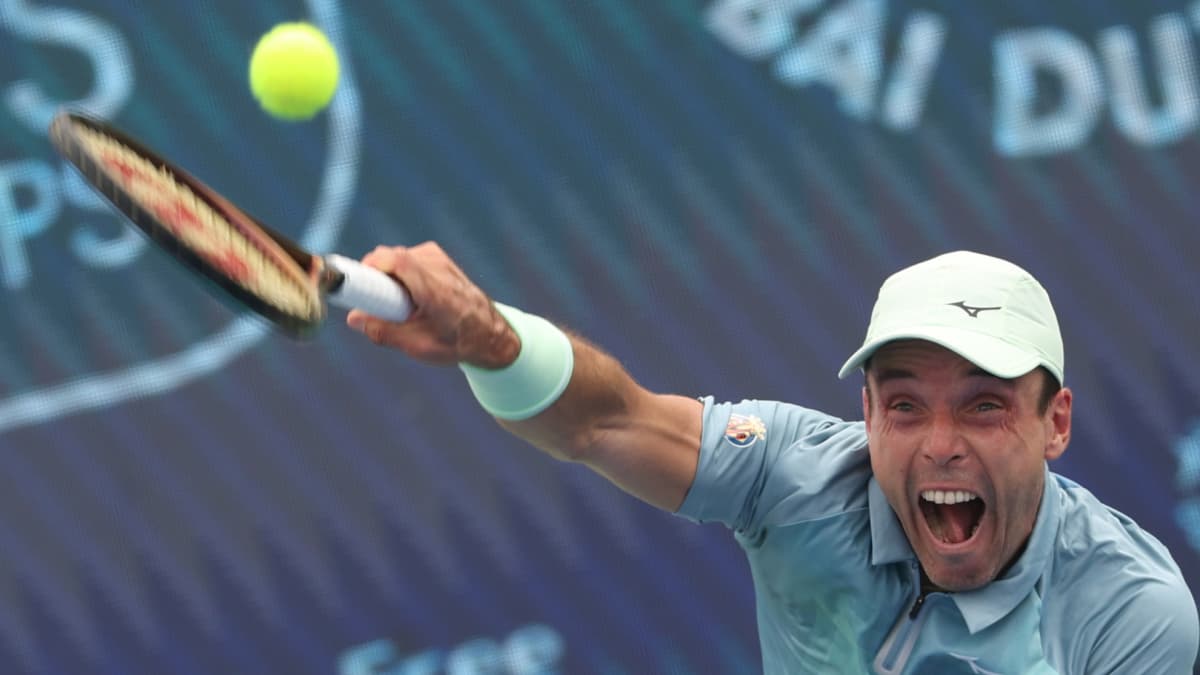
Bautista y Llamas logran las primeras victorias españolas en Roma
Matt Beard's wife alleges bullying by Burnley FC before his death
Join Ryan Shazier for the 'Run for the Black and Gold' charity event on May 15 in Pittsburgh!
FIA Considers Turkish Grand Prix for 2026 Formula 1 Calendar
Milan fans prepare to protest CEO Furlani while owner Cardinale is satisfied with profits.
See every story in Sports — including breaking news and analysis.
Colton Hood
If he does, he’ll know his journey started on Stone Mountain with those steel-toed boots — and with an unrelenting dad who refused to let his sons repeat his egotistical mistakes.
“If it’s hard, you know it’s going to make you better,” Colton told NJ.com. “He wanted us to be great. He wanted us to be better than him. So he pushed us hard. The effort that he put into us ultimately manifested in us putting the hard work in ourselves.”
Colton dribbled toward the backyard hoop and lowered his shoulder.
He plowed into Khaleb — five years older and half a foot taller — and swished a layup.
“Little boy!” Colton screamed, taunting Khaleb.
Even as a scrawny preteen, Colton refused to back down. He battled Khaleb and Brandon, a year Colton’s junior, to see who could get dressed, brush his teeth, climb the stairs, or eat a meal the fastest. He practiced push-ups until he could knock out 100 in a row. He learned Chinese as an 11-year-old at school and relished confusing Khaleb by speaking it at home.
“He made me want to be better,” Khaleb said.
During a youth baseball game, Colton caught a ground ball off his nose. Blood gushed onto his uniform, but he stayed in the game and later won it with an inside-the-park home run.
His uniquely strong-willed personality emerged early. At a family gathering when he was a toddler, he needed to use the bathroom. His aunt offered to help. “No,” he shot back. “I can do all things through Christ who strengthens me.”
Years later, the first time Brandon beat him in a neighborhood foot race, Colton stayed up until 1 a.m., cranking out burpees in the garage to train for his revenge.
Colton watched his mom, Crystal, build her practice as a pediatrician, with Bengie handling the business side while raising Colton and his four younger siblings. (Colton’s older brothers, Khaleb and 29-year-old Benjamin, have a different mother but consider Crystal a second mom.)
The family’s mantra was clear: “The best things in life aren’t just given to you,” Crystal said.
Bengie learned that the hard way — and he told his seven children about all his screw-ups. A high school star, he went to Auburn in the early 1990s to play wide receiver. When coach Pat Dye wanted to move him to cornerback, Bengie bristled: “I don’t play defense. I score touchdowns.” Bengie fell in with a partying crowd, too.
“I’ve never been a drinker,” he said. “But everybody has different vices — and my vice was I liked the girls.”
Bengie’s Auburn career fizzled, and he finished at Division II Morehouse. He dreamed of better football futures for his sons.
He knew it would start with steel-toed boots. Bengie and his younger brother Roderick, who played cornerback in the NFL from 2003-11, wore them while training during high school — all because their dad, Lamar, embraced resourcefulness.
Lamar learned to do that as a talented Black baseball player growing up in rural Alabama in the 1960s. He was forced to use filthy, segregated public bathrooms. His family farmed their own food. His mother worked as a housekeeper for wealthy white people.
But Lamar climbed. He became an electrician for Georgia Power. Every morning, he pulled on his boots.
After Bengie got dusted by other kids at a high school track meet, he complained to his dad: “Man, I thought I was fast. I’m not fast.” Lamar handed him a used pair of size-12 steel-toed boots, three sizes too big. Lamar told his son, “Carry the extra weight now, so you can move faster later.” Bengie started wearing the boots everywhere. Eventually, he felt so light without them that during one race, his foot missed the track’s surface as he sprinted.
New Mexico St Tennessee Football
Colton laced up his first pair around the age of 11 — basic black Walmart boots initially, then more fashionable tan Timberlands.
“Damn, these things are heavy,” he thought.
Bengie put them to use in every setting, always preaching, “You’ve got to wear them if you want to be great. You’ll be the fastest man on whatever field you’re on.”
His boys cranked out 200-meter track sprints in the cold rain, sometimes leaping hurdles. They jumped rope. They did cornerback footwork drills. He brought them to a park and had them backpedal up a hill through tall grass. He found a sand volleyball court and shouted at Colton as he fought a headwind while running across it.
“Don’t you slow down!” Bengie said, his high-pitched voice cracking. “Go hard! See, you chillin’! You still chillin’! You still ain’t goin’ hard!”
On Stone Mountain, where the trailside pines offered minimal shade, Bengie crooned a line from Bill Withers: “Ain’t no sunshine when she’s gone … ”
Sometimes he made his sons end that workout by jogging to the summit. When Colton reached it, he fell to his knees, exhausted, and rested his elbows and forehead against the bare rock, a gorgeous vista behind him. Then Bengie had them run back to the parking lot.
All the while, he yelled, “How many people are out here? How many people want it?” and he reminded the boys of his “12 Ps” saying: “Piss-poor preparation promotes piss-poor performance. Piss-poor performance promotes pain.”
Colton and his brothers rolled their eyes. They whispered to each other: “Dad’s crazy, bro.” They kept running.
“He liked to antagonize us while we were doing it — to get more out of us,” Colton said.
Don’t puke.
That’s what Colton repeated to himself as he, Khaleb and Brandon pushed through on-field drills alongside Peterson under the blazing Scottsdale sun.
The day before, Peterson, the star NFL corner, shocked Colton by detailing the next afternoon’s workout: We won’t drink water, so you better hydrate now. We’re going to push ourselves to the limit.
“I looked at him crazy,” Colton said. “I was like, ‘What you mean no water? It’s 120 degrees out here.’ I was a little bit flabbergasted.”
Still, he abided. Colton almost vomited every time. A few days later, he did barf.
“Just another thing helping me build my mentality — somebody who goes and gets it, regardless of the circumstances,” he said.
Colton connected with Peterson through Colton’s uncle, Roderick, who spent two seasons playing for the Cardinals and returned to the team as a coaching intern early in Peterson’s career. They clicked, and Peterson hired Roderick as Colton’s private coach. During Colton’s high school summers, he spent two months in Arizona training with Roderick — and sometimes Peterson.
Bengie’s relentlessness helped Colton keep up everywhere and “made him into a man,” Khaleb said. Back home in Georgia, Bengie tested Colton by hiring a renowned local strength coach, Brandy Outlaw, a retired Army drill sergeant who served two tours in Iraq and now trains NFL players.
Eighth-grade Colton showed up at Outlaw’s session and boasted, “Coach, ain’t no use in trying to break me. I’m already a dog.” Outlaw chuckled and thought, “We’ll see.” He’s humbled plenty of cocky kids.
Outlaw threw Colton into an insane workout with three drills in rapid succession: doing 100 lunges while holding 40-pound dumbbells, pushing a 180-pound sled for 25 yards, and doing box jumps while holding a 25-pound medicine ball.
“I’m trying to kill him,” Outlaw said.
Colton didn’t wilt. He even turned to Brandon, who was in his group, and yelled, “Let’s go! No quit!” This just reinforced what Brandon always thought about Colton: “He was invincible,” Brandon said. Outlaw shook his head. “This kid has it,” he thought.
But as an undersized freshman at the powerhouse Eagle’s Landing Christian Academy, Colton didn’t have what he craved most — playing time.
He was chasing his brothers’ lofty standards. Benjamin went to Auburn after high school. Khaleb dominated at Georgia Southern. Brandon was becoming a star and would head to Colorado. And now, Eagle’s Landing coach Jonathan Gess wanted Colton to play junior varsity (JV).
At one practice, Colton lashed out: “I’m not a f---ing JV player!” At another, he lollygagged on a scorching day. Gess scolded him: “Khaleb Hood would never act like that.” Colton considered giving up football. But Gess held firm.
“I was just saying, ‘Your actions aren’t matching up with your mouth,’” Gess recalled.
He met with Colton and Bengie, hoping to hash things out.
“I think you can be great, but you’ve got to be humble and go to work,” he told Colton.
Colton listened, checked his ego and spent the next three years working — including blasting through track workouts with Bengie immediately after football practice. Bengie encouraged Colton to remain steady amid adversity.
“No mountain highs and no valley lows,” he’d say. “We’re not quitters. We keep going.”
Colton earned a spot at Auburn in 2023 and spent the 2024 season at Colorado, where he shared his next climbing mission with coach Deion Sanders, a Hall of Fame cornerback.
“For me, just to make it to the NFL isn’t good enough,” Colton told Sanders. “That means I didn’t progress my family. I’ve got to get a gold jacket.”
Colton sat in the draft’s green room and wept.
The first round ended. No one picked him. He told his mom he wanted to leave Pittsburgh and watch Friday’s second round at home with family and friends.
“He was distraught,” said Benjamin, his oldest brother.
Roderick stepped in. He went undrafted in 2003 but still played 102 NFL games with 51 starts. He told Colton to “embrace” the moment because “great things will come from it.”
“Why do I always have to go through this?” Colton asked Bengie.
“Because you’re built for it,” his dad answered.
On Friday morning, they all flew back to Atlanta. That night, early in Round 2, Colton’s phone rang. It was Harbaugh — his new coach. Roderick smiled. He spent his first four NFL seasons in Philadelphia, where Harbaugh was the special teams coordinator.
Later, Roderick told Colton that Harbaugh won’t tolerate poor effort and “demands greatness.” Not that Roderick worries about his nephew.
CORRECTION Tennessee Pro Day Football
“He can be one of the best players to ever play the position,” Roderick said. “Because he’s super talented — and he works like he’s not. He has Hall of Fame potential.”
On the phone, Colton listened to Harbaugh congratulate him. Colton sobbed.
“You’re going to get the best out of me,” he said. “I promise.”
“It’s your time,” Harbaugh responded.
When Colton hung up, Bengie embraced him and whispered in his ear, “No mountain highs and no valley lows.” Over the next few days, around the house, Bengie relived the moment by gleefully and repeatedly asking Colton, “Son, so what do you do for a living?” He grinned at Colton’s response, the same every time: “I play for the New York Giants.”
But on that Friday night, Bengie just wanted to absorb the moment in silence. The celebration quieted. He walked to his bedroom and shut the door. In the darkness, he laid down on his bed. He cried for an hour alone, overwhelmed with gratitude, finally speechless.
“The plan worked,” he thought. “It truly worked.”
Read the original article on NJ.com. Add NJ.com as a Preferred Source by clicking here.