NBARecap
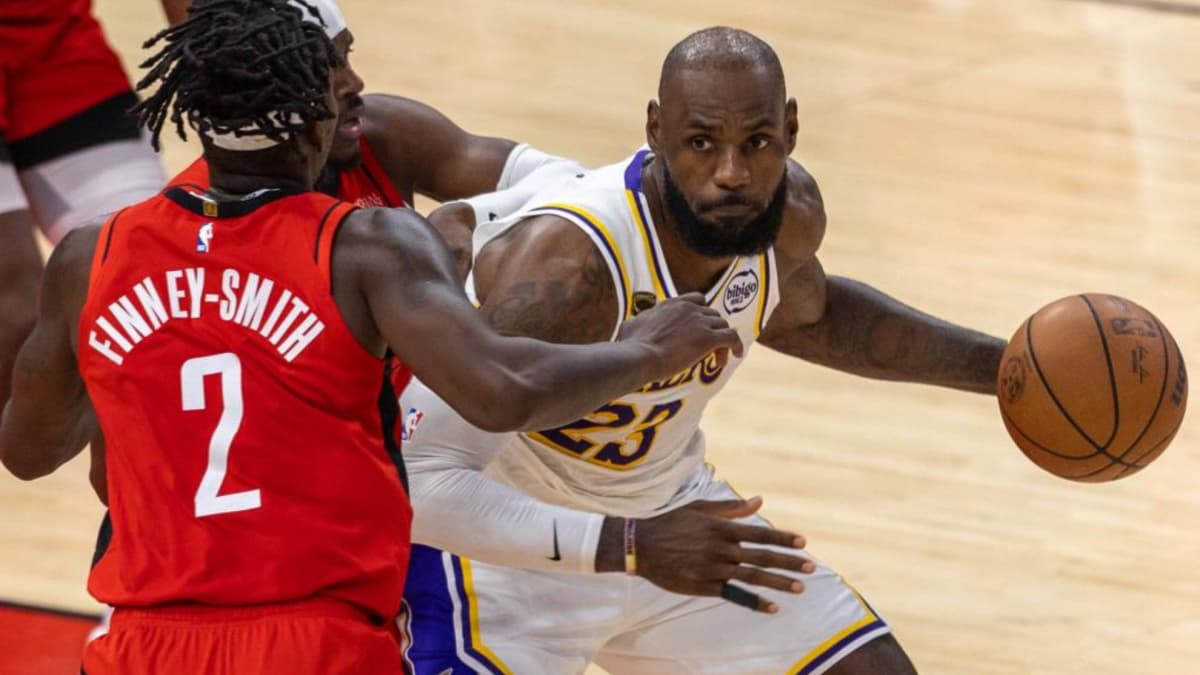
Los Lakers perdonan el primer 'match ball' en una noche aciaga de LeBron
Los Lakers pierden 115-96 ante los Rockets, LeBron decepciona con 10 puntos.
Marca1 min read
Avery Smith, a cornerback from Toledo, has signed with the Chargers as an undrafted free agent. He discusses his challenging transition from quarterback to cornerback during his college career.
Mentioned in this story
Back in January, Chargers Wire had the chance to speak with Toledo cornerback Avery Smith at the East-West Shrine Bowl.
Now that Smith has signed with the Chargers as an undrafted free agent, let's revisit that interview to get to know the latest Charger a bit better.
Chargers Wire: So you got recruited to Toledo as a quarterback, and then by the end of spring practice [your freshman year], you moved to corner. Can you talk a little bit about that move and pivoting away from quarterback after playing that your whole life?
Avery Smith: Yeah, it was definitely hard, a tough transition. I went through a lot of adversity, probably one of the big steps in my life, kind of shaping me as a man. It was hard at first, transferring to a position I had never played before. Took a lot of work. Didn't really know too much technique, was getting beat a lot when I moved early on. I just kept progressing, but my head down, kept working, and the progress started showing.
CW: How much of playing quarterback for so long helped you translate to corner? Knowing the [passing] concepts and where the quarterback was going to be looking?
AS: A lot. It probably is one of my best assets. One of my biggest [abilities is that] I still see the game as a quarterback, I always tell people. Being able to have a good feel or even know sometimes 100 percent what was coming based on the situation or formation or concept or whatever it is, just be able to have that full, overall look of the game helps me a lot when I'm on that island.
CW: Toledo has a rich history of producing DBs at this point. You have Quinyon [Mitchell], Maxen [Hook], obviously Emmanuel [McNeil-Warren] is the big name this year. You and Andre [Fuller, who was also at the Shrine Bowl] are a little bit more underrated. Can you talk about just being in the room with those guys and learning from all of them, keeping up that tradition at Toledo?
AS: Yeah, it's a standard. It's kind of - at this point - an expectation to go out there, especially on Saturdays in college football, and play well. And those guys led the way. The Qs, the Maxens, even guys before them. Tycen Anderson, Samuel Womack, yeah, they kind of set the bar high when I got there. That was the expectation in the room, was to go out there, play good, and get to the next level. And it started to feel less and less like a dream and more of a reality the more you got into it. And I feel like this is what we expected to do.
Avery Smith is a cornerback who recently signed with the Los Angeles Chargers after playing at Toledo.
Avery Smith faced significant challenges, including a lack of experience and initial struggles with technique after moving from quarterback to cornerback.
Avery Smith's experience at Toledo, particularly his transition to cornerback, helped him develop resilience and work ethic, which he views as pivotal in shaping his character.
Signing as an undrafted free agent is significant for Avery Smith as it provides him an opportunity to prove himself and secure a spot on the Chargers' roster.
Los Lakers pierden 115-96 ante los Rockets, LeBron decepciona con 10 puntos.
Juventus and AC Milan finish in a goalless draw, marking another stalemate.
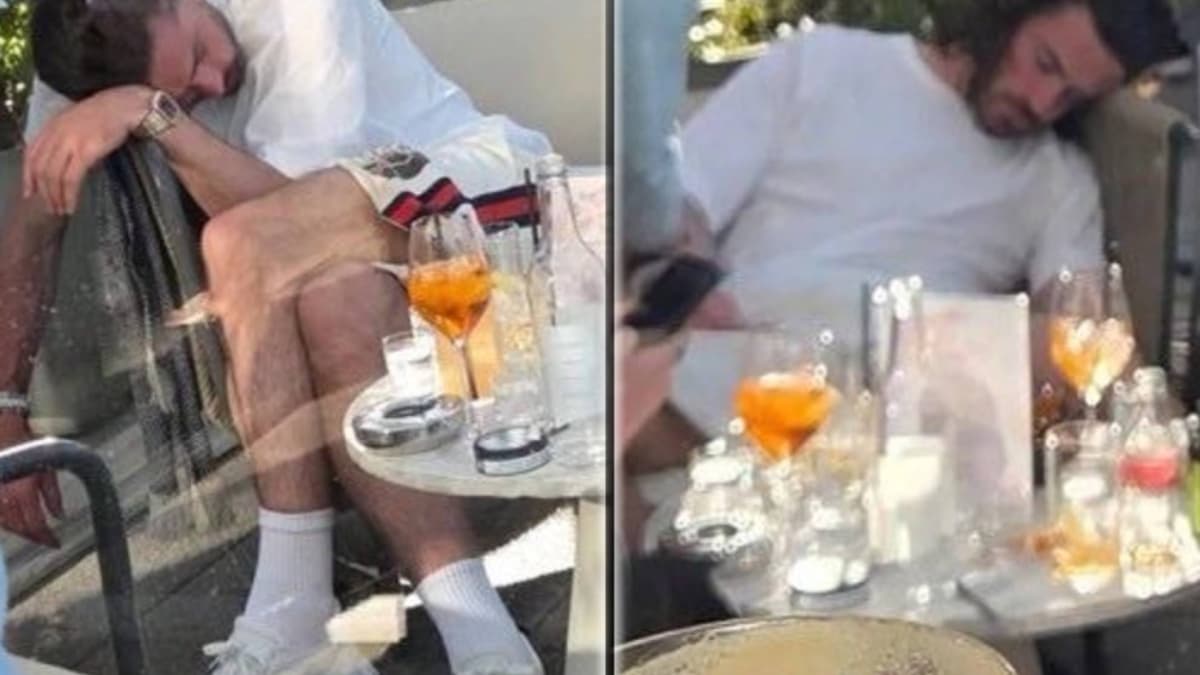
Jack Grealish, el 'Party Boy', sorprendido durmiendo en un bar tras una fiesta.

Can you run 100 marathons in 100 days? Hannah Cox is taking on this incredible challenge!
Ducks win 4-3 in OT, pushing Oilers to brink of elimination in Game 4!
UT Tower lights up to celebrate Texas beach volleyball's MPSF title!
See every story in Sports — including breaking news and analysis.
CW: Everyone at the Group of Five level has opportunities to go other places once you have a good season. Was that tradition one of the driving forces that kept you at Toledo?
AS: It was definitely one of the factors. I mean, most people leave Group of Five probably because of money or their chances of going to the league, but Toledo has league production, just like probably a lot of the Power 4. I knew going into senior year, after I have a good season, I'm gonna have a pretty good shot of going to the league and being looked at. I just handled my business.
CW: You've said in interviews previously that you and Quinyon Mitchell are really close and talk almost every other day. Can you talk about that relationship, any advice he's given you about going through this process?
AS: Yeah, kind of like a big brother, little brother relationship. Real competitive. We always trying to match up against each other. Who better, who this, who that? He's giving me lots of advice, just things he went through in his process. Our processes aren't exactly the same, but they're similar. And just seeing him when we were on the same team, how he went about his day, how he approached the game, the type of person he was, I learned from him every day.
CW: I was doing some research on you, and I found that this is actually kind of a full circle moment for you, because you played in a 7-on-7 tournament in Arlington [close to where the Shine Bowl is held in Frisco] for Cam Newton's team. Can you talk about that experience working with Cam and having that come full circle?
AS: When I was growing up in high school and middle school, playing for Cam Newton was kind of like…it was the premier. All the best guys played there. Justin Fields, George Pickens, Jadon Haselwood, Sam Powell, a bunch of guys, really. And it was just kind of getting there, [at that time] no one’s ever won a natty and we came here. There’s a lot of talented players on that team - Travis Hunter, Kamryn Perry, who’s in college doing well, Cayden Lee. We had some great guys on defense. But just being able to do that here and then come back here is kind of, you right, a full circle moment, and seems like my luck is good in Dallas.
CW: So you played a lot more in the slot this year at Toledo. What is the difference in the technique, in the mentality, versus playing outside? Do you have a preference between the two?
AS: Yeah, first, I like to say I consider myself real versatile. It’s one of those things I want to show to scouts and to everyone, really. I could play all five positions in the secondary, free, strong safety, both corner spots - boundary and field - and in the slot at nickel. They are a little different. When you’re in the slot, you’re mostly guarding smaller, twitchier dudes, so you got to be able to match, right? Then you’re tackling and fitting and blitzing a lot more. You’re more involved in the box, really. So you got to be physical. And outside, maybe not so much. You got to be real technical, though. Got to be able to play the ball in the air, have good ball skills. Which I feel like I do, and I just feel like I’m able to do both. It’s not really [the case that] I have a preferred one. I feel like I could do them all at a very high level in the league.
CW: You’re a guy that fits the run pretty aggressively. You mentioned that just now. Where does that physicality, that mentality, come from? Because coming up as a quarterback, I think those guys get the reputation that they want to avoid contact as much as possible. So where does that come from?
AS: I just think I’m a competitor. I’m gonna do whatever I need to do for my team to win. I gotta go take on a 6’8”, 350 pound pulling guard? I’m gonna go take them on. And I don’t fear anybody. I fear nothing. So I’m going in there trying to hit you with all my might, no matter how big you is. And that’s kind of where that mindset comes from.
CW: Nothing? Even off the field, you have no fears?
AS: No fears. Only thing…like not big animals, but like little big animals, like possum size. I hate that. Like, they’re too big for you to step on them. You got to like…I don’t even know what you do with them. I don’t like them. Anything else, I’m good.
CW: So you’ve talked about how at Toledo, the two position coaches you had kind of came at the perfect time for you. Can you talk about why you think that is and how those two guys aided in your development at corner?
AS: Yeah, I’ll start with my first one, Corey Parker. He was there when I first moved to corner. I feel like he was perfect at that time because he’s high energy, gonna give you the confidence that you need, even when you down. A real technical [coach], really focused a lot on techniques and winning your 1-on-1 reps. And he helped me because I was losing a lot at first, but he just kept working with me, kept giving me the confidence, and kept really tapping in with my technique. It kind of helped me start winning more. And he always kind of helped me through my struggles just as a young man.
And then Coach Eliano, he came my junior year, and it was perfect because at that time, I kind of needed more structure [from a] coach. Older, more disciplined, real experienced, knows the game like the back of his hand. I could talk football all day with him, real smart, and taught me how to be a professional. And as I’m getting ready for this journey to go to the league, he helped me a lot with that. And then just seeing [both men] as a man and as a father, both of them just really inspired me. Great dads, great husbands, just great families.
CW: You also have a ton of experience on special teams. That’s a role that you’ve played a ton, probably a role that they’re going to ask you to play in the league. Do you feel pride in that area and what is the mentality that goes into that phase of the game?
AS: Yeah, I mean, I feel like special teams is all about effort, really. It’s not really too much skill. The guy who wants it more [is] most likely gonna win. Special teams is a big aspect in football games, which a lot of people I feel like don’t know, and I understand that and I’m into winning. So if I got to go play 30 special teams reps for a team in the game, I’m gonna go do it. I could be a 8-year veteran starter still on special teams, I’ll do it. I love special teams. I like blocking kicks, I had two blocked kicks in my career. So I just love being able to impact the game in any way I can.
CW: I imagine that the move from quarterback to corner was probably a time you’d identify as a time you faced some adversity and overcame that. But what’s a second time that you faced some adversity and overcame that and came out the other side?
AS: I would give you the next year after that, going into my sophomore year. I worked really hard to just get better at the game of football and at the cornerback position. And you know, like you said, there’s a lot of good DBs at Toledo. So getting on the field isn’t as easy as you may think. I got a shot in the Western Michigan game. That was a tight one. Ended up getting beat for a touchdown on a double move. I got taken out and really didn’t see my shot. I dropped on the depth chart for weeks. Honestly, probably didn’t start playing again until later in the week. And that was hard, because sometimes in life, you only get one shot at things. At that time, I was thinking that was my only shot and I messed it up. And that was a hard time for me, just being able to know that I worked so hard and for the outcome to be that kind of destroyed me a little bit. But I put my head back down and kept working.
CW: Last thing. If you find yourself in the elevator with one of these scouts while you’re going back up to your room, what is your elevator pitch to those guys like, “This is why I belong in the league”?
AS: I’d just say I’m a clean record, great guy, impact player to the team. I’m versatile, I could play anywhere. Got a strong corner room? I could go play safety. If we need some corner, I could go play corner. At worst, I’m gonna add value on special teams. I’m a high care guy. I’m gonna be in the facility all day. I’m a high IQ player that makes everybody around me better.
This article originally appeared on Chargers Wire: Interview: Meet Chargers UDFA CB Avery Smith