Sports
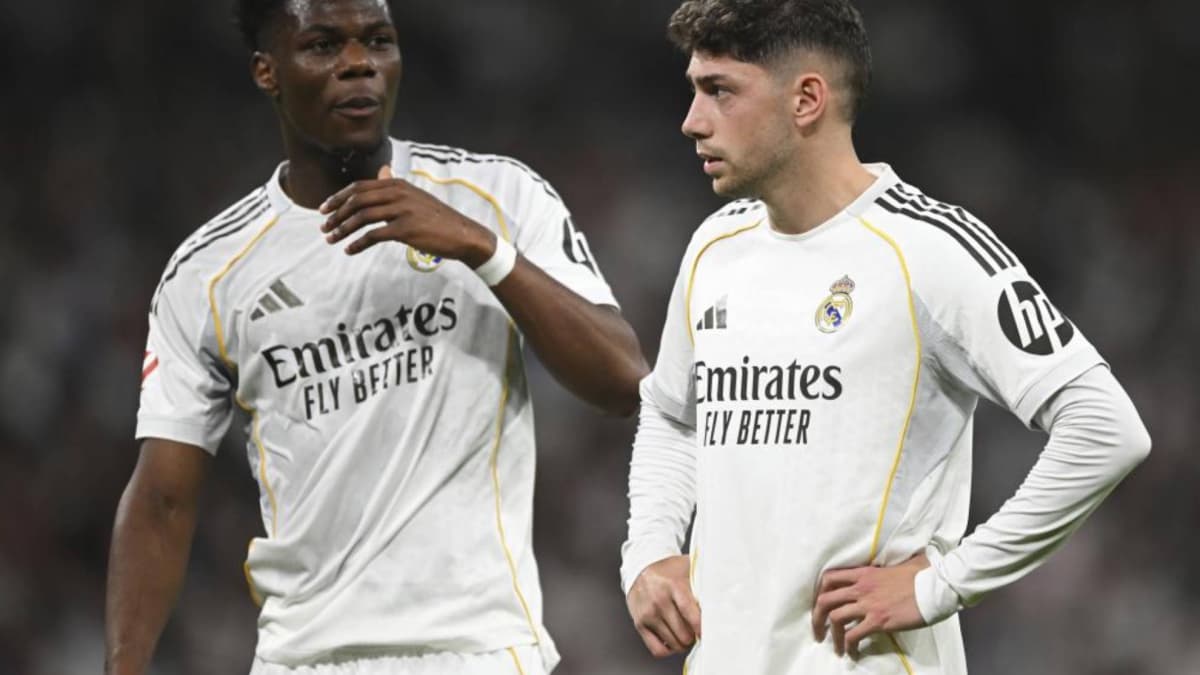
Las sanciones para Tchouaméni y Valverde: de una leve multa hasta un mes sin cobrar... y sin jugar
Tchouaméni y Valverde podrían enfrentar sanciones severas en el Real Madrid, incluyendo multas y suspensión de salario.
Marca1 min read
Scottie Scheffler has recently shown a more irritable side during media interactions, reflecting his personal frustrations rather than a broader issue with the media. His responses to questions have ranged from dismissive to thoughtful, highlighting a complex relationship with the press.
When it comes to Scottie Scheffler getting chippy at simple questions, it’s my fervent wish that we skip the entire athletes vs. media discourse. That framework applied last year when Collin Morikawa was shirking his press duties and then getting into arguments about it, and we covered it on those terms. This, to me, doesn’t feel the same. Scottie Scheffler is showing up, he’s answering questions, and the way he answers those questions is a reflection not on the broken media ecosystem, but on one person: himself.
So let’s talk about Scottie in his Irritable Era.
In the last year and change, I have witnessed either firsthand or secondhand a good deal of mildly unpleasant Scheffler interactions with the press. At the Players in 2025, he refused to answer a question about course conditions, implying that it was some kind of clickbait (note: writing about how rain softens greens is basically the opposite of clickbait), and then seemed annoyed when another writer asked a question about "getting back" to his previous form. This year at the Players, he was asked about changing his driver, and he gave a snappy response citing his strong play in 2024 and 2025, as if the writer had insulted his performance instead of asking a simple equipment question. At the Masters, after saying he left a few shots on the course in a TV interview, he responded with "terrible question" to a reporter asking how good the round could have been. Most recently, he responded dismissively to a question about LIV Golf and suffered by comparison from a more considered response by Jordan Spieth.
In these examples and others I've left out, Scheffler will often chuckle or make some vaguely apologetic offering in the aftermath. If it doesn’t quite soften the blow the way he might want, it at least seems like a recognition that he overstepped.
I have also witnessed Scheffler give plenty of thoughtful answers, including this gem at last year's Open Championship at Royal Portrush, which remains one of the most interesting things I've ever heard from an athlete’s mouth.
Notably—and very obviously—one kind of behavior comes when he's playing well, and the other when he's not.
So what explains the spiky moments? Scheffler himself has not been asked about these interactions, and while it’s tempting to chalk it up to a growing disdain with journalists, I’ve never felt that accurately reflects who Scheffler is. He values his privacy and guards his time, yes, but in his calmer moments he’s a good-to-very-good interview.
Scottie Scheffler has shown a more irritable demeanor, often giving snappy or dismissive responses to media questions.
He has reacted defensively to questions about his performance, implying some inquiries are insulting rather than constructive.
Examples include refusing to answer a question about course conditions and calling a question about his round at the Masters 'terrible.'
Yes, he has provided thoughtful responses, such as during last year's Open Championship at Royal Portrush.
Tchouaméni y Valverde podrían enfrentar sanciones severas en el Real Madrid, incluyendo multas y suspensión de salario.

Uncertainty Surrounds Vancouver Whitecaps as 'Save the Caps' Gains Momentum

UFC 328 Preview: Who Will Win - Chimaev or Strickland?
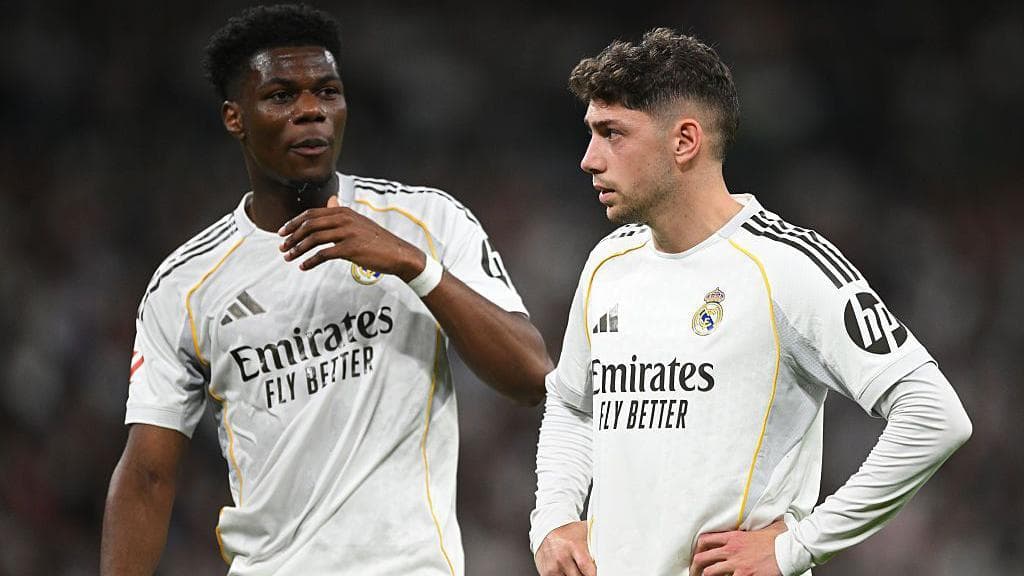
Valverde taken to hospital after altercation with Tchouameni ahead of Barcelona match

Catch the UFC 328 press conference live with Chimaev vs. Strickland!
Stephen Curry claims NBA players are underpaid, sparking debate. Lou Williams' unexpected response adds complexity to the discussion.
See every story in Sports — including breaking news and analysis.
Let’s start with the premise that Scheffler is an intelligent and somewhat conscientious person who occasionally loses the battle with an inner petulant streak. It's not just in media appearances, either—you see it in the sarcastic fist pumps he made during the Players in March after missed putts, which go a little bit past your run-of-the-mill frustrated body language and into something a bit more performative and self-pitying.
Masters 2026
Adam Glanzman
It's just that it mostly happens in those media appearances, because that's when we hear him speak in a raw state. When he faces the public after performing below his expectations, the censors that govern his self-control sometimes fail, and in those moments he’s prone to lashing out … not in any cruel or egregious way, but pointedly nonetheless. That doesn't happen with players like Spieth, and the word we use to describe the difference is professionalism.
"It’s still there," Scheffler's college coach said of the player's edge. "And it’s never, ever gonna leave."
People notice this kind of thing, and not because the media is driving the narrative. There are plenty of fans who will enjoy seeing raw emotions from the world's best player, warts and all, but it's not media spin to say that others have found it to be an unattractive quality. For a sample of reactions, look at the replies to this tweet after his “terrible question” comment at the Masters, and you can sort them into two categories: those cheering him on because they don’t like the media, and those who think he sounds like a jerk.
Right or wrong, these are all surface, knee-jerk reactions. Dig a little deeper, and I believe this is about how a human being handles his emotions when he cares very deeply. As Spieth and Rory McIlroy said in the recent Fried Egg feature on Scheffler, Scheffler simply isn’t allured by the shiny distractions that come with success, and one way to interpret that is that he's fixated on his golf game even more than your average superstar. Two years ago, The Athletic made a convincing case that his competitive drive sits on the pathological, Michael Jordan-esque end of the spectrum. That story included episodes from his past that serve as signposts for what we see now—the time he blew up at his Texas teammate for setting him up to hit the wrong ball, the time he injured his thumb by angrily swiping at a thorn bush after a bad shot, how he was an "ungracious winner" as a kid who, when he didn't win, would storm off in a rage.
The money quote came from his college coach at Texas, John Fields, who watched him lose to Billy Horschel in the final of the WGC-Match Play in 2021 and then lose control the minute he was alone, as though suffocated by disappointment and anger.
"It’s still there," Fields said. "And it’s never, ever gonna leave.”
In other words, this is Scheffler’s cross to bear. His biggest problem might be that he plays an individual sport. When we hear stories of Michael Jordan's competitive insanity that found its target in his opponents or his teammates, we react with awe and a little bit of fear. With Scheffler, the only target is himself, and the results of that battle don't lend themselves quite as well to the hero's journey we like to map out for our athletic icons.
His other biggest problem is that he looks composed. He's tall and muscular and square-jawed. By all appearances this image of the consummate American jock influences our expectations by implying a kind of emotional restraint he just doesn't possess, and never has, and probably never will. He's about as tough as it comes when he’s in contention, but when things aren't going perfectly, he's still got enough of the angry kid inside him that he reacts in ways that appear out of character. That perception is a mistake, though, because at least to me, it is his character.
So when he gets reactive in post-round interviews, don’t look at it within the tired paradigm of media vs. player, but as something very specific about the greatest player in the world. When we say a person hates to lose, we’re almost always imagining victory—the hero defeats everyone around him because his desire is greater, and thus doesn’t live out the dreaded outcome. But everyone has to lose sometimes, or struggle, or fail, and that hatred of losing still has to find its expression.
With Scheffler, what's happening inside his own head at those moments is very clearly exacerbated by having to answer questions about it, and the tension produces these moments of apparent petulance with the media. But if you picture the angry child, or the player who five years ago had tears in his eyes after one of the best tournaments of his life, you could argue that a bitter word or two with a reporter represents admirable restraint. And there’s something else, too—you learn something about the guy when the veneer slips. Would you rather he become Derek Jeter and give you two decades of platitudes?
You certainly don’t have to like the behavior. But it is part of his specific pedigree, and it may even be the engine of his greatness. When you simultaneously want something so bad it hurts, and commit to a life where you can't always have it, the excess pain has to go somewhere. A chirpy press conference is a release valve, and a reliable window into his mentality. If you want to take that personally, rest assured that he is, too.