SoccerInjury Update
Arsenal injury latest on Saka, Havertz, Odegaard for Atletico 2nd leg
Latest on Arsenal injuries: Saka, Havertz, and Odegaard ahead of Atletico clash
Yahoo Sports1 min read
Allan McNish, a three-time Le Mans winner, is now the racing director for Audi's new Formula 1 team. His extensive motorsport experience positions him well to guide the team as they enter the competitive F1 landscape.
Mentioned in this story
Allan McNish's first race as racing director with Audi is in Miami [Getty Images]
Allan McNish started racing round a track not that long after learning to walk.
In the years that followed he experienced the highs and lows of motorsport during a stellar career - winning the 24 Hours of Le Mans three times but also being involved in a crash in which a spectator died at Donington Park in 1990.
Few people are better placed to provide advice and support to a fledgling Formula 1 team like Audi.
In January he was unveiled as head of driver development but he has since accelerated into the role of racing director - starting this weekend in Miami - while continuing to identify the stars of the future.
The Dumfries racer started out in motorsport very young [Getty Images]
It is all a long way from his home town - Dumfries - where he grew up and attended St Andrew's Primary and St Joseph's College before his racing talent sent him further afield.
Speaking from the United States, however, his accent remains largely unchanged from the days he used to kick a football around the playground with his pals.
The 56-year-old said there were now two parts to his job with Audi, with the first - driver development - "a bit like a football academy".
The second - that of racing director reporting to team principal Mattia Binotto -covers "everything at the racetrack", from engineering, strategy and the drivers to marketing and communications at the circuit.
Allan McNish is a former racing driver and three-time Le Mans winner, currently serving as the racing director for Audi's new Formula 1 team.
Allan McNish has won the 24 Hours of Le Mans three times and has a significant history in motorsport, including both successes and challenges.
Allan McNish's first race as racing director for Audi is set to take place in Miami.
McNish's extensive experience in motorsport provides valuable insights and guidance as Audi navigates the challenges of entering Formula 1.
Latest on Arsenal injuries: Saka, Havertz, and Odegaard ahead of Atletico clash
Miami Grand Prix start time moved to 1 p.m. EDT due to thunderstorms.
76ers defeat Celtics 109-100 in Game 7, advancing in playoffs!
Cincinnati Bengals' Brian Parker could be a hidden gem from the NFL draft.
NFL veteran Dean Lowry backs out of his deal with the Steelers to focus on fitness.
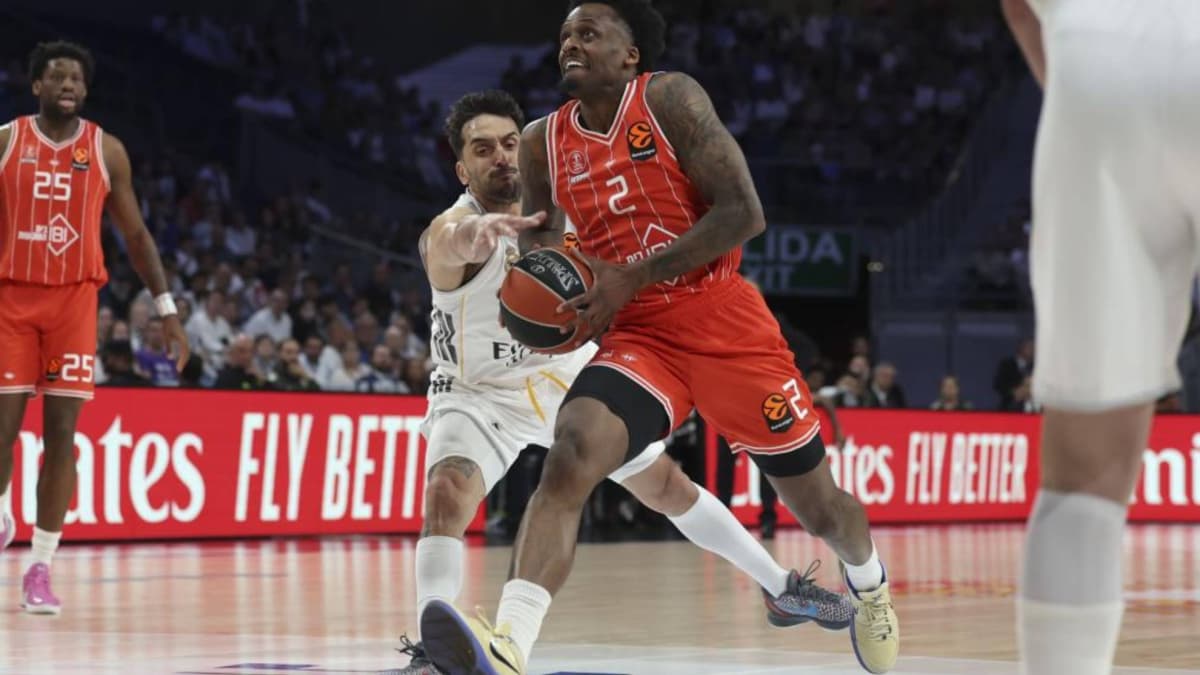
El Hapoel Tel Aviv agradece al Real Madrid por su hospitalidad en dos partidos.
See every story in Sports — including breaking news and analysis.
It is, he admitted, "very wide" in its job description.
McNish said driver development hardly existed when he started out [Getty Images]
McNish said his driver development role simply did not exist in this form when he was breaking through in the 1980s, although one local motorsport hero - David Leslie - did take him under his wing.
Now it all has a "much more structured format".
However, he said the sport remained all about preparation, work ethic and being prepared for setbacks like he suffered in his own career.
"It's been a bit of a roller coaster at times," he said.
"It's not as if it's been a straight linear road up and with that, you also learn to take a little bit of pain on the route.
"That's one definite thing in any sports person, there is going to be pain and it's how you return from that, how you come back from it is, I think, the defining point of a person's sporting career."
Making it to the starting grid in F1 was a high point in McNish's own career [Getty Images]
Not that McNish did not taste success - when asked to pick a high point, he said there had been a "lot of them".
Among them was winning his first ever kart race in Morecambe in 1982 when he got the confidence that came from realising he was "good at something".
"And then obviously, winning Le Mans, because it opened up so many doors that I didn't expect - I didn't realise the world stage Le Mans was," he added.
There was also, of course, the little matter of reaching the starting grid in F1 himself.
McNish won Le Mans three times as a driver [Getty Images]
At the other end of the spectrum was a day when tragedy struck.
"I think personally a low point obviously was Donington in 1990 when the spectator was killed - that definitely was one," he said.
"It's just a big change to your life, it doesn't matter what stage you are in, it's a big change to your life."
One of the biggest differences between his era and now is that racers are starting much younger and are, possibly, "more open" thanks, in part, to the Netflix documentary series Drive to Survive.
He cites Audi driver Gabriel Bortoleto as a case in point - an "absolutely lovely, natural person".
McNish said a lot of the nostalgia for years gone by was down to "rose-tinted glasses" [Getty Images]
McNish also dismissed a lot of the nostalgia for racing of yesteryear as "rose-tinted glasses to a great extent".
"If you go back and watch a video of Spa, you know, the holy era of V10s, V12s, and you look at Spa, the gap on the grid was like 0.5, 0.7, 0.8 seconds between one car to the next," he said.
"It was like 10 seconds over the course of the grid - it was huge.
"And now we're talking about one second being from first to last - so the competitiveness of everybody is much, much closer."
As for his current team - they are planning long term rather than expecting immediate success - with a "long road" ahead to be in a position to fight for race wins or challenge for the championship.
The racing director said he liked Freddie Slater's attitude the moment he saw him race [Getty Images]
And is there another Allan McNish out there?
Possibly, he said, in the shape of Freddie Slater who they signed aged 14.
"I watched him fight his way through a kart race and it was that attitude that was the thing that really stood out," he said.
"It was his ability to, when the car wasn't quick, to be able to get through and muscle it through to the front.
"I would say the mentality as opposed to necessarily the skill set - but there, that was something that ticked the box for me."
That is high praise indeed from a man who scaled the heights of racing during his driving days and is now passing on everything he has learned.