
Sports
Brighton boss Hurzeler signs new contract
Brighton head coach Fabian Hurzeler signs new three-year deal until 2029.
Sky Sports1 min read
The Indy Ignite volleyball team showcases high-level athleticism and skill, making complex plays appear effortless. Observers are reminded of the challenges and dedication required to compete at such a professional level.
INDIANAPOLIS — The balls were being smashed onto the court, and the brilliance of the Indy Ignite was on full display.
I stood on the sidelines, next to Aaron, and we both knew what was coming. The Ignite players, the professional players, made it all look so easy. Mia Tuaniga's sets, Lydia Martyn's blocks, Elena Scott's digs. The insanely, intricate footwork, the timing, the approach.
That's what pro athletes do. They perform these moves, and we all witness the greatness, thinking somewhere in the back of our minds that we might be able to do that. It can't be that hard.
Until you step onto a court that is the ultimate equalizer, that court of greatness.
I played high school volleyball, and I still play sand volleyball, but none of that translated into a sliver of excellence as we took on a practice with the Ignite.
The players and coach Lauren Bertolacci smiled, and they never made us feel like we didn't have the skills it would take to master their drills. They were welcoming, as if we really were a part of the team.
They erupted in roars when we made contact with the ball. They coached us, they corrected us, they gave us high fives and they never once made us feel like we looked like idiots.
And we definitely looked a little like idiots. And that's OK.
How many pro sports teams welcome a reporter and an editor into a practice just days before they leave for the playoffs, ranked No. 1 with a 23-5 record. That tells you just about everything you need to know about this team.
So often we fit professional, including college, athletes into a box: They make us happy, angry, joyful, sad, and it leads some to say and do irrational things. We forget that they are people who, yes, have a job to do, but we're all allowed to have joy in our jobs and they are no different.
That's what struck me — Aaron — about volleyball, and always has in the four years I've followed it closely (covering Kelly Sheffield's Wisconsin Badgers, the interest in them and the high levels they played at became a high priority as interest nationally continues to grow). Even when the stakes and intensity are highest, I wondered why teams would huddle in celebration, or what words of encouragement were offered in losing a point.
Indy Ignite players exhibit advanced skills such as precise setting, effective blocking, and strategic digging.
Key players include Mia Tuaniga, known for her setting, Lydia Martyn for her blocking, and Elena Scott for her digging.
Professional volleyball requires intricate footwork, precise timing, and a high level of athleticism that is often underestimated by casual players.
The Indy Ignite represents a high standard of play and embodies the fun and competitive spirit of volleyball at the professional level.
Brighton head coach Fabian Hurzeler signs new three-year deal until 2029.
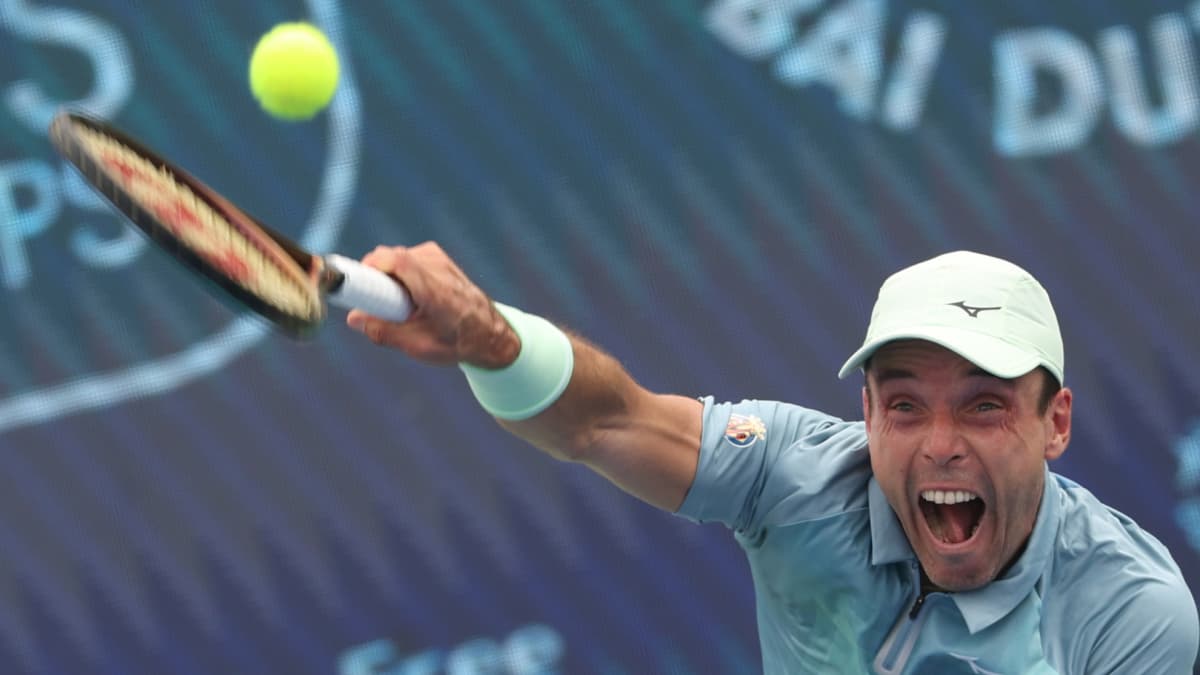
Bautista y Llamas logran las primeras victorias españolas en Roma

Middlesbrough has appointed Kim Hellberg as their new head coach, aiming for a Premier League return.
Bartolo Colon commemorates his only MLB home run with the Mets
Cavaliers' Sam Merrill leads injury report ahead of Game 2 vs. Pistons

¡El reto más loco del Mundial! Gana 50.000 dólares viendo todos los partidos.
See every story in Sports — including breaking news and analysis.
Stepping between the lines showed that. Looking foolish in trying to get footwork down but getting coaching, from the players, then reminders about positioning on digs and tips about timing of attacks, and then high-fives and affirmation when finally launching an attack or serve over the net.
IndyStar sports reporter Dana Hunsinger Benbow, left, and sports editor Aaron Ferguson find the fun in a humbling volleyball lesson with Indy Ignite.
Yes, leaning into Tuaniga's leadership about dancing — something I never do — and celebrating a point — something I happily did in our serving competition — was a great reminder that sport is fun. These are kids games that some are lucky enough to perform at the highest level and, yes, that brings consequences throughout the course of a season or career, but fun in the Ignite's sense embodies the culture of this team.
"I just want to help people feel comfortable in uncomfortable situations," Tuaniga said.
Right, left, right, jump and open your upper body to the setter — this was the command to hit out of the middle blocker position. Oh, and you also want to go fast, as the pass to the setter is in the air. That timing was tricky for someone hearing this and trying it for the first time in a matter of minutes.
Another one: left, right, toss the ball up in front of you, left, right, jump, locate the ball and serve (over the net or you owe donuts) — this for an effective jump serve.
High-level volleyball became a constant when I moved to Madison, Wisconsin. It quickly taught me how fun this quick-paced sport is to watch, and playing at a low level with friends amplified the excitement of the sport.
But it took until this opportunity between the lines (my background is a few physical education units with no teaching on form) to have an even greater appreciation for the level at which players process information, and how quickly. And, no, that's not talking about the skills referenced above they learned at 8 years old.
The number of reps since they began playing does help, though. Preparation before the action is key, and the Ignite spoke about the importance of "eye work" or reading the opposition from pass to set to attack.
MLV champion Indy Ignite taught IndyStar what it's like to play volleyball at the highest level. Reporter Dana Hunsinger Benbow, left, and sports editor Aaron Ferguson, right, learn from league libero of the year Elena Scott how to receive serves.
Hitting options from either pin, the middle — sometimes a quick dump by the setter — or the backrow provide numerous attacks to plan for. A drill the Ignite do, "ball, setter, ball hitter," helps them prepare for in-game opportunities, Scott explained. It begins with the opposing offense setting itself up with a pass to the setter, judging the tempo by looking at the ball and then back to the setter's hands to read where the attack will come from and then "where the shoulders are facing, where the elbows are going."
Scott was the best at this in Major League Volleyball, being named the libero of the year. Impressive for someone who played setter in high school. But it didn't take long to hone in on becoming an elite defender, helping key Louisville's run to the national championship game in 2024, and now the Ignite to a regular-season championship.
That backcourt view provides a little bit more time than those at the net. Martyn takes a pre-hop when the ball is reaching the setter to activate her movement, knowing she'll have to rotate to her left or right to close down attacking lanes. Middles like Martyn also have to prepare for the possibility of the setter dumping the ball when in the front row, which she said causes a late reaction to try and block it.
Consider that even the longest of rallies are over by the time you've read those last three paragraphs, and it puts into perspective how quickly these offenses are run. Oh, and the power behind those hits as Indy's Leketor Member-Meneh can send it over at 63 mph.
Baseball is the lens through which I translate skill sets through because so often in sport, the movements and goals are similar. As 6-foot-6 middle blocker Cara Cresse explained the importance of squaring our upper body to the setter, I found a different translation.
Pointing my left shoulder at the net helps not only aiming my attack but maximizing power on my swing. Not only that, but I'm squaring my shoulders as I would after fielding a ground ball to aim toward first base. And, while I'm not throwing down a mound like a pitcher, I instantly thought of the imaginary rubber band that stretches from my front hip to my arm that when stretched builds up enough power to maximize velocity — hitting velocity, in this case.
In-between reps — Bertolacci kept it quick — I explained this epiphany to Cresse, who said her Louisville volleyball coach, Dan Meske, would use similar ways to explain things during his drills. When I was younger, I had a coach who used boxing terms to explain this concept of maximizing force to generate velocity as a thrower, or exit velocity as a hitter.
Indy Ignite middle blocker Cara Cresse gives IndyStar sports editor Aaron Ferguson a lesson on how to play middle blocker.
Cresse is among the Ignite players who would make good coaches one day. Or even in the fall as Martyn and her husband do at Fishers High School, or opposite hitter Azhani Tealer does at Vanderbilt. The grace with which they gave us, even staying after practice for an hour, was an admirable trend for those at the top of their sport, which they'll look to claim beginning 7 p.m. Thursday in Frisco, Texas.
Follow IndyStar sports reporter Dana Benbow on X:@DanaBenbow. Reach her via email:dbenbow@indystar.com.
Aaron Ferguson is a sports editor at IndyStar, overseeing coverage of college sports, the Indiana Fever and IndyCar. Follow him on Twitter at @Sports_Aaron.
This article originally appeared on Indianapolis Star: How difficult is playing pro volleyball? Indy Ignite teach lessons