Sports
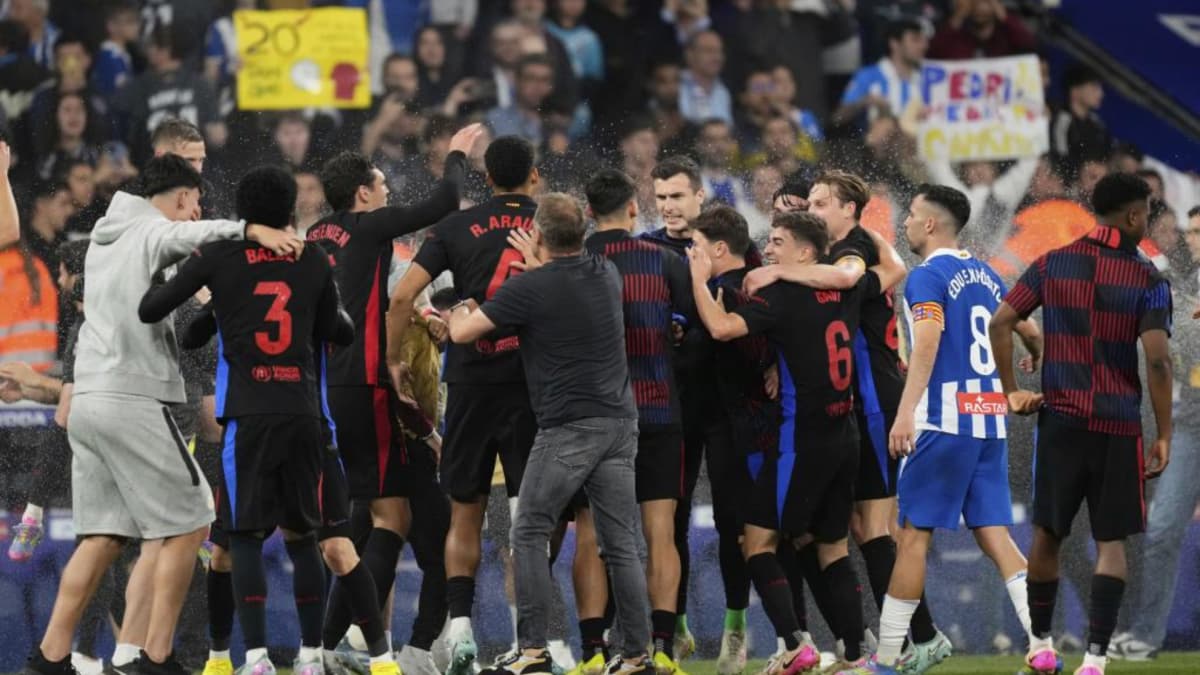
El Barça sigue de fiesta
El Barça celebra un año de su primera Liga con Flick
Marca1 min read
NCAA Division I men's soccer may soon adopt a two-semester season, splitting games between fall and spring. If approved, the new format would take effect on August 1, 2027.
If things play out in early summer like NCAA Division I men’s soccer coaches want, they may finally get the change they’ve been looking for.
The oversight committee adopted legislation this week that would split the college soccer season across the fall and spring semesters.
If adopted by the Division I cabinet in late June, it would take effect Aug. 1, 2027.
Under the proposed new format, teams would continue to have a 25-game limit for their regular season. However, it would be divided over two semesters, with a maximum of 18 games in the fall and up to 10 in the spring.
The fall season would run from late August through the Saturday before Thanksgiving and the spring season would begin in mid-February, with the specific dates for the postseason yet to be determined.
It would also fall in line with the MLS schedule and its SuperDraft change, which plans on going to a similar schedule beginning in July 2027.
“I like it,” Akron coach Jared Embick said. “I think once we work through the kinks long term that's going to be better for the game and development. When you’re looking at, if you're U.S. soccer and you're looking at the best players, this is going to help the development of the best players move on and help college maybe impact the pyramid more.”
Akron defender Jamai Royer, center, celebrates as time winds down during the second half of a game against Duke in the third round of the NCAA Division I soccer tournament, Nov. 30, 2025, in Akron, Ohio.
The emphasis for coaches is not trying to cram a packed season into three-plus months. Last season, Akron played 21 games over the span of 101 days.
That’s an average of less than five days between matches, which means there wasn’t much recovery time and a crammed academic schedule.
“The stress level is really high on everybody in the fall when you're having to turn around after a game, not only physically but psychologically,” Embick said. “These kids aren't pros, so the ability to turn off a bad game isn’t there. If you have six days to learn from it and move on and build yourself back up or as a coach to help build them back up, their whole mental health changes.
“With testing in school added on, if you start struggling in one you may struggle in the other. It's just a slippery slope. It's 100 times better and it's going to benefit the kids. I think they'll be happier.”
Akron Zips men’s soccer assistant Ger Coppinger, left, chats with coach Jared Embick before a game against Western Michigan on Sept. 9, 2025, in Akron.
It also keeps a team engaged for an entire season and shrinks the transfer portal at the end of the championships.
The current format has a 30-day portal in December and another May 1-15.
This proposal would have one 15-day portal after the championship in the spring, which will help a team and its coaches to concentrate on improving both athletically and academically.
Akron Zips midfielder Jack Roman (23) kicks a shot on goal during the first half of an NCAA college soccer match against the Western Michigan Broncos, Sept. 9, 2025, at First Energy Stadium in Akron, Ohio. The shot was good, for the Zips’ first goal of the game.
Two other scenarios the change presents to coaches come in recruiting and player development.
Under the old schedule, coaches were able to get players in-game experience in an effort to give other players breaks when games were three days apart.
Now, coaches will have time to develop their players in training with an emphasis on improvement instead of making them game-ready at breakneck speed.
Recruiting will be the interesting part as games in April take a front seat instead of going to some of the big headline events that same month. Although it doesn’t hurt the ones in May and through the summer, teams may have to sacrifice a coach to an international trip instead of having him or her at the game.
It’s a loss coaches are willing to make.
“Some of that we’ve got to just kind of feel out,” Embick said. “As a player and coach, when you're in the spring, just playing friendlies or trying to get guys to train when their next real competitive matches in August, it has always been difficult.
“Now when you can pull towards a match in March and April, a championship in May. I kind of like the theory. I think there's some things that have to be worked out to see if it goes as well as we think it would go.”
Brad Bournival can be reached by email at bbournival@usatodayco.com and is on X at @bbournival.
This article originally appeared on Akron Beacon Journal: Men's college soccer would be 2 semesters under coaches proposal
The proposed changes include splitting the college soccer season across the fall and spring semesters, with a maximum of 18 games in the fall and up to 10 in the spring.
The new two-semester soccer season would take effect on August 1, 2027, if approved by the Division I cabinet in late June.
Teams will continue to have a 25-game limit for their regular season, divided into a maximum of 18 games in the fall and up to 10 in the spring.
The oversight committee has adopted the legislation, and the Division I cabinet is expected to make a decision in late June.
El Barça celebra un año de su primera Liga con Flick
Trey Kaufman-Renn's NBA Draft stock rises despite injury at Combine.

Tragedia en Ávila: Muere el árbitro Ismail Bouissa a los 22 años
Viktor Gyokeres and William Saliba are the first Arsenal players named in World Cup squads.
Como 1907 hosts Parma in Serie A on May 17 - Match Preview
See every story in Sports — including breaking news and analysis.