
Sports
USMNT's Agyemang (Achilles tendon) out of WC
ESPN News

Getty Images
North Carolina basketball is ready to move forward from more than 60 years of having former players and coaches leading the program. This week, the school moved to finalize the hire of former Denver Nuggets coach Michael Malone to lead the program. Malone, who won an NBA Championship with the Nuggets but has been out of coaching since 2025, is set to take over a program in the midst of growing pains as it breaks from traditions to build a new future. Firing Hubert Davis after five years was a mission statement that the pursuit of winning at the highest level was more important than keeping everything in the Carolina family, and now North Carolina has charged Malone with guiding that build back to the program standard.
Malone should understand the standard after spending time around practice during the year as part of trips to visit his daughter, who currently plays volleyball for the Tar Heels. This appears to be a job that he wants, and it is not a tool for selfish ambition. The North Carolina opening may have been leverage for a coach to get a new contract, or a new reporting structure in his athletic department, or a general manager in his NBA front office, but those were not motivations with Malone. His interest was explored early in the search by North Carolina officials, who kept him among the contenders as they navigated the complicated process of feeling out coaches who were in various stages of wrapping up their seasons.
So Malone's hire is not and should not be considered a "surprise" hire, but there are certainly a lot of unknowns.
[Experts react to North Carolina's hire of Michael Malone: What else were the Tar Heels supposed to do?
David Cobb
For some North Carolina fans, it's as simple as not knowing Michael Malone. The former NBA coach has not been in the college ranks since his time as an assistant for Oakland, Providence and Manhattan in the late 90s and early 2000s. His father, Brendan Malone, was a longtime figure in the NBA with a title-winning stint as an assistant in Detroit and a head coaching run with the Raptors after NBA expansion in 1995. For NBA-focused basketball fans, the Malones are a basketball family that brings a set of expectations. But for some college-focused fans along Tobacco Road, Monday's news was met with plenty of research into the background of the Tar Heels' next head coach.
But even for those inside basketball who respect Malone and his coaching acumen, there are still unknowns regarding how this will work at North Carolina. Malone has an NBA title and years of success as a sharp mind at the professional level, but there are no results to use as a baseline expectation for what the Tar Heels will be in 2027 and beyond.
That would not have necessarily been the case if North Carolina had hired one of the other names attached to this search. If the Tar Heels had hired Tommy Lloyd or Dusty May after the Final Four, the expectation would have been to lead North Carolina right back to the Final Four stage in a short time. If North Carolina had lured Billy Donovan away from his position with the Chicago Bulls, then the expectation would have been the kind of national title contention that served as the standard during his time with Florida. Even before a single roster spot was solidified under a new head coach, the previous success of those current and former college coaches would have been translated as expectations for what's to come in the immediate future for Carolina basketball.
That's not the case with Malone, who provides a confident, clean slate from the coaching perspective. And that clean slate might be just what North Carolina needs at this point to reset its basketball program.
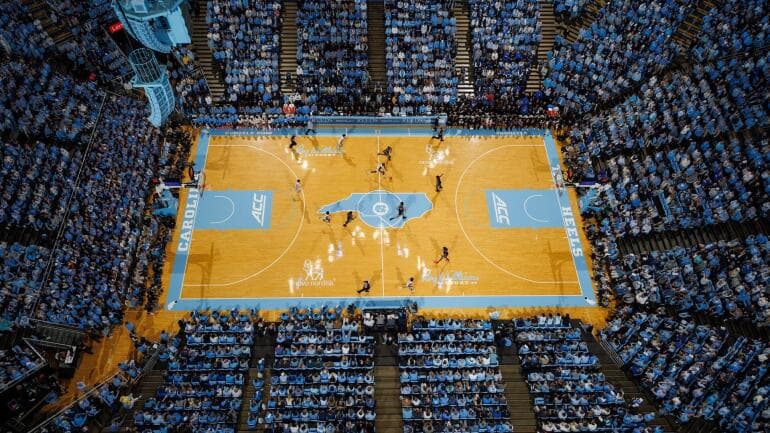
North Carolina basketball underwent a passionate identity crisis during the 2025-26 season regarding the future of its home arena, as the university pitched alternative options and a grassroots "Renovate Don't Relocate" campaign pushed to keep the team in Dean E. Smith Center on campus. Roy Williams and former players got involved speaking up for the preservation of Carolina's history, while the administration pointed out the revenue opportunities that could come from a new home for the school's most-celebrated sport. The debates did not fall simply into old money vs. new money and tradition vs. innovation, but the discussions of season ticket licenses, premium suites, student seating and more certainly showed some obvious divides in the university and alumni community.
All of that took a back seat, though, when it was time to wipe the slate clean with a change at head coach. The school announced last month that any efforts on the arena project would be paused indefinitely, putting full attention and resources behind the hiring process and providing the new head coach with what's needed to win. Michael Malone has mentioned in interviews a respect and even reverence for the program and his father's appreciation for Dean Smith as a coach, but unlike the previous three head coaches at UNC, he did not play for Coach Smith.
Malone, too, could be finding this job at a time when having a clean slate has benefited his own career. Modern sports history is littered with stories of coaches who take a year or two to step away from the game before returning with a renewed sense of spirit for the job. Malone's dismissal just before the 2025 NBA Playoffs was a surprise, given Denver's position as a seven-time playoff team just two years removed from an NBA championship, leaving personnel matters at the heart of the organization's decision to go in a different direction. For a coach who has gone non-stop since the end of his college career, moving from job to job since 1993, Malone finally experienced a break during this past season. With the North Carolina job, Malone has, at 54 years old, found his own clean slate to redefine himself as a coach.
There is, of course, an obvious comparison to North Carolina's hire in football 17 months ago. The Tar Heels brought in another former champion from the pro ranks with little college experience when they hired Bill Belichick, and the disappointing on-field results of 2025 have left some scars within the fan base. A team that was expected to win seven or eight games went 4-8, starting with a Labor Day night disaster against TCU and finishing with a blowout loss to rival NC State. Belichick's team improved as the season went along and were a few plays away from being bowl eligible, but considering the hype that was generated and the money that was raised by the mere mention of Belichick's name, the production fell short of expectations.
Michael Malone's name alone does not move a fan or booster the way that Belichick's does, and that's going to cut two ways. On one hand, it sets up a clean slate when it comes to expectations.
Belichick may have been sold as someone who could lead Tar Heel football where it had rarely (or never) been before, while Malone is tasked with accomplishing goals that have been hit dozens of times in Chapel Hill. CBS Sports' David Cobb had a great line to summarize this dynamic when he noted that North Carolina's hire of Malone was more akin to USC hiring Pete Carroll than the football program hiring Belichick. Carroll did not need to reveal the world of title contention to a school that already had a robust trophy case; he just had to revitalize and reposition the program in a new era.
On the other hand, it is going to require more of a sell to raise the funds necessary to put together a team capable of reaching those title-contending goals. Meetings with North Carolina stakeholders in the immediate wake of the historic first-round loss to VCU brought a financial reality to light that Hubert Davis did not have the support necessary to reload the roster for 2026-27. Malone needs to be a name that can receive that support if he's going to be able to deliver with instant success like many other first-year coaches have done in the transfer portal era. Belichick was seemingly given the keys to the kingdom because his six Super Bowl rings demanded unchecked and unquestioned authority, while Malone will not get the benefit of the doubt.
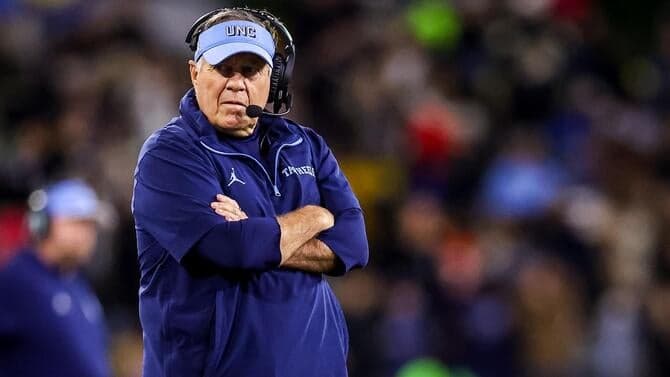
Year 1 of the Bill Belichick era did not go as planned, as North Carolina finished the 2025 season at 4-8 overall. Getty Images
While there may not be a solid set of expectations for Malone, there is an understanding that since no buyout money was needed for this hire (something that would not have been the case for another sitting head coach), there should, in theory, be more resources available to acquire talent. If North Carolina's going to hire the coach who is going to be viewed as a fall-back option, a roster of first choices could go a long way in establishing some momentum for Malone's program.
CBS Sports' Matt Norlander reported Monday that there are efforts ongoing to raise money to get North Carolina to competitive roster spending, which was a piece of the puzzle in Hubert Davis' dismissal. If resources were being withheld at the thought of Davis' return to lead the team in 2026-27, will Malone's hire be enough to motivate the kind of fundraising efforts needed to meet those expectations? The transfer portal officially opened Tuesday, but back-channel conversations and general industry buzz have indicated market-wide inflation. Put more simply: yesterday's price is not today's price, and North Carolina needs to know that when it sets its goals for the offseason.
[UNC hires Michael Malone, what's next for Tar Heels: Roster outlook, retention priorities, transfer needs
Isaac Trotter
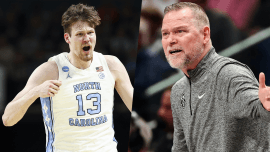
Michael Malone is not saddled with the emotions of the arena controversy or a debt to previous coaches, nor is he at a place in his own career where insecurity should be a factor. He has been to the top of the mountain as an NBA world champion, coached All Stars and MVPs and yet continues to pursue the coaching profession that he shares with his late father and countless other key figures from his life. A true ball coach who is getting high praises for his X's and O's from former players at multiple stops, Malone is returning to college basketball at a time when the system is closer to the pros than ever before.
But the tie that could bind Malone to UNC for a lifetime might be the one that hits closest to home. Questions about whether Malone can connect to the modern college player could be answered, at least partially, by his college athlete daughter. And doubts about his understanding of Chapel Hill and the university community should be calmed by the glowing remarks he's given on the record already coming out of visits to the campus and around the basketball program. There is at least some indication that while Malone is technically an outsider, he appears to be someone who "gets it," and that will go a long way in winning over those fan bases who don't have anything to expect with a clean slate hire. He's got knowledge and respect for the history without being weighed down, and as he builds his staff and roster in the coming weeks, that blend of old and new could provide the blueprint for how Carolina basketball moves forward in a more modern, professionalized era.
Share this article
North Carolina hat Michael Malone geholt, weil das Programm einen Neuanfang und einen Coach mit nachgewiesener Erfahrung auf höchstem Niveau wollte. Malone bringt einen NBA-Titel, einen starken Ruf als Trainer und keine Bindungen mit, die einen echten Neustart erschweren würden.
Malones Verpflichtung ist anders, weil er nicht aus der Carolina-Familientradition stammt, die die letzten drei Head Coaches geprägt hat. Außerdem bringt er nicht automatisch die gleichen College-Erwartungen mit, die bei anderen Kandidaten entstanden wären.
Gemeint ist, dass UNC sein Basketballprogramm neu aufbauen kann, ohne an alte Vorstellungen darüber gebunden zu sein, wer das Team führen sollte oder wie schnell es gewinnen muss. Malone gibt der Schule die Chance, eine neue Ära zu definieren, ohne dieselbe emotionale Last wie bei einer traditionelleren Lösung.
Malones Verpflichtung könnte UNC helfen, das Geld für einen konkurrenzfähigen Kader einzusammeln, weil für diesen Wechsel keine Buyout-Zahlung nötig war. Laut Artikel laufen die Spendenbemühungen weiter, und der Markt im Transferportal ist teurer geworden.
Es gibt weiter Fragezeichen, weil Malone seit vielen Jahren nicht mehr im College-Basketball trainiert hat und es keinen aktuellen Vergleichsmaßstab auf diesem Niveau gibt. Sein NBA-Erfolg ist unbestritten, aber für seine Zeit in Chapel Hill gibt es keine direkte Vorlage.


See every story in Sports — including breaking news and analysis.