
Sports
Follow live: 76ers, Magic face off in play-in tournament
ESPN News
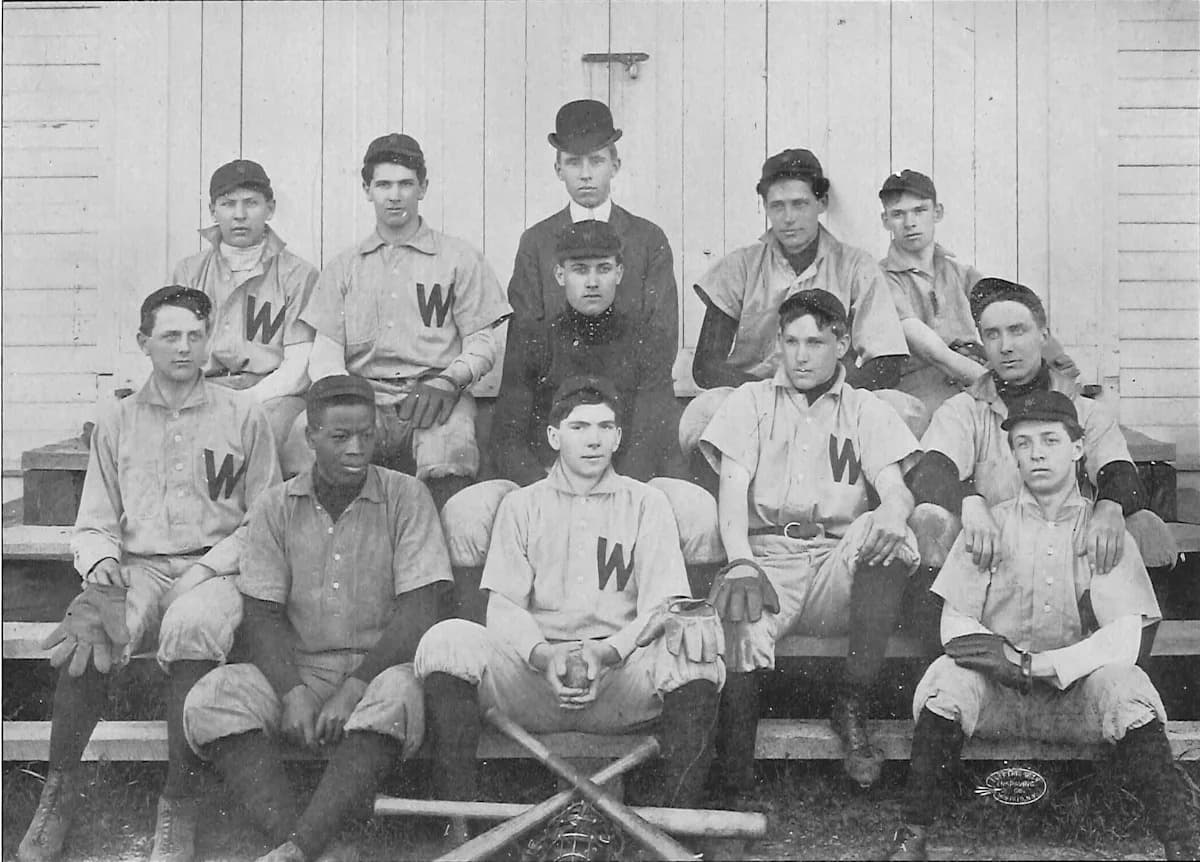
Charles W. Follis was the first African American professional football player and a notable alumnus of the College of Wooster. His legacy includes significant contributions to both football and baseball, highlighting his pioneering role as a two-sport Black athlete.
WOOSTER, Ohio — Little did I know.
For four years as a student at the College of Wooster, I was entirely naive to one of the school’s most important alumni. But last fall, I was back on campus enjoying a tour of nostalgia (hardly a unique exercise for anyone who reflects fondly upon their undergraduate days), taking the time to explore what had changed and what had stayed the same since I graduated in 2017. And while walking a familiar route from the library toward the dorms, I noticed a sign near the quad that surely wasn’t there during my time at Wooster.
The large text at the top seized my attention: “Charles W. Follis – The First African American Professional Football Player.”
If that title weren’t intriguing enough, the subhead explaining the sign’s location piqued my curiosity: “The College of Wooster’s Original Baseball Field.”
Somehow, this chance encounter on a stroll through my old stomping grounds was my introduction to Follis, a remarkable figure who has captivated me in the months since, as I’ve scrambled to get up to speed on an individual whose story I had overlooked.
The next two paragraphs on the sign offered the basics of Follis’ background, confirming an astonishing reality: More than a century ago, this small Ohio town — one I never knew to harbor grander historical significance — was a crucial early setting for one of the most impactful athletes of an era and one whose brief yet brilliant careers in football and baseball featured a fascinating link to one of the most celebrated trailblazers in American history.
That trailblazer is Jackie Robinson, whose legacy is celebrated Wednesday across Major League Baseball with the league’s annual honoring of Robinson breaking baseball’s color barrier with the Brooklyn Dodgers on April 15, 1947. Robinson’s Dodgers debut unquestionably marked the beginning of a new era for baseball and American professional sports, and his story is well-worth commemorating on a regular basis.
But Robinson integrating the majors was also a long overdue triumph after decades of Black athletes pushed for equality and respect, few of whom ever gained a fraction of the recognition that Robinson receives today, yet all of whom suffered horrific hardships in their efforts to defy the overwhelming tone of racial prejudice in America. One such athlete was Follis, who overcame unthinkable personal tragedy and rampant racial bigotry and violence to become a multi-sport phenom — and who might have contributed directly to Robinson’s breakthrough in 1947.
As it turns out, that sign I came across detailing Follis’ tenure as a collegiate athlete at Wooster was just one stop along a driving tour organized and installed in 2022 by the Wayne County Convention and Visitors Bureau. Dubbed “The Black Cyclone Trail” after the nickname Follis earned for his blistering speed and devastating physicality as a running back, the tour traverses a dozen locations from Follis’ life, beginning in Wooster and concluding about an hour west in the town of Shelby. Markers at each stop offer notes about the significance of each location, and most of them describe key plot points of Follis’ life, including:
Follis was born to parents Henry and Catherine in 1879 in Cloverdale, Virginia, and his family moved to Wooster when he was a young boy. He became captain of the Wooster High School football team in 1898, garnering the respect of his peers for both his physical talent and his leadership, but it was his unrivaled on-field performance that raised his profile in the region. His dominant displays as Wooster’s halfback drew the attention of Frank Schiffer, the owner of the nearby Shelby Athletic Club, a professional football team that would later become the Shelby Blues of the Ohio League, a predecessor of what we know today as the National Football League. Schiffer was so impressed by Follis’ performance against his team that he insisted Follis leave Wooster and call Shelby home instead. In 1902, Schiffer negotiated a contract of $10 per game for Follis, making him the first Black man to play professional football in America.
Follis spent four years starring for Shelby, gaining a reputation for his breathtaking running style and all-around ability on the gridiron, including on defense. During that time, he also reunited with an old foe from his days playing college baseball: Branch Rickey, now known for being the general manager of the Brooklyn Dodgers when they signed Robinson. Before becoming teammates on the Blues, Follis and Rickey had been rivals, each the star catcher for their Ohio colleges, Follis at Wooster and Rickey at Ohio Wesleyan. In Shelby, they were on the same side, affording Rickey an up-close look at Follis’ unwavering determination and courage in the face of the unrelenting vitriol directed toward him as a Black professional athlete in a white-dominated space. That ire included vicious verbal abuse from spectators as well as physical assaults from opponents that stretched beyond the normal standards of football competition.
Follis’ star power with Shelby burned brightly, and his foray into the pro ranks as a Black man at the outset of the 20th century was groundbreaking, but a rash of injuries necessitated an early retirement from football in 1906. Follis then turned his attention back to baseball, and he restored his status as a superstar backstop with several local semipro teams before landing with the Cuban Giants Negro League team based in New Jersey. He played with the Giants until his untimely death at age 31 in 1910 due to complications from pneumonia.
Rickey, meanwhile, was in the earliest stages of a prolific career in baseball, first as a major-league player and manager and then as an executive, most famous for the Dodgers’ signing of Robinson in 1945. The most common story regarding Rickey’s earliest inspiration for Robinson’s signing — the one expressed by Rickey and depicted in the film “42” — involves his experience with a Black catcher named Charles Thomas, who played for Rickey when he was coaching at Ohio Wesleyan in 1903-04 and who also had to persevere through virulent racial animosity. But it stands to reason that Rickey’s experiences with Follis — as both an opponent and a teammate in multiple sports — also influenced his conviction that someone like Robinson would have the fortitude and character to make barrier-breaking history all those years later.
These are the details of Follis’ life presented along “The Black Cyclone Trail,” which I spent a recent Sunday afternoon exploring again, after my initial encounter last fall. That provided me with a surface-level understanding of Follis’ accomplishments, in tandem with the landmarks where his legacy was built, some of which I had connections to from my four years in Wooster.
For instance, I spent countless hours watching friends compete at the Division III level at Art Murray Field atop the hill at the northeast end of campus, but not until this tour did I know that the original ballfield where Follis starred was about a half-mile west on the same patch of grass where I played intramural softball. Strolling past Follis’ childhood home on Spink Street with my newfound knowledge was a strange experience, knowing how many times I’d trekked down that sidewalk without a clue. And though I had never been to Shelby before this recent trip, finishing my day with dinner and a drink at Weber’s Bar and Grill, where Follis and his teammates celebrated victories, was surreal in its own right, with a team photo of the 1902 Blues hanging on the wall.
All together, it was an amazing way to learn about someone whose rare athletic gifts and character enabled him to succeed at an especially difficult time and place in American history. And yet, knowing how chronicles of this ilk tend to lessen the haunting realities in favor of celebrating the good that came out of them, Follis’ story felt incomplete to me. Sure enough, in searching for more specifics about Follis’ time in Wooster and how his life and career unfolded, harsher truths came to light, most notably in “Follis: Greatness Transcends,” a book co-authored in 2023 by veteran sportswriter Ralph N. Paulk and Herman D. Smith, Follis’ great-nephew. This riveting and heartbreaking account illuminates the broader scope of Follis’ 31 years on Earth.
It starts at the beginning, with the circumstances of the Follis family’s arrival in Wooster. In simple terms, they followed Charles’ grandfather, Benjamin, who decided to head north in 1878 after living the first four-plus decades of his life as a slave. He left for Ohio in search of a less hostile environment than a south filled with former slaveowners and eventually settled in Wooster and began his new life. Benjamin’s son, Henry, and his wife, Catherine, initially preferred to stay in Virginia and raise their growing family in familiar surroundings. Charles was born in 1879, the couple’s third child after daughters Lelia and Cora Belle. Four more kids followed: sister Laura, twin brothers Allen and James, and finally the youngest, Curtis.
Though legally freed, the Follises were left to navigate the terrors of violent racism that remained in their hometown, spearheaded by the Ku Klux Klan. Those terrors reached a crisis point in the winter of 1884, when the Follis family home was burned down overnight, taking the life of 3-year-old Allen. This solidified Henry and Catherine’s sense that it was time to settle elsewhere, so they packed up their family and journeyed north to join Benjamin in Wooster. But that trauma was indicative of a life filled with racial atrocities, ranging from more subtle jabs of prejudice to downright murderous violence. Because while Charles’ elevated status due to his athletic prowess garnered a level of respect, it also put a target on the family from Virginia, who were overturning years of racial hierarchy as they integrated into the Wooster community.
Two more children, Joe and Lucille, were born in Wooster, but another tragedy took the life of a Follis sibling in 1903, when Curtis died at age 19, reportedly unable to recover from severe injuries suffered in a football game at Wooster High School. At this point in history, a death from football was not uncommon due to the rough nature of the sport and poorly regulated contests played without proper protection. But eyewitness accounts indicate that Curtis endured not the usual bruisings from the sport he hoped to play professionally alongside his brother, but malicious, targeted attacks from racist opponents seeking permanent damage to a player who did not look like them. With that, Curtis’ dream of playing with Charles was dashed in gutting fashion, and the Follises were left to reckon with having lost another family member to racial violence.
Less than a decade later, Charles’ own life was cut short. Official records indicate that his cause of death was asphyxiation as the result of pneumonia. But “Follis: Greatness Transcends” conveys skepticism from the family that a player in Charles’ world-class physical condition would succumb to illness so swiftly. The book recounts that Charles too was the victim of physical violence, bullied and beaten by a group of racist spectators on his way home from a double-header in Cleveland on April 5, 1910, the day he was pronounced dead at Huron Hospital. Although the family demanded an investigation into Charles’ death, no further inquiry from city officials was pursued, literally and figuratively burying Follis with so much of his story yet to be told.
Among the tragedies of Follis’ life being cut so abruptly short is the impossible unknown of who he could’ve become. His accomplishments and trajectory invite speculation about how much more well-known his story could’ve been had his life spanned more than three decades. In the years leading up to his death, Follis had formed a friendship with W.E.B. DuBois, who was in the process of founding the National Association for the Advancement of Colored People (NAACP) and regularly invited dialogue about combating racism in America. The Follis family had experienced its fair share of surprising successes and devastating setbacks since moving to Wooster, and before his death, Charles was contemplating retirement in order to spend more time challenging the racial divide in the country. His experience as a pro sports pioneer made him a strong candidate to become a civil rights advocate.
Instead, his living impact was abbreviated, eliminating the possibility that his outstanding career on the field could serve as a springboard to a life of making a difference beyond it. That left descendants such as Smith, the grandson of Charles’ youngest brother, Joe, to keep his memory alive and his significance understood. That task, more than a century removed from Follis’ death, is not a straightforward one by any means.
Follis’ family has worked to achieve more mainstream recognition for him, and there has been a notable uptick in such acknowledgement in recent years. In 1998, Wooster High School renamed its home turf Follis Field, and more recently, the school was given an official Ohio Historical Marker outside its gates. In 2013, Follis was inducted into the College of Wooster’s athletic Hall of Fame. In 2018, governor John Kasich signed legislation designating Follis’ Feb. 3 birthday as “Charles Follis Day” in Ohio. In 2020, the town of Shelby dedicated a street in his honor. In the Pro Football Hall of Fame in Canton, there is a small display recognizing Follis and several other Black players who thrived professionally before the NFL was formed; his family has also pushed to see Follis formally inducted into the Hall.
But in addition to shining light on Follis’ accomplishments, it’s important that the nuance and ugly realities of his life are also recognized. These efforts are exemplified in “Follis: Greatness Transcends,” a deeply personal account that directly contradicts some of the accepted interpretations of Follis’ experience, including his “Black Cyclone” moniker, which according to the book, Charles quietly detested, questioning why he was given a nickname when his white teammates were strictly called by their surnames.
Details such as this — as well as more thorough retellings of the highs and lows of the Follis family’s journey out of slavery in Virginia and into a new world in Ohio — are crucial to ensuring that Follis is not reduced to the short-hand designation of “First Black Professional Football Player” and a few memories of his time on the field. As with Jackie Robinson, a pioneering individual cannot be distilled to only the headlining traits, but rather should be remembered in full for what they lived through, with their own perspectives considered. The story of race in America — for decades before April 15, 1947, and for decades after — occasionally warrants celebration but also requires reckoning.
To that end, Jackie Robinson Day isn’t just an opportunity to commemorate his signature achievement. It’s also a chance to consider the themes that defined Robinson’s journey up to and in the years after his Dodgers debut. From his terrific physical talents to his rare blend of character traits to the dangerous realities of smashing the status quo as a Black man in America in 1947, there are countless elements of Robinson’s life worth further exploration. But Robinson is not alone in having broken barriers despite bigotry and hatred. And for someone so often revered for having paved the way for those who came after him, it feels only right to also honor those who did the same for Robinson.
And in the case of Charles W. Follis, I feel fortunate to have gained a deeper appreciation for an overlooked figure in American sports history, one who happened to call Wooster home for a time.
Now I know.
Share this article
Charles W. Follis was the first African American professional football player, recognized for his pioneering contributions to both football and baseball.
Charles W. Follis played both professional football and baseball, making him a notable two-sport athlete in history.
Charles W. Follis attended the College of Wooster, where he is celebrated as an important alumnus.
Charles W. Follis has been recognized for his groundbreaking achievements in sports, including a commemorative sign at the College of Wooster marking his legacy.


See every story in Sports — including breaking news and analysis.