Crypto
XRP Price Will Trade At $1,000 If This Happens; Analyst
NewsBTC

Ether treasury companies may need to use liquid staking and other active yield strategies if they want to offer investors something beyond the staking rewards already available through listed Ether products, Kean Gilbert, head of institutional relations at Lido, told Cointelegraph at ETHCC 2026.
Liquid staking lets Ether (ETH) holders stake their tokens while receiving a transferable token that can still be deployed elsewhere in decentralized finance (DeFi).
Gilbert said strategies such as posting ETH as collateral and borrowing against it could help treasury companies generate higher returns than passive staking products.
US-listed staked ETH products now include the REX-Osprey ETH + Staking ETF, launched in September 2025, Grayscale’s Ethereum Staking ETF and Ethereum Staking Mini ETF, and BlackRock’s iShares Staked Ethereum Trust ETF, introduced on March 12.
Issuer disclosures show different staking economics across Ether products, making direct yield comparisons difficult. Grayscale’s ETHE page showed 2.26% net staking rewards as of April 6, while Grayscale’s ETH page showed 2.56% as of April 2. Native ETH staking was yielding about 2.72% annually, according to Staking Rewards.
Related: Bitmine paper loss nears $8.8B as Ether slump tests cyclical thesis
Still, Jimmy Xue, co-founder and chief operating officer of quantitative yield platform Axis, said Ether treasury companies do not necessarily need to beat staked Ether products on headline yield because they are different investment vehicles.
“A staked ETH ETF is a passive vehicle. A DAT trading at a meaningful mNAV premium is promising something a passive ETF structurally cannot deliver, which is active, dynamic deployment of spot inventory across opportunities as they arise.”
“The mNAV premium investors pay reflects confidence in management’s ability to put that treasury to work,” Xue said, adding that basis trading is a major yield source for treasury companies.
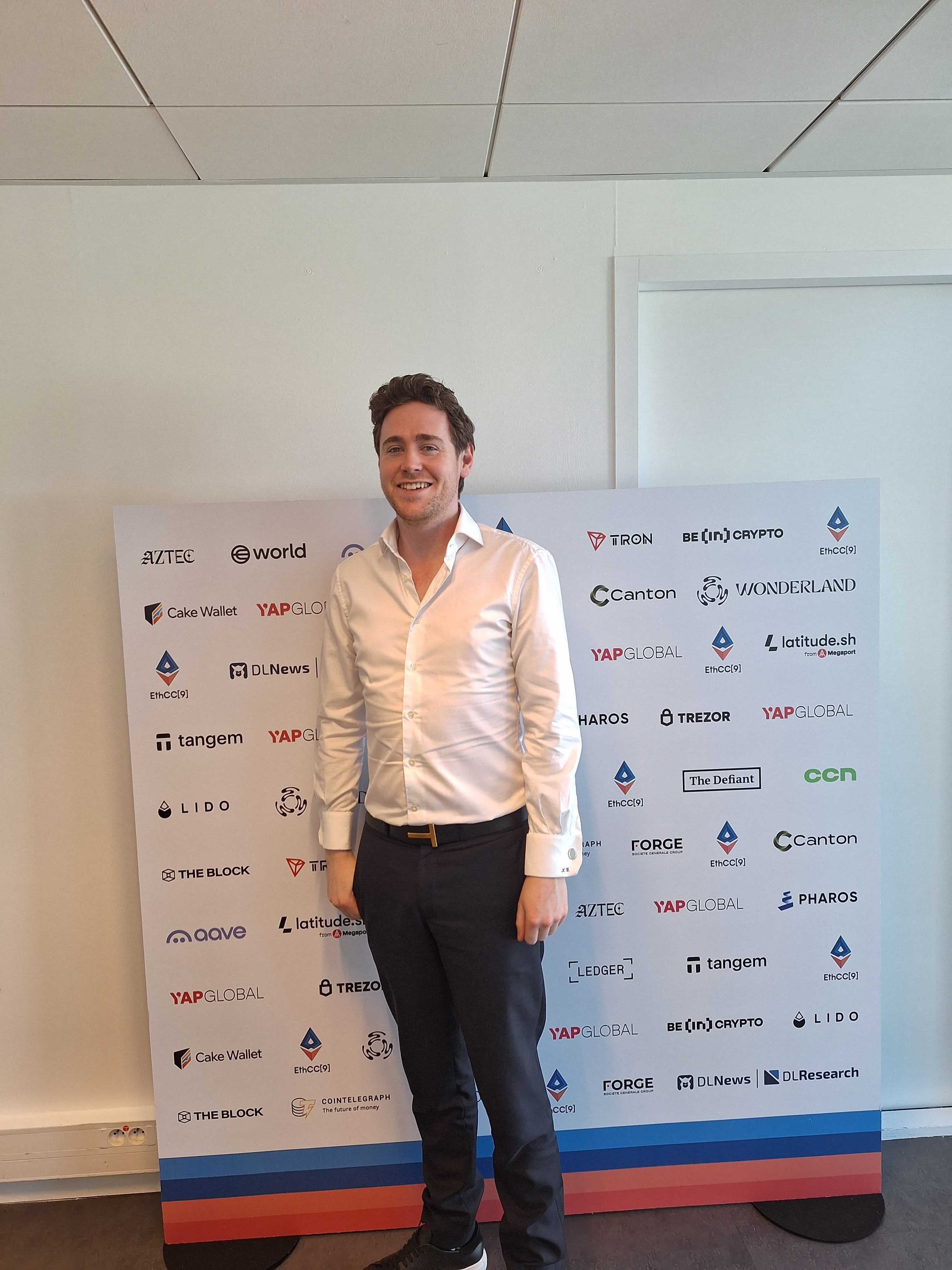
Kean Gilbert, head of institutional relations at Lido Finance, interviewed by Cointelegraph at ETHcc. Source: Cointelegraph
Public disclosures show several Ether treasury firms using staking or liquid-staking-related strategies, though the level of detail varies by company.
Sharplink Gaming, the second-largest corporate Ether holder, has generated 14,516 ETH (around $30.8 million) in staking rewards as of March. It derived 33% of these rewards from liquid staking and 66% from native staking, according to a March 1 filing with the US Securities and Exchange Commission.
Sharplink reported a $734 million net loss for 2025, largely driven by the sharp crypto market downturn in the second half of the year.
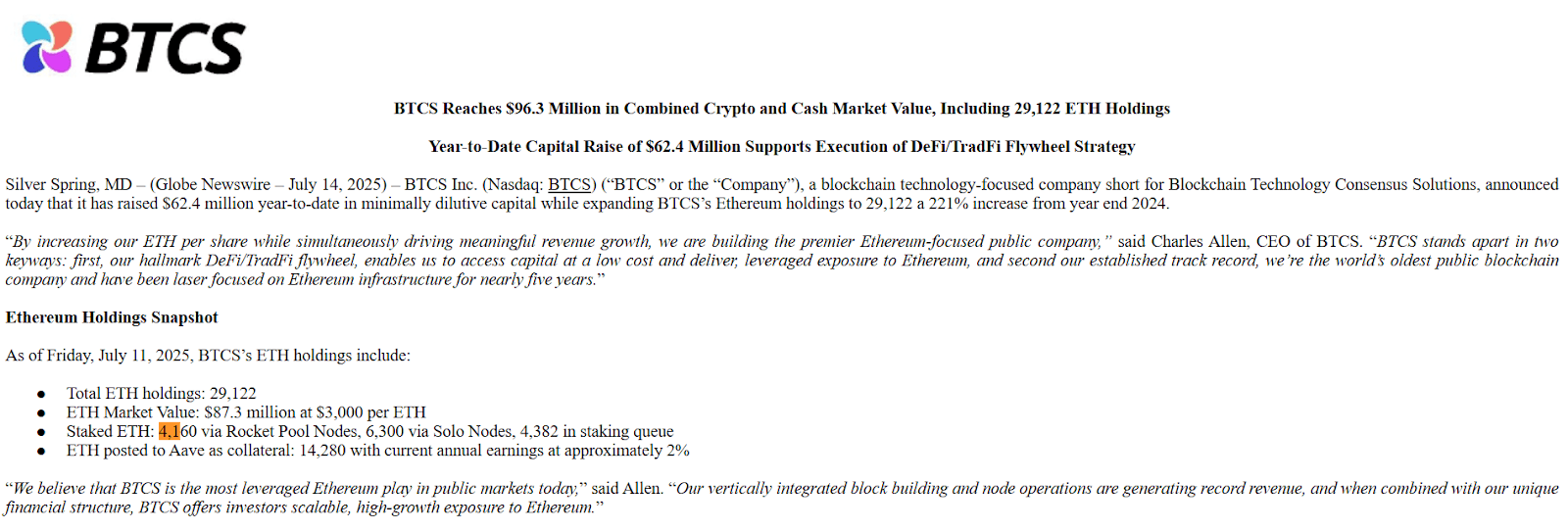
BTCS Inc. SEC filing. Source: SEC.gov
BTCS Inc., the 10th-largest Ether treasury company by returns, has also staked a part of its Ether holdings through the liquid staking protocol Rocket Pool. Out of its total 29,122 ETH holdings, the company has liquid staked 4,160 ETH ($8.8 million) through Rocket Pool nodes, according to a July 2025 SEC filing.
Cointelegraph has approached BitMine, SharpLink and The Ether Machine for comment on the role of liquid staking in their strategies.
Magazine: Sharplink exec shocked by level of BTC and ETH ETF hodling — Joseph Chalom
Share this article
They may need to use liquid staking and other active yield strategies. Kean Gilbert of Lido said treasury firms should offer investors something beyond the staking rewards already available through listed Ether products.
Liquid staking lets ETH holders stake their tokens while receiving a transferable token in return. That token can still be used in decentralized finance, so the assets are not fully locked up.
Active strategies can potentially generate higher returns than passive staking products. Gilbert said tactics like posting ETH as collateral and borrowing against it could help treasury companies earn more.
Not necessarily. Jimmy Xue of Axis said these are different investment vehicles, and a treasury company can offer active deployment of assets rather than just passive staking yield.
Several companies have disclosed staking-related activity, including SharpLink Gaming and BTCS Inc. SharpLink said 33% of its staking rewards came from liquid staking, while BTCS reported liquid staking 4,160 ETH through Rocket Pool.




See every story in Crypto — including breaking news and analysis.