Crypto
Proposed Ethereum Standard Aims to Help AI Agents Execute Complex DeFi Trades
Decrypt
TL;DR
Digital asset investment products showed a moderate recovery, according to CoinShares data, with total net inflows reaching $224 million over the past week. However, the real standout was XRP, which effectively led investor allocations into crypto funds.
XRP recorded $119.6 million in inflows, marking its largest weekly figure since mid-December 2025. Compared to the previous week’s $15.8 million, this represents a 656% increase.
This week, XRP even surpassed Bitcoin in terms of attracting capital, becoming the asset with the strongest positive sentiment. Total XRP inflows year-to-date in 2026 have reached $159 million, accounting for around 7% of total assets under management in these products.
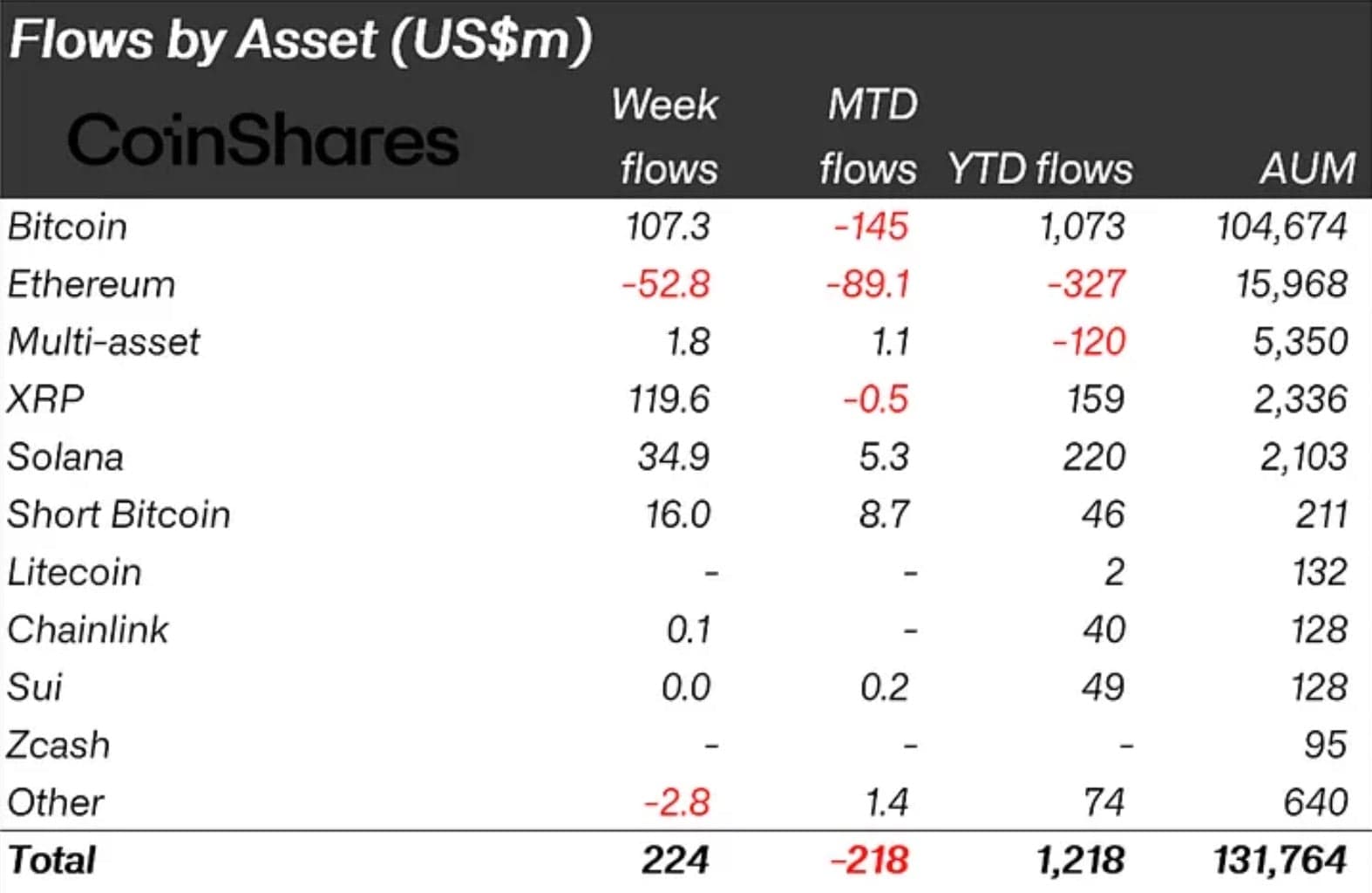
Digital Asset Fund Flows Weekly Report, Source: CoinShares
Surprisingly, Switzerland emerged as the main hub for crypto ETF activity with $157.5 million in inflows, followed by Germany, while the United States ranked third with a modest $27.5 million. This highlights a clear shift of institutional capital toward European jurisdictions.
Amid ongoing uncertainty and polarized views on Bitcoin — whether it behaves as a beta to tech stocks or as a safe haven like gold — XRP is showing a clear bullish trend, at least in ETF flows. Sustained inflows for a second consecutive week, following March’s negative performance, confirm that institutions are currently viewing XRP as a key altcoin for portfolio diversification in spring 2026.
At the start of the week, Binance released its updated Proof of Reserves report, revealing a noticeable increase in net user balances, particularly for Shiba Inu (SHIB). The token saw an increase of over 181 billion SHIB between March and April.
User net balances rose from 52.45 trillion to 52.63 trillion SHIB, while Binance’s total on-chain reserves stood at 52.72 trillion SHIB. The reserve ratio remains unchanged at a surplus level of 117%.
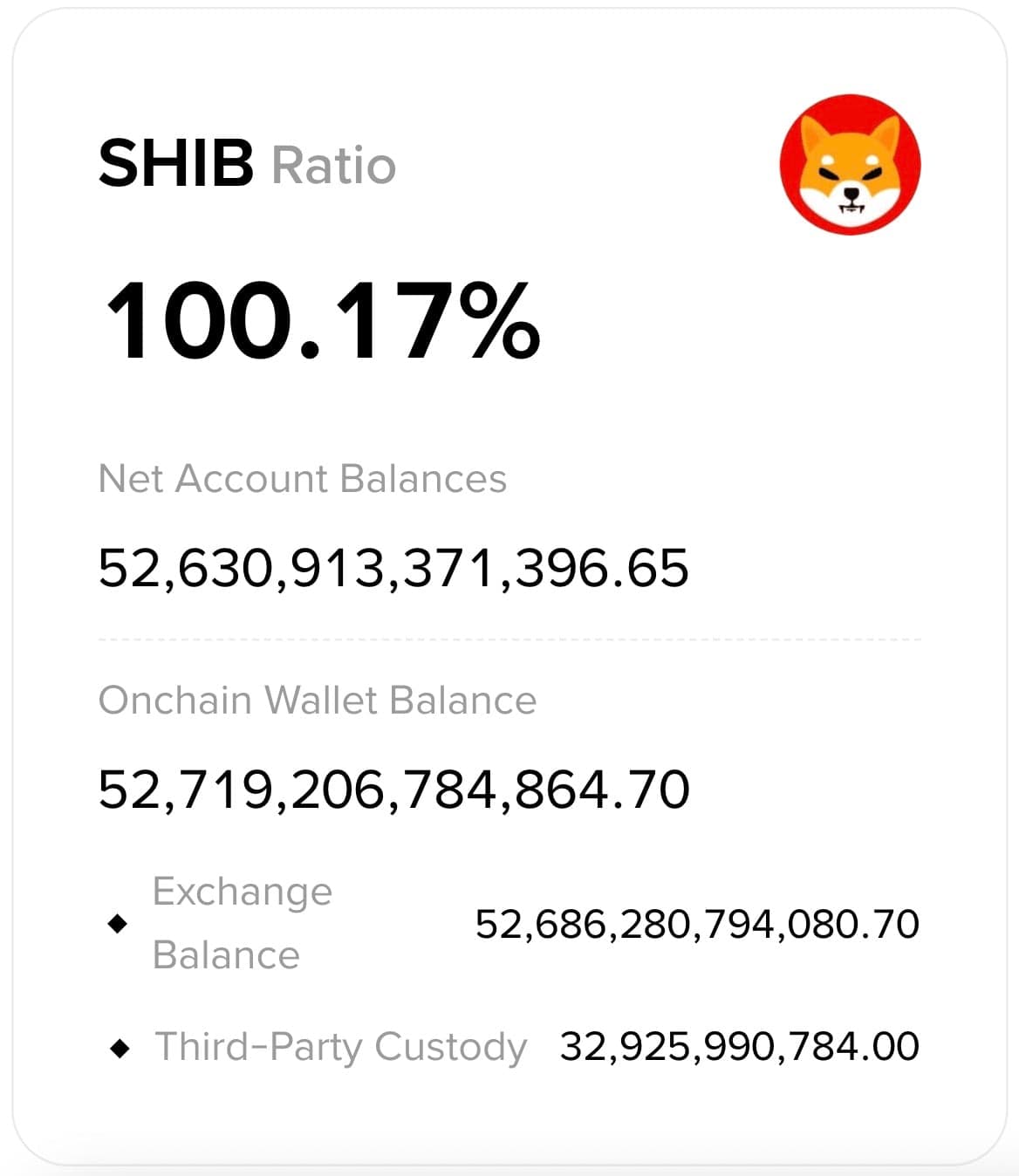
Binance Shiba Inu (SHIB) reserves as of April 2026, Source: Binance
The average market price of SHIB is currently around $0.000006, with a total market capitalization of approximately $3.5 billion. The growth in balances suggests renewed interest in the token alongside a broader market recovery.
This indicates that Shiba Inu coin has not been left behind and is benefiting from the same positive sentiment affecting the rest of the market. At the same time, the token still lacks its own strong narrative and continues to move in line with general market trends.
Well-known crypto critic Peter Schiff made a controversial statement on X, arguing that even if Bitcoin falls to $10,000 by the end of 2026, Michael Saylor would still present it as a major success.
Schiff mocked what he described as "mathematical gymnastics" by crypto supporters. According to him, even at $10,000, Bitcoin could formally retain its status as the best-performing asset of the decade, and Saylor would use this argument to justify continued aggressive accumulation financed by ongoing share issuance.
If Bitcoin ends 2026 at $10,000, it will still be the best-performing asset over ten years. I'm sure @Saylor will rely on that to keep pumping Bitcoin and issuing more shares of $MSTR to buy it. But a 92% decline will make it the worst-performing investment for most HODLers.
— Peter Schiff (@PeterSchiff) April 7, 2026
However, for most investors who entered the market in recent years, such a scenario would be catastrophic, representing a 92% decline from the peak and turning Bitcoin into their worst investment.
This view aligns in part with analysis from Bloomberg Intelligence strategist Mike McGlone, who sees $10,000 as a return to the mean average seen in 2020-2021. He argues that the current correction is clearing out a credit-driven bubble formed over the past five years.
Meanwhile, Strategy’s financial position appears increasingly pressured. The company holds between 766,970 BTC, with an average purchase price of $75,644, putting it at an unrealized loss of around 9.68% at current levels. Its market capitalization remains in the $42-46 billion range, approaching the value of its Bitcoin holdings.
After briefly breaking above $70,000, Bitcoin has entered a corrective phase amid ongoing geopolitical uncertainty and mixed institutional flows.
Key checkpoints:
The current environment is defined by Bitcoin increasingly decoupling from tech equities and reacting more to geopolitics and energy markets, positioning itself as both a digital gold and infrastructure asset.
card
Share this article
XRP attracted $119.6 million in weekly ETF inflows because investors showed strong renewed interest in the asset. That was a 656% jump from the previous week and made XRP the top crypto fund allocation over the period. The article says institutions are viewing XRP as a key altcoin for diversification.
Binance’s update shows user SHIB balances rose by more than 181 billion tokens in one month. That suggests renewed retail interest and a broader recovery in market sentiment. The article also notes Binance’s SHIB reserve ratio stayed at a surplus level of 117%.
Peter Schiff says a drop to $10,000 would be disastrous for most recent Bitcoin buyers. He argues it would still let supporters claim Bitcoin was the best-performing asset over ten years, which he mocks as misleading. In his view, that kind of price collapse would be a 92% loss from the peak.
Yes, Bitcoin is still seeing strong institutional demand despite recent volatility. The article says spot Bitcoin ETFs brought in $471 million, the highest since February. Even so, Bitcoin slipped back to around $68,000 after failing to hold above $70,000.
Geopolitical tension and rising oil prices are driving much of the current volatility. The article says investors are reacting to risks around key oil logistics routes, which is pushing some to take profits and move into defensive assets. Bitcoin is also increasingly reacting to these macro factors rather than just tech stocks.




See every story in Crypto — including breaking news and analysis.