
Crypto
Bitcoin ETF inflows hit highest level since February
CoinDesk

The Solana Foundation on Monday announced a new security auditing framework for Solana-based protocols in addition to an incident-response network, warning that “adversaries are rapidly innovating.”
The Solana Foundation, a Swiss organization that supports the adoption and security of Solana, and Web3 security firm Asymmetric Research unveiled the Solana Trust, Resilience and Infrastructure for DeFi Enterprises (STRIDE), stating that it was a “structured program for evaluating, monitoring and escalating security across Solana projects.”
The initiative works to evaluate the security of protocols across eight pillars: program security, governance and access control, oracle and dependency risk, infrastructure security, supply chain security, operational security, monitoring and incident response, as well as log management and forensics.
Protocols are independently assessed against these requirements, with findings published publicly, said Asymmetric Research. “This gives users, investors, and the broader ecosystem real transparency into the security posture of the protocols they interact with.”
The announcement comes just a week after one of the largest DeFi exploits this year, with the Drift Protocol losing around $280 million following a social engineering attack from North Korean-linked threat actors.
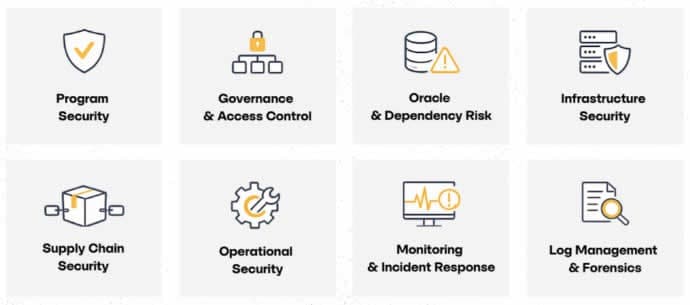
STRIDE’s eight pillars of security. Source: Asymmetric Research
The Solana Foundation also announced the Solana Incident Response Network (SIRN), a network of security firms for real-time incident response across the Solana ecosystem.
“Members will share threat intelligence, coordinate responses to active incidents, and contribute to the ongoing evolution of the STRIDE framework,” it stated.
Related: Crypto hackers steal $169M from 34 DeFi protocols in Q1: DefiLlama
The foundation did not mention artificial-intelligence agents directly, but the announcement comes at a time when they are becoming an increasing threat to crypto protocols.
In January, $40 million was drained from the Solana DeFi platform Step Finance, with AI agents amplifying the damage by executing large transfers autonomously, KuCoin reported last week.
Malicious actors stole over $168 million in cryptocurrency from 34 DeFi protocols in the first quarter of 2026, according to data from DefiLlama.
However, the figure has fallen significantly from the same period last year, when $1.58 billion was pilfered in Q1, 2025.
The largest exploit for the period was the private key compromise of Step Finance.
Magazine: No more 85% Bitcoin collapses, Taiwan needs BTC war reserve: Hodler’s Digest
Share this article
STRIDE is a new security auditing framework for Solana-based protocols. It is described as a structured program for evaluating, monitoring, and escalating security across Solana projects.
STRIDE evaluates protocols across eight pillars of security. These include program security, governance and access control, oracle and dependency risk, infrastructure security, supply chain security, operational security, monitoring and incident response, and log management and forensics.
The Solana Foundation launched the initiative as attacks on DeFi protocols continue and adversaries are rapidly innovating. The announcement came just a week after Drift Protocol lost around $280 million in a social engineering attack.
The Solana Incident Response Network, or SIRN, is a network of security firms focused on real-time incident response across the Solana ecosystem. Members will share threat intelligence, coordinate responses to active incidents, and help evolve the STRIDE framework.
DeFi attacks remained significant in Q1 2026, with malicious actors stealing over $168 million from 34 protocols, according to DefiLlama. That total was far below the $1.58 billion stolen in the same period in 2025.





See every story in Crypto — including breaking news and analysis.